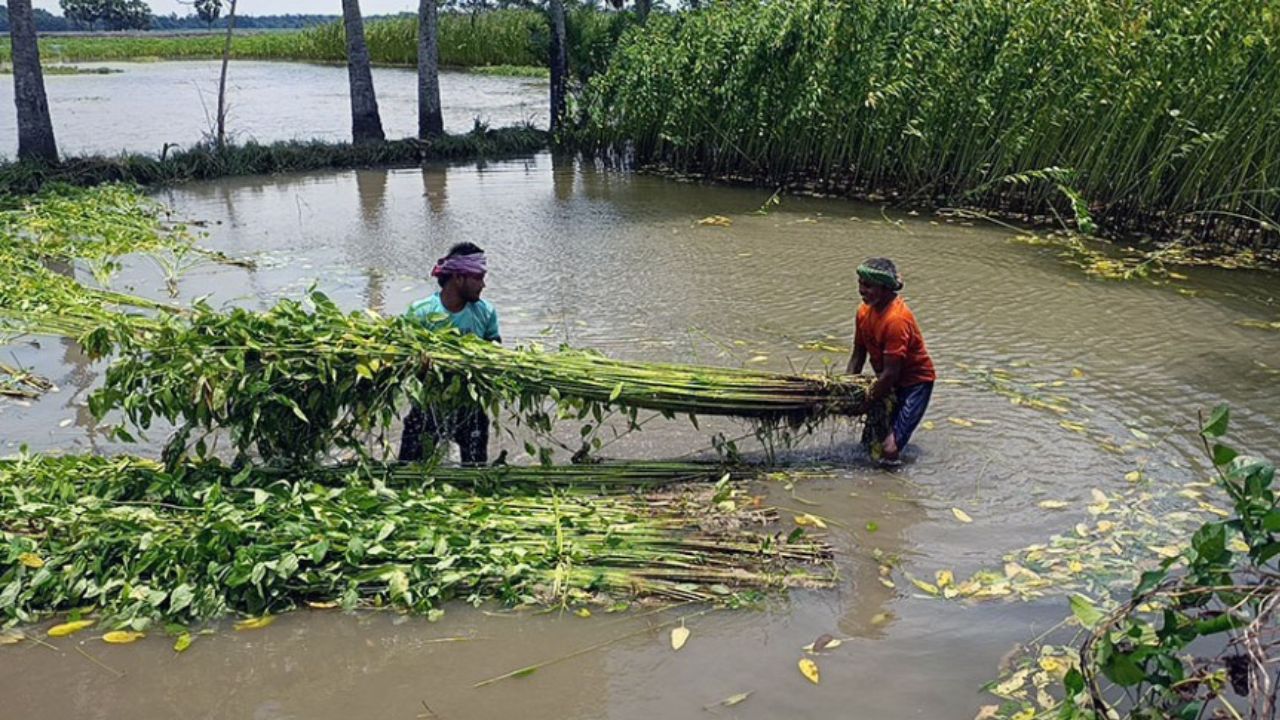
Persistent rain triggered by Cyclone ‘Akvan’ has raised fears of damage to Aman paddy and winter crops across several parts of Bangladesh, leaving farmers struggling to harvest and dry their produce.
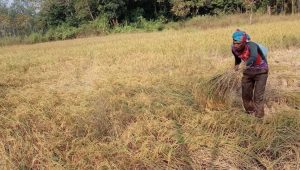
Harvested paddy remains soaked in fields, while ripe crops have been submerged in some areas. Waterlogging in vegetable plots and seedbeds has also heightened concerns about losses, with the Bangladesh Meteorological Department (BMD) forecasting further rain on Sunday.
In Khulna’s Dumuria upazila, Aman paddy fields in Rustampur, Narnia, Baratia and Chuknagar under Atlia union remain submerged.
Rustampur farmer Siraj Morol said three to four days of rain had soaked harvested paddy, raising fears of damage and reduced grain yields.
In Naogaon, ripe paddy has fallen over in several fields, while harvested crops remain on the ground. Rain has disrupted harvesting, threshing and drying.

Moazzem Hossain, who cultivated Aman paddy on nearly two acres in Bagachara of Sadar upazila, said, “The paddy has grown well. I just hope I can bring it home safely.”

Raninagar farmer Mizanur Sardar has harvested paddy from three acres but left it in the fields. He fears substantial losses if the rain continues.
Winter vegetables are also threatened, with water accumulating in fields growing bottle gourd, potatoes, beans, aubergines, bitter gourd and cauliflower. Newly planted vegetable seedlings and Boro paddy seedbeds face similar risks.
Nazmul Hossain of Khamar Atita village in Naogaon Sadar said he had spent nearly Tk20,000 cultivating potatoes on one bigha.



“The potatoes were supposed to be harvested in a month. But with the rain continuing like this, I am worried the field will be damaged,” he said.
Fellow farmer Faruk Hossain, who cultivated beans and cauliflower on one bigha each, feared he might struggle to recover production costs if the rain persisted.
In Bhola, fields in char areas and low-lying parts of several upazilas have become waterlogged, threatening winter vegetables and watermelon seedbeds.
Rajapur farmer Kalu Sardar said harvested paddy could not be dried without sunshine.



Abul Hasan Kerani’s watermelon seedbeds on nearly 100 kani of land are at risk, while Jamal Hossain’s three acres of cabbage fields in Kachia Majherchar have become waterlogged.
The rain has also disrupted livelihoods. Ilisha buffalo farmer Iqbal Hawlader said people were avoiding unnecessary travel, leaving many day labourers without income.
Agricultural officials warned that prolonged waterlogging could cause vegetable roots to rot and trigger diseases. They advised draining accumulated water quickly to minimise damage.
Winter chill in Lalmonirhat
Meanwhile, overcast skies, chilly northerly winds and drizzle have brought a winter chill to Lalmonirhat, prompting residents to wear warm clothes.

The district recorded a minimum temperature of 19.8 degrees Celsius on Saturday, compared with 17 degrees the previous day.
Saidul Islam of Canteen Mor said cloudy skies and the absence of sunshine were disrupting daily activities, particularly during mornings and evenings.
Kurigram’s Rajarhat Weather Observatory Officer-in-Charge (OC) Subal Chandra Sarker said the conditions could persist for another two to three days.
The BMD’s five-day forecast indicated continued rainfall across different regions, with moderate to heavy rain possible in some areas and a slight decline in night-time temperatures.
Cumilla recorded the country’s highest rainfall of 101 millimetres in the 24 hours ending Saturday evening, while Dhaka received 22 millimetres.
During the same period, Teknaf recorded the highest temperature at 29.8 degrees Celsius and Tetulia the lowest at 14.9 degrees.