Unseasonal drizzle and adverse weather triggered by Cyclone Akvan have disrupted the peak harvest of Aman paddy across Mirsarai and Fatikchhari upazilas in Chattogram, leaving local farmers in distress over crop damage and rising financial losses.
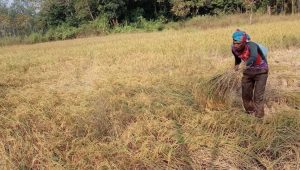
Continuous light rain from Thursday night through Saturday afternoon in Mirsarai, extending through Sunday in Fatikchhari, has submerged harvested paddy in fields and flattened standing crops during the Bengali month of Agrahayan.
Farmers are struggling to transport harvested crops home, dry threshed grain, or harvest standing paddy due to waterlogged land and a severe shortage of agricultural labourers who are demanding higher wages.
Beyond paddy, farmers are expressing frustration over delays and potential damage to winter vegetable seeds and early Rabi crops such as potatoes, chillies, and beans.
Mirsarai Upazila: Crop damage and labour crisis
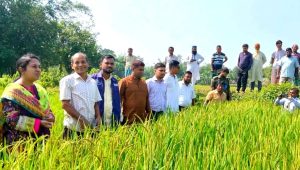
An on-the-ground inspection across Ichakhali, Durgapur, Moghadia, Kheyachhara, and Wahedpur unions in Mirsarai revealed widespread devastation affecting farmers across all 16 unions and two municipalities.

Golam Sobhan, a farmer from Char Sarat area in Ichakhali Union who cultivated paddy on nearly three acres despite fertilizer shortages and previous adversities, shared that rain soaking his cut paddy has left him anxious about failing to even recover production costs.
Alauddin from South Wahedpur lamented the unseasonal rain, noting that while water was scarce when needed earlier, continuous drizzle is now ruining ripe paddy lying in fields during harvest.
Meanwhile, Abu Jafar from Kheyachhara explained that ripe crops remain unharvested because the few available labourers are demanding exorbitant wages.



Farmers fear that if waterlogged paddy is not dried quickly, its colour and quality will degrade, creating uncertainty over fair market prices alongside mounting financial pressure from high production costs and fertilizer shortages.
According to Mirsarai Upazila Agriculture Office, Aman paddy was cultivated on 19,870 hectares this season, exceeding the target by 50 hectares. Upazila production targets were set at 86,435 metric tonnes of paddy and 57,623 metric tonnes of rice.
Mirsarai Upazila Agriculture Officer Pratap Chandra Roy stated that water has accumulated in many fields, which could cause minor damage to cut paddy, though crops should dry if sunshine returns.


He noted that standing ripe crops will suffer minimal harm from rain but admitted that adverse weather and labour shortages are severely delaying harvesting operations. He added that agricultural officials are distributing incentives and support to boost crop yield.
Fatikchhari Upazila: Flooded lowlands and sowing delays
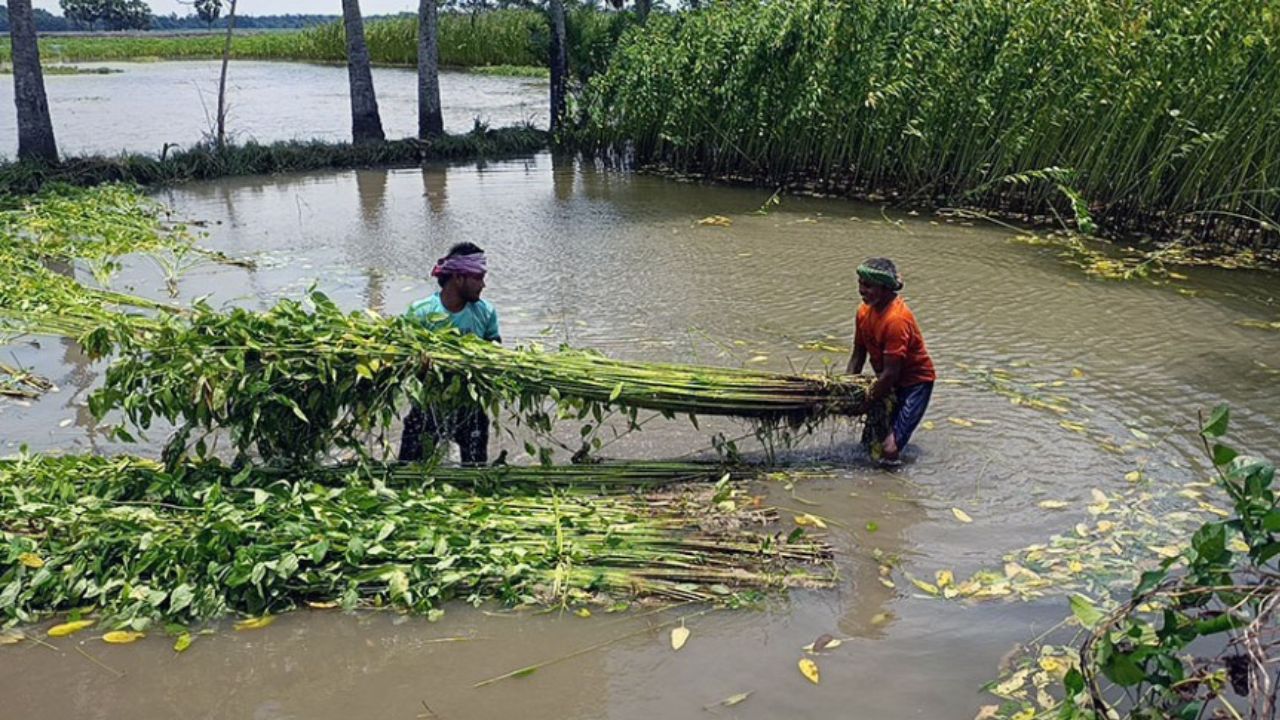
In Fatikchhari upazila, rain from Thursday to Sunday inundated low-lying areas, causing ripe paddy to rot and leaving cut bundles submerged in water. Although farmers are employing modern machinery for threshing, drying wet paddy remains a critical hurdle.
Muhammad Enam, a farmer from Panchpukuria village who expanded his Aman cultivation hoping for higher yields, explained that submerged fields are preventing timely harvesting and drying.

He warned that delays in clearing fields will disrupt the upcoming cultivation of early winter vegetables like potatoes, chillies, and beans, raising fears of escalated costs and financial losses.
Official data from the Fatikchhari Agriculture Office indicates that 29,560 farmers cultivated Aman across 23,580 hectares, surpassing the 22,320-hectare target by 1,260 hectares.
Fatikchhari Upazila Agriculture Officer Md Abu Salek confirmed that sub-assistant agriculture officers are actively advising the 29,560 farmers to alleviate their apprehension, remaining optimistic about eventual recovery despite harvest delays.
The localized agricultural crisis unfolds as the government launched its national Aman procurement drive for the 2026–27 fiscal year on 14 November.
The government has set nationwide procurement targets of 3 lakh metric tonnes of paddy at Tk35 per kg, 5 lakh metric tonnes of parboiled rice at Tk49 per kg, and 50 thousand metric tonnes of atap rice at Tk48 per kg.