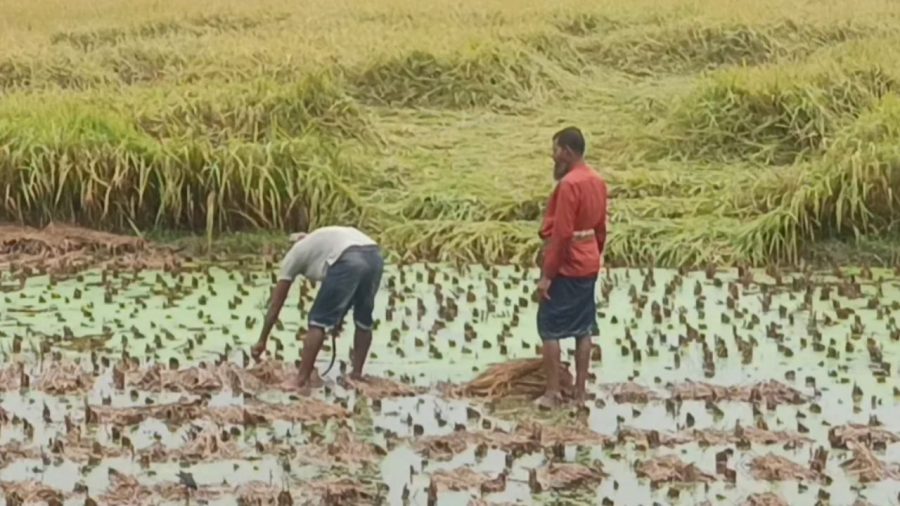



Continuous rainfall triggered by Cyclone Akvan in the Bay of Bengal has disrupted normal life in Chuadanga, leaving farmers worried about their ripe Ropa Aman paddy, maize and winter crops.
Rain began on Thursday morning and intensified on Friday, causing waterlogging in several areas and disrupting agricultural activities. Farmers fear that continued rainfall could submerge ripe paddy and damage other crops before they can be harvested.
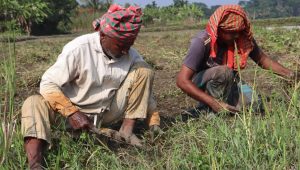
Large areas of Chuadanga Sadar, Damurhuda, Jibannagar and Alamdanga upazilas were brought under Ropa Aman cultivation this season, and most of the paddy is now ready for harvest.
Moniruzzaman, a farmer from Natun village under Kurulgachi Union in Damurhuda upazila, said farmers would face serious difficulties harvesting and bringing their crops home unless the rain stopped soon.

Another farmer from the village, Arafat Ali, said growers were worried that their ripe paddy could become submerged if the bad weather continued.
Sharmin Akter, Assistant Deputy Director of the Chuadanga Department of Agricultural Extension (DAE), said there was no risk of major agricultural damage if the rainfall did not continue for an extended period. She said water would drain from the fields once the weather returned to normal.




Jaminur Rahman, in-charge observer at the Chuadanga First Class Weather Observatory, said the district recorded 15 millimetres of rainfall between 6am and 3pm on Friday. The temperature was 23 degrees Celsius, with relative humidity at 95 per cent.
He said rainfall was likely to continue for another two to three days, while temperatures were expected to drop from 25 November.
The rain has also disrupted the livelihoods of day labourers, who are struggling to find work, while people travelling for essential needs are facing difficulties.
Meanwhile, three consecutive days of rain from Thursday to Saturday have disrupted public life in Jhalakathi municipal town, affecting daily wage earners, pedestrians, small traders and working people.
The town’s main roads remained largely deserted as heavy rain reduced traffic and the number of pedestrians. Small traders reported a sharp decline in customers and sales.
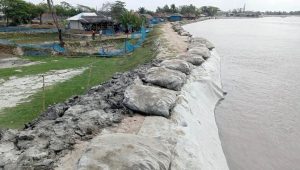
Rickshaw and auto-rickshaw drivers also suffered as fewer commuters reduced their daily earnings. Commuters faced difficulties at local ferry ghats, particularly those crossing the river towards Nalchhiti in the morning.
Despite the adverse weather, low-income daily wage earners have little choice but to venture out to earn their living.