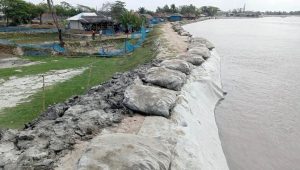
Vegetable prices have risen in Jhalakathi as flooding and heavy rain damage crops and disrupt supplies, putting additional pressure on low- and middle-income households.
Three consecutive days of rain under the influence of Cyclone Akvan have also disrupted daily life across the district, affecting workers, small businesses, pedestrians and transport services.
Visits to several markets on Saturday found cauliflower selling at Tk30–45 per kg, cabbage at Tk35–45, turnips at Tk40–60, aubergines at Tk80, green chillies at Tk40–60, beans at Tk70–100, yardlong beans at Tk35–40 and radishes at Tk40. Bottle gourds were selling at Tk40–50 each, depending on size.
Traders attributed the higher prices to crop damage and disruptions to vegetable supplies from different areas following flooding and excessive rainfall.
They said supply disruptions had pushed up wholesale prices, which were reflected in retail markets.

Consumers expressed frustration over the high prices, saying buying vegetables had become increasingly difficult, particularly for low- and middle-income families.
They called for effective measures to ensure adequate supplies and keep prices under control.




Meanwhile, intermittent heavy rain from Thursday to Saturday has severely disrupted daily activities across Jhalakathi.
Workers, pedestrians, small traders and daily wage earners have been among the worst affected, with many struggling to carry out their regular activities despite venturing outdoors to earn a living.
The usually busy streets of Jhalakathi town have seen significantly fewer pedestrians as persistent rain keeps many residents indoors.
Small traders have also suffered as fewer customers visit markets and roadside shops, reducing their daily sales and income.
Visits to different parts of the town found auto-rickshaw drivers waiting for passengers in the rain, often for hours without securing enough fares.
With passenger numbers falling sharply, many drivers have seen their earnings decline, raising concerns about meeting their families’ daily expenses.
Rain has also caused difficulties at ferry crossings across the district, particularly for people travelling from Nalchity to Jhalakathi town.
Passengers were seen using ferries despite the rain from early morning, many compelled to travel for work and other essential activities.
The adverse weather has made commuting increasingly difficult, adding to the hardship faced by workers and residents who depend on regular travel for their livelihoods.
Despite the disruption, people continued to travel and work to support their families amid persistent rainfall.