


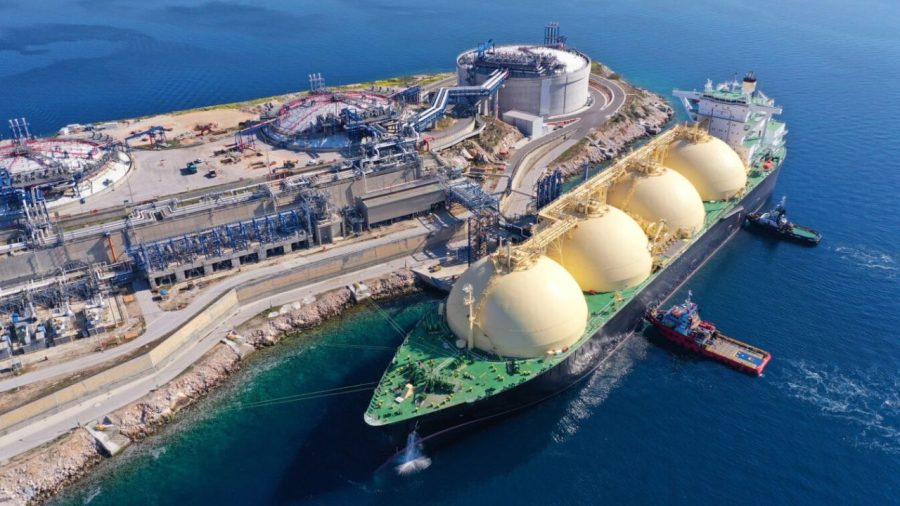



Bangladesh’s ambitious plan to expand LNG-based power generation has largely failed to materialise, with 10 projects involving a potential investment of around $7.7 billion either cancelled, withdrawn or stalled without significant progress over the past five years.
Only three plants with a combined capacity of 1,900MW have started operation since 2021, involving an estimated investment of $1.8 billion.
Even these operational plants are struggling to secure adequate gas supplies, raising questions about the viability of the country’s LNG-based power generation expansion.
Energy analysts warn that the investments could turn into stranded assets as the infrastructure needed to import LNG and supply gas to the plants has not developed as planned.
Ijaz Hossain, former professor of Bangladesh University of Engineering and Technology (BUET) and an energy expert, said the investment outlook for LNG-based power plants had changed significantly.
He said the plants risked becoming “stranded assets” as their owners had moved away from plans to import LNG themselves and instead relied on state agencies for fuel supplies.
However, the necessary LNG terminals and gas supply infrastructure have not been developed, leaving the availability of fuel uncertain even where power plants have been built.

According to the US-based Institute for Energy Economics and Financial Analysis (IEEFA), 10 proposed LNG-based power plants with a combined capacity of 8,000MW have been cancelled, withdrawn or stalled without significant progress since 2021.
Their potential investment value stands at around $7.7 billion.
A similar slowdown has affected LNG import infrastructure. Between 2021 and 2025, six proposed terminal projects with a combined annual capacity of more than 38 million tonnes were cancelled, withdrawn or stalled, involving potential investments of around $5.6 billion.
Bangladesh currently operates two floating storage and regasification units (FSRUs), but their capacity remains insufficient to meet the gas requirements of power plants.




Ijaz said a third FSRU was necessary not only to increase LNG imports but also to provide an alternative supply arrangement during emergencies. However, adding another terminal would not automatically guarantee adequate gas supplies to power plants.
The supply constraints were evident in IEEFA’s data. At the end of June 2026, even when both FSRUs were operating at full capacity, Petrobangla could allocate enough gas to meet only 39% of the demand from gas-fired power plants.
The rising cost of imported LNG is adding to the pressure. IEEFA data show that the cost of LNG imports and regasification increased by 33% between 2021 and 2025, compared with an 8% rise in the cost of domestic gas production.
Volatility in international LNG prices also makes power generation costs unpredictable. Meanwhile, the failure to adjust gas and electricity tariffs in line with supply costs has increased subsidies and outstanding dues at Petrobangla and the Bangladesh Power Development Board (BPDB), raising concerns about their ability to purchase electricity from new projects.
Ijaz said the projects had initially been planned on the assumption that LNG would cost $10-12 per million British thermal units (MMBtu).
But that calculation no longer holds.
Following Russia’s invasion of Ukraine in 2022, international LNG prices surged to $70 per MMBtu. Bangladesh, however, stopped purchasing when prices reached $36.95. Imports resumed as prices eased, with the government paying around $25 per MMBtu in November.
Changing industrial demand is adding another layer of uncertainty.
“Some industries are reducing production or shutting down because of the crisis, while others are switching to alternative fuels such as coal, LPG and wood. This creates uncertainty over future gas demand, which must be considered before making new investments,” Ijaz said.
Regional projects face similar setbacks
IEEFA’s review of LNG-based power generation and import infrastructure in the Philippines, Vietnam and Thailand reveals similar challenges.
In the Philippines, only one LNG-based power plant has started operation over the past five years, while 13 projects have been cancelled or withdrawn. High fuel costs, competition from renewable energy and difficulties securing power purchase agreements have hindered new investments.
Vietnam has dropped 20 power projects with a combined proposed capacity of around 33,000MW from its development plans. Only one LNG-based plant, with a capacity of 1,620MW, has started operation. Uncertainty over power purchase agreements and project financing has held back investments.
Thailand, meanwhile, is grappling with excess power generation and LNG import capacity. In the first quarter of 2026, privately owned power plants with more than 11,000MW of capacity operated at below 20% utilisation.
Around 7,200MW of capacity generated almost no electricity, raising questions about the need for additional gas-fired plants and LNG terminals.
Across the four countries, IEEFA reviewed 92 proposed LNG-based power plants with potential investments of $109.2 billion and 44 proposed import terminals worth $21 billion.
Of these, 49 power plants and 22 terminals, involving a combined potential investment of $67.8 billion, have been cancelled, withdrawn or stalled without significant progress.
Only 11% of the proposed power generation capacity and 15% of the planned terminal capacity across the four countries have become operational, highlighting the growing risks of investing in LNG-dependent energy infrastructure.