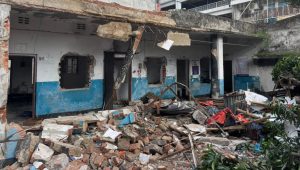
Bangladesh has achieved a significant milestone in national security, recording a 100 per cent fall in the number of terrorist attacks according to the 13th edition of the Global Terrorism Index (GTI) 2026.
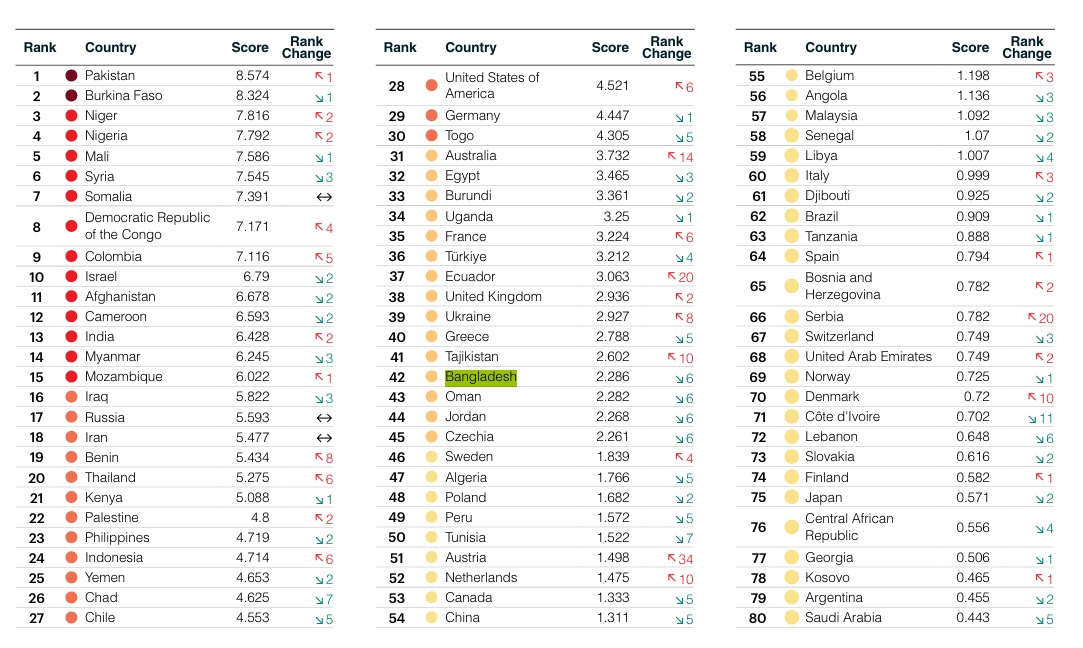
The report, published by the Sydney-based independent think tank Institute for Economics & Peace (IEP), reveals that Bangladesh has fallen six notches in the global rankings to occupy the 42nd position.
With a total score of 2.286, the nation saw a score improvement of 0.677 from the previous year, reflecting a broader trend of widespread global improvement where total deaths from terrorism fell 28 per cent to 5,582.
These findings are based on data from Dragonfly’s TerrorismTracker database, which has meticulously recorded reported terrorist incidents since 2007.
While the global number of attacks declined by nearly 22 per cent, Bangladesh’s complete absence of incidents stands as a domestic success against a shifting international backdrop where terrorism is increasingly concentrated in conflict-affected regions.

A regional landscape of extremes
Despite the individual progress made by countries such as Bangladesh, South Asia remains the region most impacted by terrorism globally, a position it has occupied since 2016.
However, the regional average impact did decline in 2025, with four countries recording improvements. Bangladesh’s regional neighbours displayed vastly different trajectories, with Pakistan recording the highest score on the Index at 8.574.



For the first time in the history of the Index, Pakistan is now the country most impacted by terrorism globally, driven by a sharp resurgence in activity from groups such as Tehrik-e-Taliban Pakistan (TTP) and the Balochistan Liberation Army (BLA).
In contrast, India ranked 13th on the list with a score of 6.428, though it also recorded a significant improvement as its number of terrorist attacks fell by 43 per cent.
Afghanistan showed signs of change, dropping out of the top ten for the first time since the Index’s inception to rank 11th.
Deaths from terrorism in Afghanistan fell by just under 50 per cent over the past year, while Nepal recorded the largest improvement in the region, ranking 88th with no terrorist attacks recorded in 2025.
Within the South Asian context, Bhutan and Sri Lanka achieved the distinction of being the least impacted, both ranking at the bottom of the list at 100th with scores of zero.
Global shifts and persistent threats
The GTI 2026 highlights a growing geographic concentration of terrorism, with just five countries – Pakistan, Burkina Faso, Nigeria, Niger, and the Democratic Republic of the Congo – accounting for 70 per cent of all global terrorism deaths in 2025.
While the epicentre of terrorism has shifted away from the Middle East and North Africa towards sub-Saharan Africa, particularly the Sahel region, the global list of nations least impacted includes 65 countries that recorded an Index score of zero.
These nations have not experienced a single terrorist incident in the past five years.
While the overall decline in fatalities is a positive development, the IEP warns that the nature of the threat is adapting.
The 2026 report draws particular attention to the rise of youth radicalisation and the increasing concentration of attacks in border regions, where state authority is often weakest.
For nations like Bangladesh, maintaining this year’s improvements will require continued vigilance against these evolving global patterns, even as domestic incidents have reached a historic low.