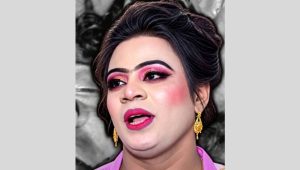
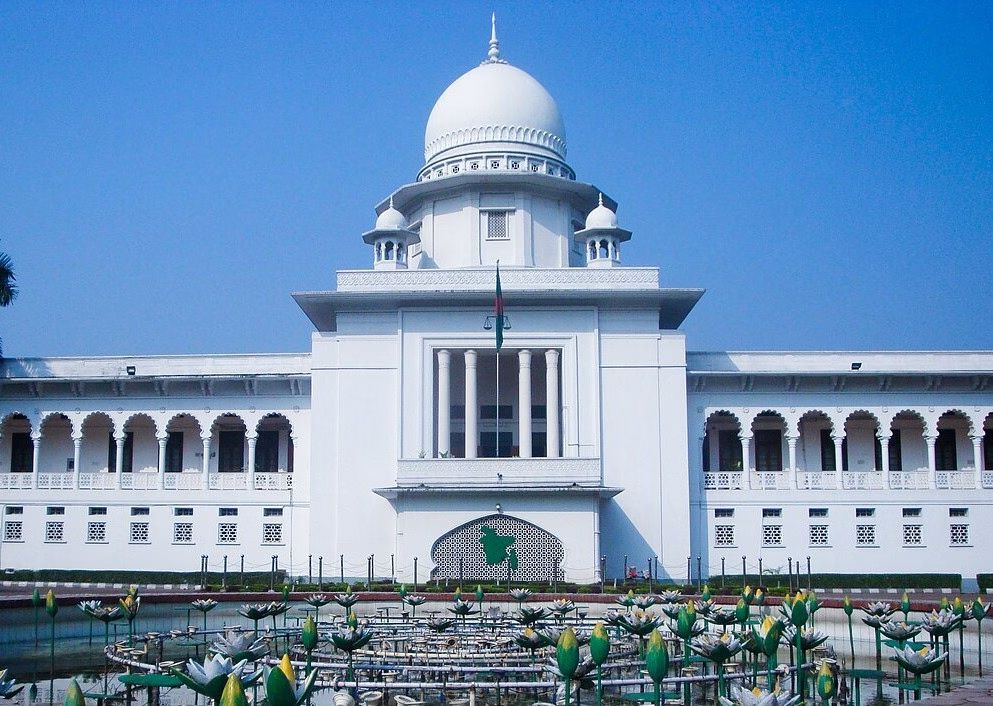
The International Crimes Tribunal-2 today accepted the statement of late Sharif Osman Hadi, convener of Inqilab Moncho, as evidence against Awami League General Secretary Obaidul Quader and six other accused in a case related to crimes against humanity committed during the July uprising.
Prosecutor Faruk Ahmed confirmed the matter to TIMES of Bangladesh.
According to the prosecution, investigating officer Ahmed Naser Uddin Mohammad had recorded Osman Hadi’s statement. Hadi has since passed away. When the investigating officer submitted the statement for acceptance as evidence under legal provisions, the tribunal granted the request.
The tribunal has set 26 April for the next hearing in the case.

Osman Hadi had announced his intention to contest the 13th parliamentary election as an independent candidate from Dhaka-8 constituency. On 12 December, the day after the election and referendum schedule was announced, he was shot in the Box Culvert Road area of Paltan Model Thana in Dhaka.
He died on the night of 18 December while undergoing treatment at Singapore General Hospital.



On 22 January, charges were framed against Obaidul Quader and the six other accused. Besides Quader, the other accused are: Former joint general secretary of the now-banned Awami League AFM Bahauddin Nasim, former deputy minister of information Mohammad Ali Arafat, Jubo League president Sheikh Fazle Shams Parash and its general secretary Mainul Hossain Khan Nikhil, and former president Saddam Hossain and general secretary Sheikh Wali Asif Inan of the banned student organisation Chhatra League.
The prosecution argues that Obaidul Quader, as a powerful minister and the general secretary of Awami League, played a significant role in planning, directing and implementing the genocide that took place in Bangladesh during July-August.
Other party leaders, particularly Bahauddin Nasim and Arafat, were directly involved in facilitating the killings, the prosecution alleged. During that period, alongside police and other forces, Awami League, Jubo League and Chhatra League acted as auxiliary forces and directly participated in attacks, committing murders, torture and maiming with brutal cruelty to suppress the student-public movement.
For these reasons, Obaidul Quader has been made an accused in this case under the doctrine of command responsibility. The other accused are also top leaders of their respective organisations and have been charged under the same principle.
The prosecution claims that the accused gave coordinated instructions, provocations and inciting speeches to suppress the movement during July-August. They planned violence in multiple meetings, calling on activists to take to the streets to build resistance.
They also played roles in armed attacks, brutal crackdowns and media control.
As a result of their actions, killings, attempted killings and widespread violence occurred across the country, which the prosecution considers punishable as crimes against humanity.