



Household waste is piling up openly at least 60 locations along Chattogram city’s main roads and side streets.
Due to irregular waste collection, inadequate monitoring of the city corporation’s cleanliness operations, and negligence by responsible staff, heaps of rubbish accumulate day after day along the roadsides.
This has led to foul odours, environmental pollution, and serious public health risks for local residents.
Open piles of household waste are visible on major streets in areas including Gate No 2, Dampara, Agrabad, Anderkilla, Chawkbazar, Riazuddin Bazaar, New Market, Muradpur, Bahaddarhat, Oxygen intersection, Noyabazar on the Bishwaroad, and Akbarshah.
While this waste is eventually transported to the Arefinagar Dumping Station in Bayezid Bostami and the Anandabazar Dumping Station in Halishahar, its negative impact on the environment and public health occurs long before disposal.

Field visits reveal that the city corporation’s installed dustbins are carrying several times their intended capacity. In many areas, rubbish spreads 10 to 15 metres around the bins. In some locations, waste piles extend beyond the footpaths, occupying one lane of the road, obstructing both pedestrian and vehicular movement.
Rotting vegetables, fish scraps, and household waste produce a strong stench, making the surrounding environment unfit for habitation.
Local residents alleged that irregular collection schedules lead to overflowing dustbins and scattered rubbish on the streets. The situation worsens particularly at night and on public holidays when cleanliness operations are lax, leaving streets in an even worse state by morning.
Mohammad Afsar, a textile trader from Sholoshahar, said, “Every day, I have to pass by these piles of rubbish on my way from home to Gate No 2. The stench is unbearable, and I have to hold my nose and hurry past.”
Saiful Islam from Dampara said, “A large part of the main road is occupied by rubbish. Walking here is extremely uncomfortable.”




According to Chattogram City Corporation (CCC), the city generates around 3,200 tonnes of household waste daily. Of this, CCC collects about 2,200 tonnes, leaving roughly 1,000 tonnes uncollected, much of which eventually ends up in drains and canals.
CCC officials said that 3,198 corporation workers operate across the city in two shifts. They collect waste from households throughout the day and transport it mainly to dumping stations in the evening.
Worker Md Liton told TIMES of Bangladesh, “We do not send the same waste from the same location to the dumping station every day. We load waste onto trucks as directed by our supervisors.”
Public health experts said that open waste piles are not only foul-smelling but also breeding grounds for pathogens. Mosquitoes, flies, and rats multiply in these areas, increasing the risk of disease transmission. Stagnant rainwater further provides ideal conditions for the larvae of dengue and chikungunya-carrying mosquitoes.
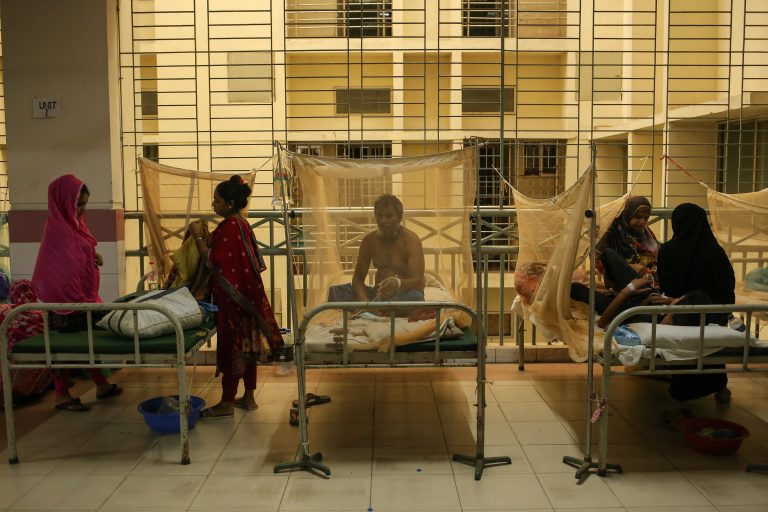
According to the Chattogram Civil Surgeon’s Office, 157 dengue cases were reported in the port city up to May 2026.
Public health specialist Mahfuzur Rahman said, “Long-term exposure to such polluted air increases the risk of bronchitis, asthma, and chronic lung diseases. Contact with waste also raises the incidence of skin diseases and eye infections.
During the monsoon, toxic liquids from waste can spread over roads, potentially causing waterborne diseases such as typhoid, cholera, and jaundice.”
Environmentalist Kazi Ashiqur Rahman Araf said, “Rainwater washes liquids from roadside waste into drains and canals, contaminating soil and water.
Leachate from the rubbish piles seeps deep into the ground, polluting groundwater with heavy metals. Open waste disposal across the city poses serious environmental and public health risks, increasing soil, water, and air pollution.
Immediate measures are required, including sanitary landfills, decentralised waste segregation, and strict regulatory controls.”
City corporation officials said that underground utility lines prevent the construction of modern waste containment facilities below ground. CCC’s Chief Sanitation Officer Commander Ikhtiar Uddin Chowdhury told
TIMES of Bangladesh, “Because of utility pipes, we cannot construct dustbins underground. We are now planning to create an above-ground enclosed system to reduce odour and prevent open waste accumulation.”