


Bangladesh is set to gain a modest competitive advantage in the US market after Washington introduced a revised tariff structure that imposes lower duties on Bangladeshi exports than on several key apparel-exporting rivals.
It is also signalling a shift towards a more structured bilateral trade framework anchored in the Agreement on Reciprocal Trade (ART).
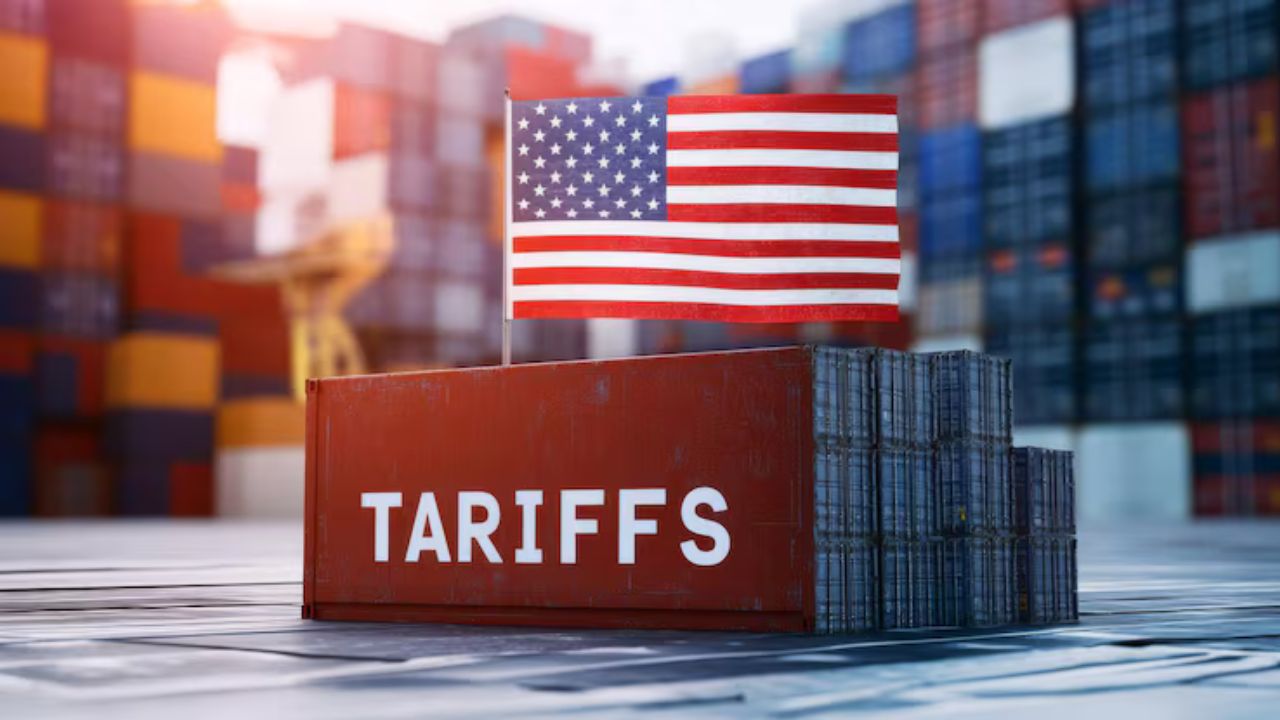
The revised policy, announced by the Office of the United States Trade Representative (USTR) on Friday under Section 301 of the Trade Act of 1974, replaces the temporary 10 per cent tariff imposed under Section 122 and establishes a longer-term tariff regime covering Washington’s 60 largest trading partners, which account for 99.4 per cent of US imports.
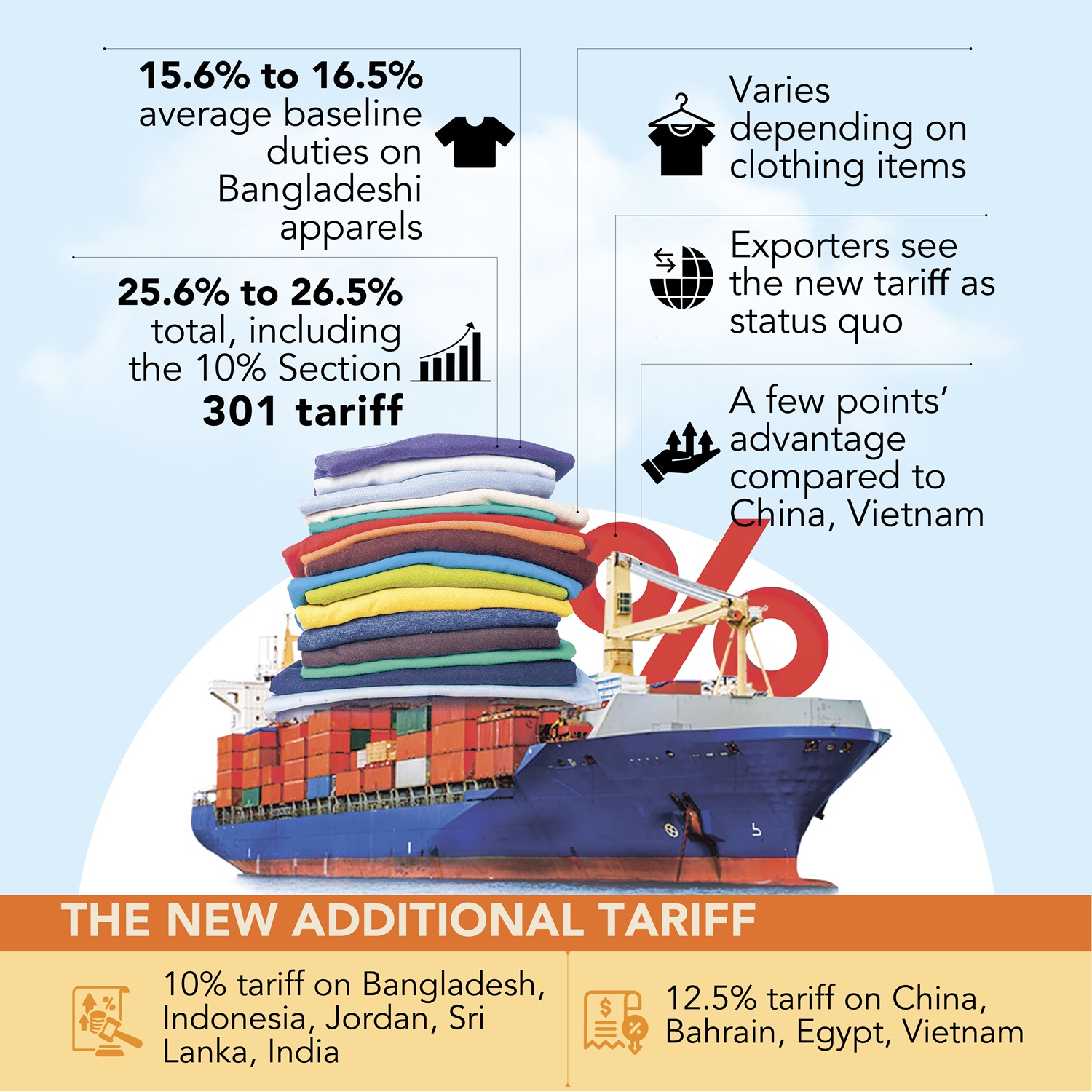
Under the new structure, imports from Bangladesh will face a 10 per cent tariff, while exports from major competitors including China, Vietnam, Thailand, Bahrain and Egypt will be subject to the maximum 12.5 per cent rate.
Argentina, Britain, Cambodia, Canada, Ecuador, El Salvador, Guatemala, Honduras, India, Indonesia, Jordan, Malaysia, Mexico, Pakistan, Sri Lanka and Trinidad and Tobago will also face the 10 per cent tariff. The USTR said these countries either have bans or plans to ban imports produced with forced labour but are not effectively enforcing those restrictions.
Trade analysts estimate the differential gives Bangladesh an effective 2.5 percentage-point pricing advantage over several competing apparel exporters in the US market.

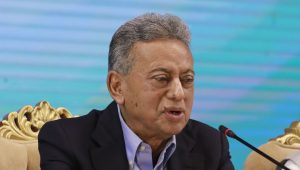
Trade expert Mostafa Abid Khan described the decision as a favourable outcome for Bangladesh.
“Bangladesh receives a 2.5 per cent edge over some of its major competitors after the latest revision,” he said.
Benefit for Bangladesh
Beyond the lower tariff rate, the USTR has indicated it will establish a tariff-rate quota (TRQ) mechanism for Bangladesh, Cambodia, Indonesia and Malaysia once implementation becomes feasible. The initial arrangement will remain in force for three years.
The proposed quota system is designed to encourage participating countries to import US cotton and textile products, add value through domestic manufacturing and export finished products back to the United States, while reducing reliance on supply chains linked to forced labour concerns.



Analysts say the proposed TRQ could provide Bangladesh with an additional opportunity to expand apparel exports if Dhaka secures favourable terms through negotiations.
Khan said Bangladesh should actively pursue discussions with Washington to maximise the benefits.
“The government should now engage proactively with the United States to secure a favourable tariff-rate quota arrangement, which could significantly boost exports of Bangladeshi ready-made garments.”
He said Bangladesh’s placement in the lowest tariff bracket appeared to reflect commitments made under the Agreement on Reciprocal Trade signed with the United States in February.
Bilateral trade deal
Khan said the latest tariff decision carries broader strategic implications beyond the immediate tariff advantage.
According to him, the United States is increasingly linking market access to commitments made under the bilateral Agreement on Reciprocal Trade, indicating that the agreement is likely to become the principal framework governing future commercial relations between Dhaka and Washington.
Bangladesh and the United States signed the ART on February 9. Under the original arrangement, Bangladeshi exports would have faced an additional 19 per cent duty, lifting the overall tariff burden to around 35 per cent, including existing import duties.
The trade landscape changed after the US Supreme Court struck down President Donald Trump’s sweeping tariff measures on February 20. The same day, the administration imposed a temporary flat 10 per cent tariff on imports for 150 days under Section 122.
The new Section 301 framework replaces that temporary measure with a more permanent tariff structure for major US trading partners.
Exporters welcome revised decision
Bangladesh’s apparel exporters welcomed the decision, saying it preserves the country’s competitive position in its largest export market at a time when manufacturers are already battling domestic operational challenges.
Former BGMEA director and Sparrow Group Managing Director Shovon Islam said the revised tariff structure gives Bangladesh a relative advantage over several competing sourcing destinations despite a more challenging global trading environment.
“Although no additional tariff is desirable, this outcome offers some reassurance for our exporters as the industry continues to grapple with prolonged energy shortages, unreliable gas and electricity supplies, rising production costs and extended manufacturing lead times.”
He said Bangladesh’s apparel industry has continued to demonstrate resilience and remains a trusted sourcing destination for global brands despite mounting domestic constraints.
Islam said the latest development also reinforces the need to improve the sector’s long-term competitiveness through stronger energy security, higher productivity, greater value addition and continued investment in sustainability, alongside sustained engagement with the US administration to deepen bilateral trade and economic ties.
He also urged the government to strengthen policy support for manufacturers by ensuring reliable energy supplies and adopting financial measures to help the industry navigate one of its most challenging periods in recent years.
While the revised tariff structure gives Bangladesh a limited but meaningful competitive edge, analysts say the larger test will be whether Dhaka can convert that advantage into lasting market access under an increasingly rules-based bilateral trade relationship centred on the ART.