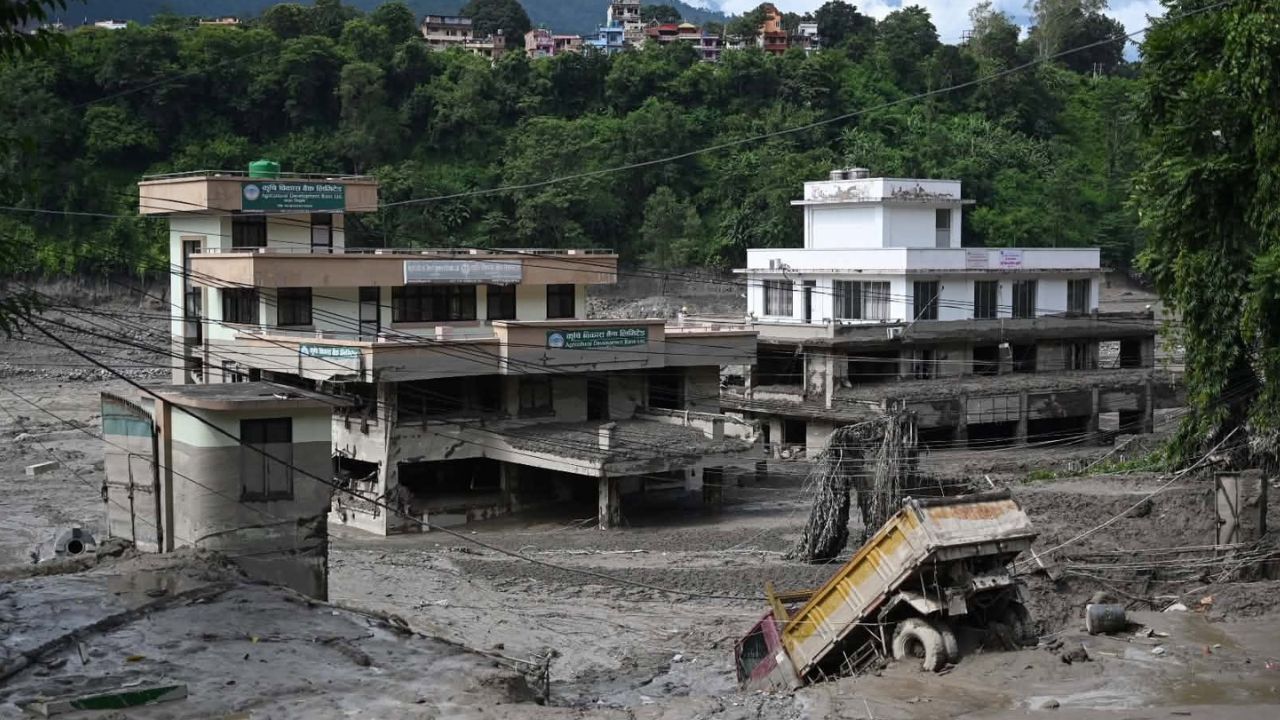



At least 150 people have died after a sudden, massive flash flood and mudslide hit Nepal, washing away entire villages and multiple project sites in a region bordering Tibet.
The disaster struck early on Wednesday in the Rasuwa region, situated just north of the Nepalese capital of Kathmandu. The fast-moving floodwaters also piled mud and sand against a northern Nepalese hydropower plant, causing severe damage.
While Nepalese authorities initially believed that an earthquake occurring at 8:37am local time had triggered the landslide, scientists have corrected this sequence of events, reports AP and BBC.
The US Geological Survey (USGS) has now confirmed that the recorded seismic energy was actually generated by the massive landslide itself, rather than an antecedent earthquake. This massive landslide sent a torrent of mud, debris, and melted snow surging directly into the Bhote Koshi river.
Search and rescue operations are actively underway on both sides of the border. While 12 individuals have been successfully rescued so far, local residents have shared harrowing stories of survival.

One woman recounted the tragedy of watching her family get swept away in front of her, explaining that she and her son only survived by climbing onto a rooftop.
The scale of the devastation is feared to be immense. On the Tibetan side of the border, Chinese state media reports three deaths and 265 people missing. Footage broadcast by CCTV from Tibet shows a powerful wall of water and mud crashing directly into buildings at a border crossing.
Security personnel and tourists missing
The number of missing people continues to climb. Addressing parliament, Nepal’s Foreign Affairs Minister Shishir Khanal initially reported that 26 police personnel, nine armed police officers, and 44 members of the military were missing.




Latest updates confirm that dozens of Nepalese police officers, army personnel, and power workers remain unaccounted for.
Moreover, the Nepal Tourism Board and local authorities are working to locate hundreds of missing tourists and local guides who were known to be in the area, which is highly popular with trekkers and pilgrims.
According to the latest figures from the tourism board, the missing include:
- More than 100 tourists from India
- 54 tourists from the United States
- 33 tourists from the United Kingdom
- More than 100 Nepalese nationals, including local guides
Widespread disruption and rescue obstacles
Powerful floodwaters continue to crash through downstream villages along the Bhote Koshi river, leaving communities on high alert.
Roads, electricity, and telecommunications have been severely disrupted across the region, and the main highway leading to Kathmandu is completely closed.
Contact with many in the area has been entirely lost due to a complete lack of signal. Yee Liang, a Chinese businessman based in Kathmandu, expressed deep concern after losing all contact with seven of his logistics company’s container trucks staffed by Nepalese employees.
On the Tibetan side, Guan Daoxuan shared that he lost contact with his wife on Wednesday morning; she is employed by a Chinese state-run construction company building roads and bridges in Tibet.
Nepal Police spokesman Abhi Narayan Kaphle stated that all security agencies are working in coordination to conduct rescue operations.
However, air-based rescue and inspection efforts have been severely hindered, as strong winds prevented a Nepalese helicopter from reaching the cut-off zone.
Nepal’s Prime Minister Balendra Shah, following an emergency meeting, confirmed that active coordination has begun with medical teams, scouts, and the Red Cross to deliver aid.
Disaster management officials have urged residents along vulnerable riverbanks to remain highly vigilant.
Although the Rasuwa region experienced a glacial lake outburst last year that resulted in 18 deaths, officials indicate that the scale of this week’s disaster far exceeds last year’s calamity.