


Long before Neil Armstrong became the first person to walk on the Moon, he was a teenager building model aeroplanes at his family home in Ohio.
That house, where Armstrong developed his early passion for aviation, has gone on sale for the first time in nearly 40 years, reports AP.
The two-storey home at 601 W Benton St in Wapakoneta has remained largely unchanged over the years. Its future is uncertain, but the current owner hopes whoever purchases the property will preserve its connection to one of the most significant moments in space history.
Inside the house, Armstrong’s childhood bedroom sits at the top of a creaky staircase. As a boy, he used to launch model aeroplanes from the rear window to see how far they could fly.
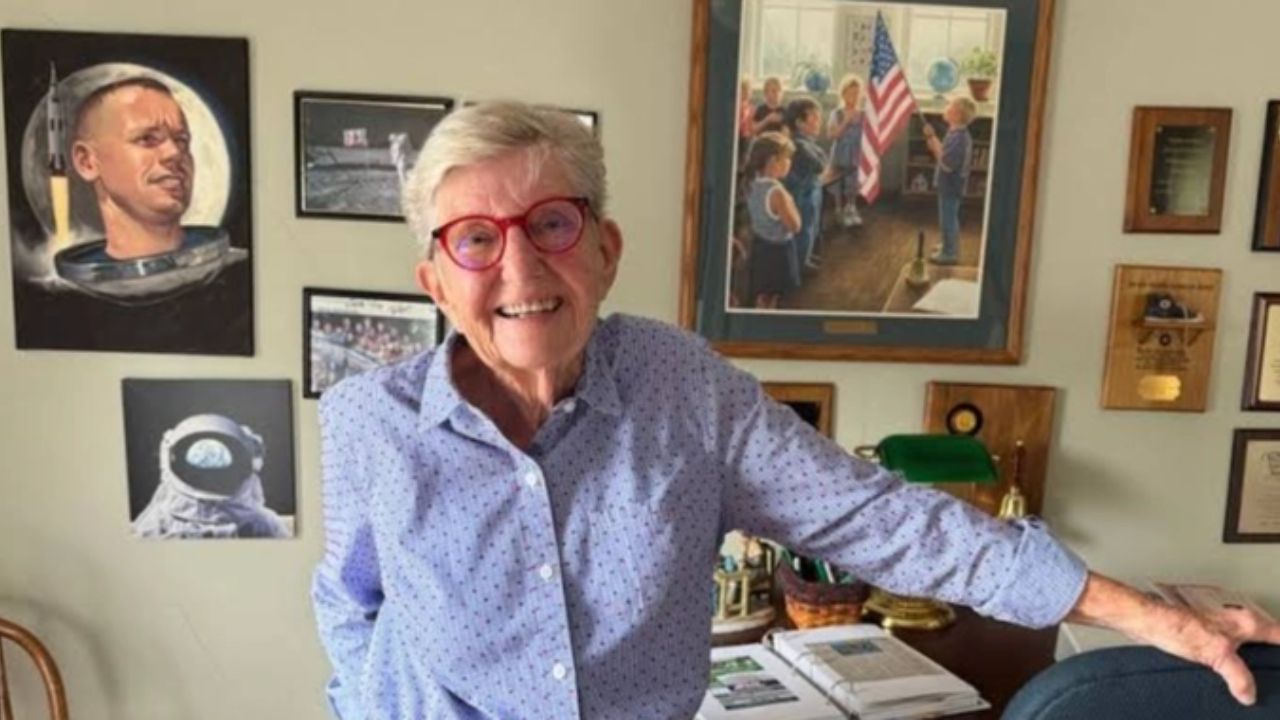
The room now displays photographs signed by astronauts who have visited the house to see where Armstrong’s journey to the Moon began.
Armstrong’s family moved into the house when he was a young teenager. He built model aeroplanes using balsa wood and glue in the dining room and set up a wind tunnel in the basement to test them.
He also rode his bicycle from the house to a nearby airstrip for flying lessons.

At the age of 16, Armstrong made his first solo flight and earned his pilot’s licence. Two decades later, he went into space for the first time. In 1969, he became the first person to walk on the Moon during NASA’s Apollo 11 mission.
After the historic Moon landing, Armstrong taught at the University of Cincinnati.
Astronauts visit Armstrong’s childhood home
The house is occasionally visited by people travelling to Wapakoneta’s Armstrong Air and Space Museum, although it is not open for regular tours.
Karen Mikesell bought the property in 1988. At the time, she did not know Armstrong had once lived there until another teacher informed her.




Mikesell, a former history teacher and school principal, decided to preserve the house as closely as possible to the way the Armstrong family had maintained it.
Over the years, she has welcomed nine astronauts, including Buzz Aldrin, who travelled to the Moon with Armstrong and Michael Collins in 1969.
Mikesell recalled Aldrin visiting Armstrong’s old bedroom several years after Armstrong’s death in 2012.
She has also received a Moon rock and a piece of gold foil that once covered the Apollo 11 command module.
Several astronauts have signed photographs for her with personal messages thanking her for caring for Armstrong’s childhood home.
“You can read books, but you can never have those kinds of experiences that I was able to have because I lived here,” Mikesell said.
A house filled with Armstrong memories
Armstrong’s family bought the house in 1944 after his father’s government job forced the family to move frequently.
Armstrong, the eldest of three children, was born at a farmhouse near Wapakoneta, a city now home to fewer than 10,000 people.
The Benton Street house still looks much as it did from the outside, with its large front porch. The interior layout has also remained largely the same, although some updates have been made.
A garage built by Armstrong and his father using scrap wood still stands in the backyard. A nearby chicken coop, where Armstrong and his friends once held Boy Scout meetings, is no longer there.
His old bedroom is now filled with photographs and paintings related to the Moon landing. A model of the Wright brothers’ first production aeroplane hangs from the ceiling. The aviation pioneers, who were from nearby Dayton, inspired Armstrong.
Mikesell never met Armstrong, who was known for keeping his private life away from public attention. However, she spoke with his parents, siblings and children about the house and its role in his upbringing.
A piece of history on the market
Mikesell, 82, hopes the house can eventually be preserved as part of Armstrong’s legacy.
She would like someone to buy the property and donate it to the Armstrong Air and Space Museum. However, museum spokesperson Logan Rex said the museum does not have enough funds to purchase the house.
The property, listed at $430,000, is not legally protected from changes by future owners.
Mikesell hopes, however, that the next owner will recognise its historical value, whether the house remains a private residence or is transformed into a place where visitors can stay.
“It’s time to let someone else have the opportunity to be as blessed as I’ve been,” she said, while expressing hope that the new owner will care for the house and preserve it as part of history.