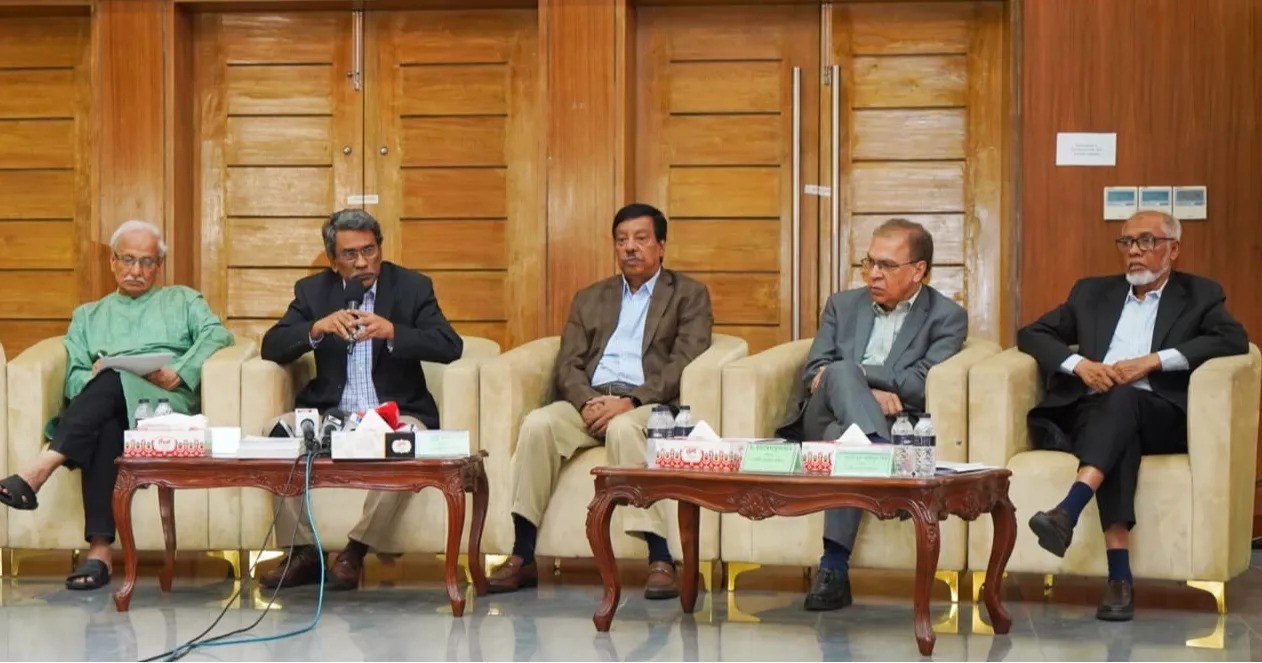

National Consensus Commission (NCC) will not impose decisions independently and will instead develop an execution plan based on the desires of political parties, Commission Vice-Chairman Prof Ali Riaz stated on Thursday.
Prof Riaz made these remarks as the NCC resumed discussions at the Foreign Service Academy with political parties on the implementation of the July Charter.
“The cooperation the commission has received from all political parties has been remarkable,” Prof Riaz noted, adding that nearly all parties had made concessions from their original positions.
He further highlighted, “This spirit of consensus has enabled preliminary agreements on 84 issues. The success of implementing reforms in these areas will determine Bangladesh’s future trajectory.”
The NCC is currently assessing various opinions for the implementation of the July Charter, which is aimed at strengthening democratic processes. Some reforms are expected to be carried out by the interim government, while others will be introduced through elected representatives, according to Prof Riaz. “The commission will consult an expert panel to determine which reforms the interim government can implement immediately, but it will not dictate actions for elected representatives post-elections,” he added.
Before Thursday’s dialogue, the NCC reviewed expert opinions and feedback from political parties regarding the strategies for the charter’s implementation. On September 7, the commission held an extensive meeting with experts to finalise the charter and assess execution methods. Informal discussions with political parties and alliances also preceded the formal session.