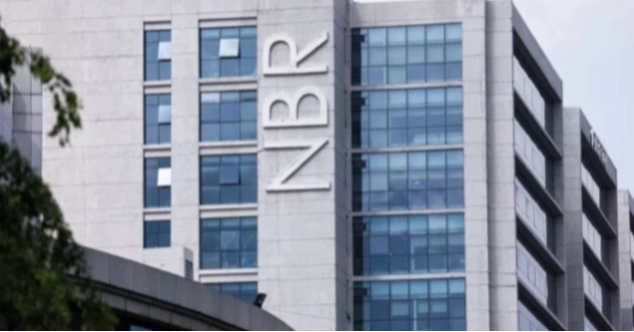

Farid Uddin, a member of the advisory committee for NBR reforms, expressed serious concerns at a roundtable on Saturday that their recommendations were not properly reflected in the Ordinance splitting the National Board of Revenue (NBR).
He personally feels there might have been “hatred” in splitting the board to overhaul the country’s revenue collection.
“The idea of dividing the NBR into Revenue Policy and Revenue Management was introduced by our committee, but the actual implementation is far from what we envisioned,” Farid Uddin said.
“If this reform is carried out out of ‘hatred’ following the protests by NBR officials or by mistake, it will create a ‘disastrous situation’ for the nation,” he said at a roundtable on “NBR Reform – Effective Revenue Policy and Revenue Management System in Bangladesh,” organised by the Metropolitan Chamber of Commerce and Industry (MCCI), Dhaka, and Policy Exchange Bangladesh in the capital.

In May 2025, the government issued an ordinance that dissolved the NBR and replaced it with two new entities. This move sparked protests from NBR employees who demanded that experienced officers from the BCS Taxation and BCS Customs and Excise cadres be appointed to leadership roles, rather than only officers from the administration cadre.
Due to these protests, the government withdrew the ordinance and went for amendments, including provisions for appointing experienced officials. However, Farid Uddin said that several of the committee’s recommendations were still not included in the final ordinance.




“I have told the government that if this is done out of hatred or by mistake, it will create a catastrophic situation for the nation,” he added.
Farid Uddin presented a document outlining the missing recommendations and urged the business community to engage in the discussion.
“You should read it and give your opinions to the government,” he said.
Former MCCI President Nihad Kabir raised concerns about the speed and focus of the NBR reforms.
“While the NBR reform committee’s work has been excellent, we are not seeing the needed government attention or momentum we hoped for,” Kabir said. She pointed out that past experiences made her cautious about the implementation of the reform.
Policy Exchange Bangladesh Chairman M Masrur Reaz agreed that the committee’s initiatives, based on stakeholders’ consultation, were fantastic, but a lack of will to implement their recommendations is being observed in the government. The economist questioned the effectiveness of splitting the NBR into two departments, saying, “If this separation is ineffective, businesses will face ‘two-step hassles.’”
MCCI President Kamran T Rahman stressed that Bangladesh’s tax-to-GDP ratio remains one of the lowest in Asia, and reforming the tax system is critical. He called for simplifying the tax system and making it more transparent.
The roundtable concluded with a call for greater collaboration between the government and the private sector to ensure the reform process leads to a modern, efficient, and transparent revenue system.