


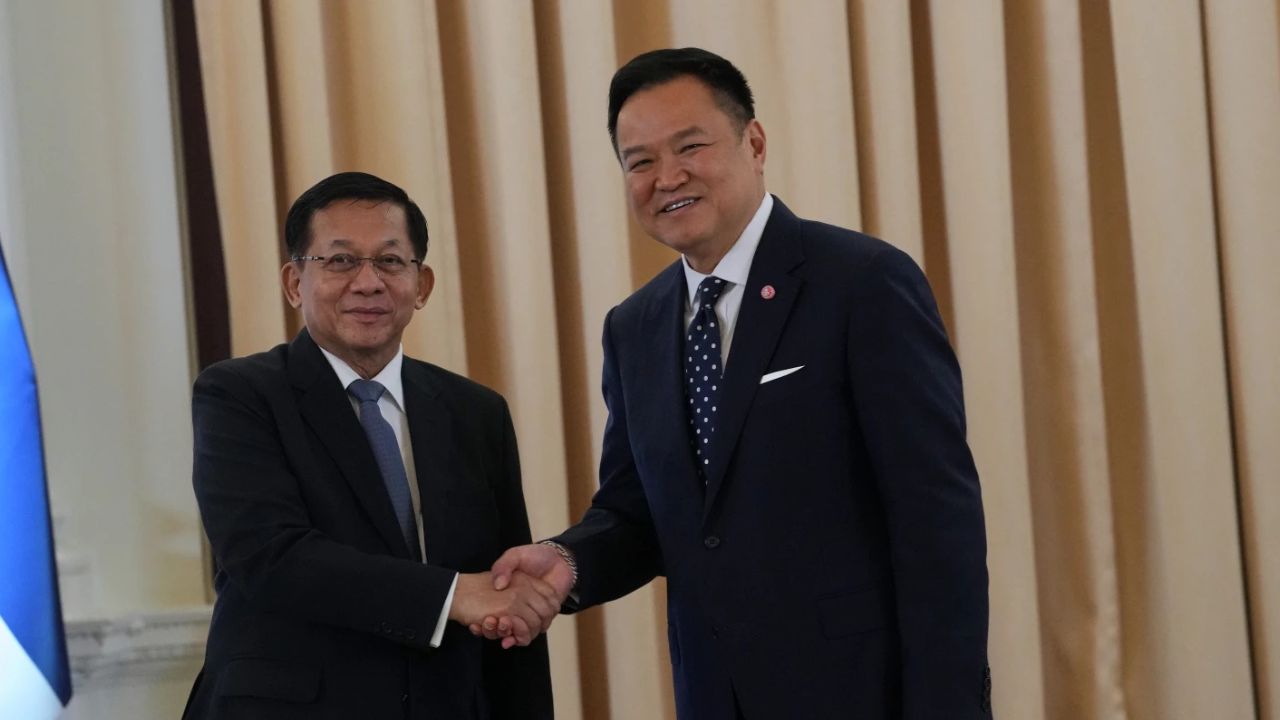
Myanmar’s military-installed President Min Aung Hlaing arrived in Thailand on Thursday for a two-day state visit, part of a wider push for international acceptance more than five years after he seized power from an elected civilian government, reports AP.
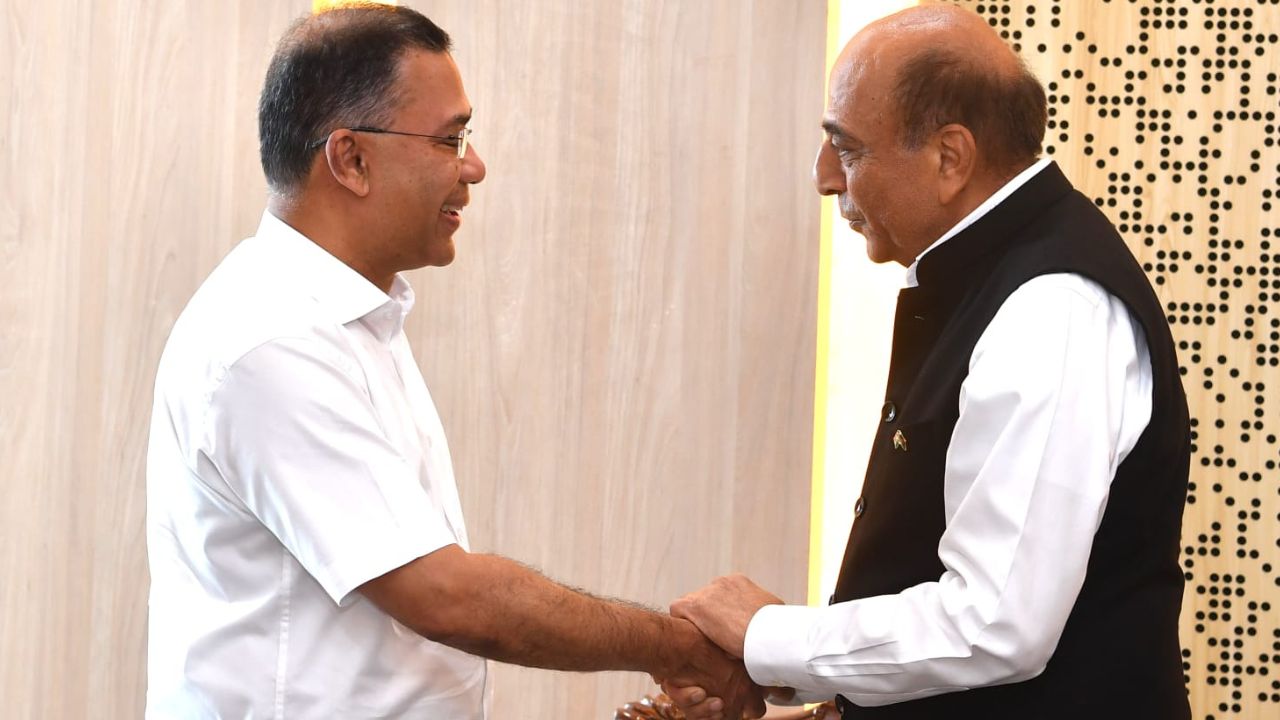
The trip brought Min Aung Hlaing and members of his cabinet to Government House for talks with Thai Prime Minister Anutin Charnvirakul, where officials signed memorandums of understanding covering Myanmar’s migrant workforce, water quality in rivers shared by the two nations, and space technology for Earth observation.
Addressing Anutin, Min Aung Hlaing insisted his administration was restoring order and guiding the country towards democratic rule, telling him Myanmar had returned to that path and that his government was now focused on stability, peace and national reconciliation.
The two leaders later addressed a Thailand-Myanmar Business Forum. Anutin said the countries were ready to build a new phase of economic cooperation founded on mutual trust, while Min Aung Hlaing urged investors to back sectors including energy, agriculture, manufacturing, healthcare and technology with confidence.
Rights groups condemned the visit. Justice For Myanmar said it granted false legitimacy to Min Aung Hlaing and the generals who back him.
The visit follows Min Aung Hlaing’s swearing-in as president in April, after an election staged in phases across December and January that critics dismissed as a sham intended to entrench military control while presenting a veneer of civilian government.
He ousted Aung San Suu Kyi’s administration in February 2021 while serving as army chief, a move that plunged relations with much of the world into crisis.
Western governments have sanctioned and shunned the general and his inner circle over the takeover and the deadly crackdown on protesters that followed, which ignited an armed uprising and a civil war that continues to rage.
The visit to Bangkok is among his most prominent diplomatic outings yet, following earlier trips to China, India and Laos, and forms part of efforts to rebuild standing within the Association of Southeast Asian Nations after years of exclusion from top-level meetings over his failure to honour a 2021 regional peace plan.
Even as he seeks to soften his image abroad, Myanmar’s armed forces remain locked in fighting against pro-democracy fighters and ethnic armed organisations demanding greater autonomy.
The Assistance Association for Political Prisoners, which tracks arrests and casualties tied to the conflict, said more than 8,200 civilians had been killed and 31,645 detained by security forces as of Wednesday.
A Fortify Rights specialist, Chit Seng, argued last month that swapping a uniform for a presidential sash does not change the character of what she called a brutal regime.
Only around a dozen protesters gathered outside the United Nations’ regional office in Bangkok to oppose the visit, voicing support for resistance forces and calling for Min Aung Hlaing’s downfall.
In an apparent gesture to critics, the junta this week allowed a Red Cross representative to visit Suu Kyi, 81, marking the first known contact with an independent international humanitarian body since her detention.
The organisation confirmed the visit but gave no details of her condition. She was originally jailed for 33 years in late 2022 on charges her supporters call fabricated, before being moved to house arrest in April with her term cut to 18 years, of which more than 13 remain.
The UN and Western governments have repeatedly demanded her release. Anutin, speaking in Indonesia on Tuesday, argued a stable Myanmar was vital to ASEAN unity, defending Bangkok’s policy of calibrated engagement.
Fortify Rights’ Thanida Piyachot countered that legitimising Min Aung Hlaing sent the wrong signal to Myanmar’s people, urging Thailand and ASEAN to abandon non-interference and champion human rights instead.


