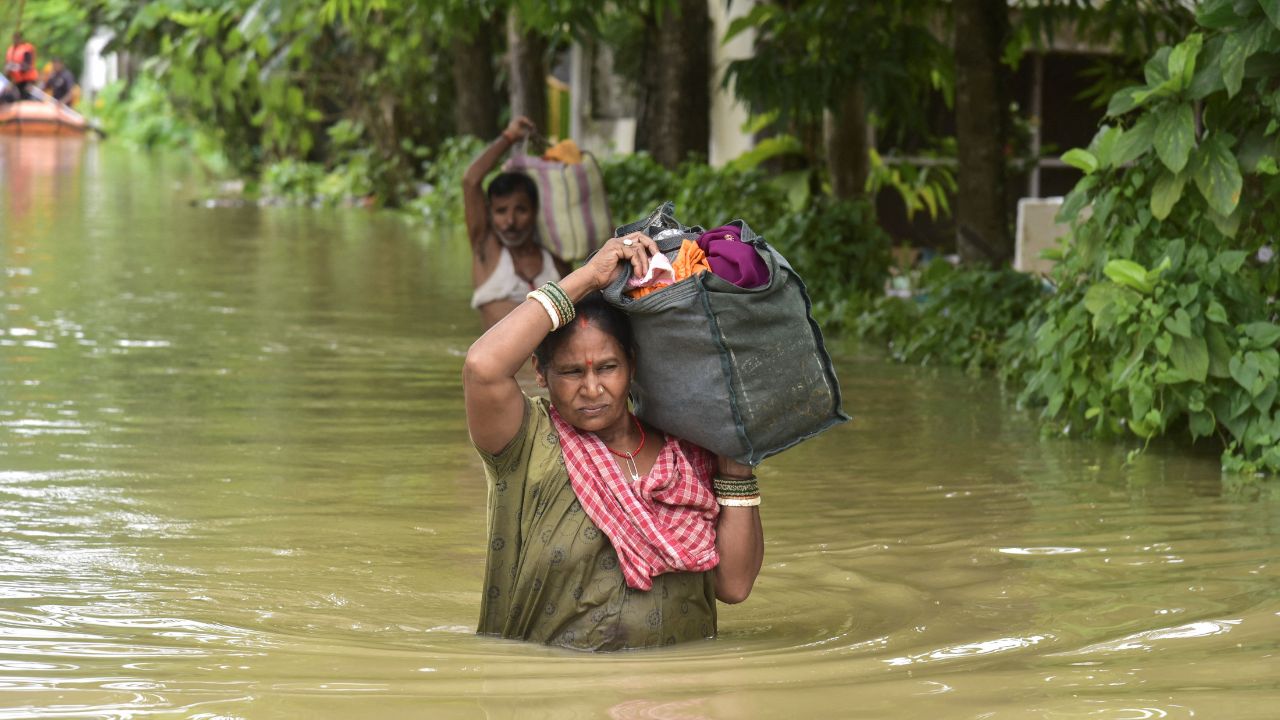



Floods and landslides triggered by severe monsoon rains have killed more than 100 people across India since July, according to official data, with thousands forced to leave their homes as heavy downpours continue to batter several states, says Al Jazeera.
The annual monsoon season, which provides vital rainfall for farmers across the region, has caused widespread destruction this year, with scientists warning that climate change is making extreme weather events in South Asia increasingly dangerous and unpredictable.
The death toll has been recorded across multiple Indian states, with Assam emerging as the worst-hit region. At least 87 people have died there, including 47 in Sivasagar district alone, according to official figures.
In Kerala, at least 15 people have been killed and seven remain missing following days of intense rainfall, Chief Minister VD Satheesan said. More than 10,000 people have taken refuge in over 300 relief camps across the southern state as authorities respond to the crisis.

A report by India’s public broadcaster said the Indian-administered region of Jammu and Kashmir has recorded at least 31 deaths following bursts of heavy rainfall.
In Jharkhand, lightning strikes have claimed at least 14 lives, most of them farm workers who were caught in open fields during storms. The state recorded more than 200 lightning-related deaths in 2025, with most attributed to “lightning associated with thunderstorms”, according to the India Meteorological Department in January.




Monsoon-linked deaths are a recurring tragedy in India following the country’s long summer months, when many regions experience severe water shortages and drought before the rains arrive.
The impact of the extreme weather has also spread beyond India’s borders. In Sri Lanka, at least eight people have died and around 12,000 have been displaced due to monsoon flooding.
The flooding came as parts of eastern Sri Lanka were facing a severe drought, forcing authorities to deliver drinking water to affected communities through tanker trucks.
Sri Lanka’s government said last month that the unusual weather conditions were linked to this year’s El Nino phenomenon, a climate pattern caused by warmer-than-usual surface temperatures in the central and eastern equatorial Pacific Ocean.
El Nino occurs when normal east-to-west trade winds weaken or reverse direction, allowing warm water to move eastwards and disrupting weather systems and rainfall patterns around the world.
Scientists have warned that such climate disruptions are making seasonal weather patterns less predictable, increasing the risks posed by floods, landslides and droughts across South Asia.