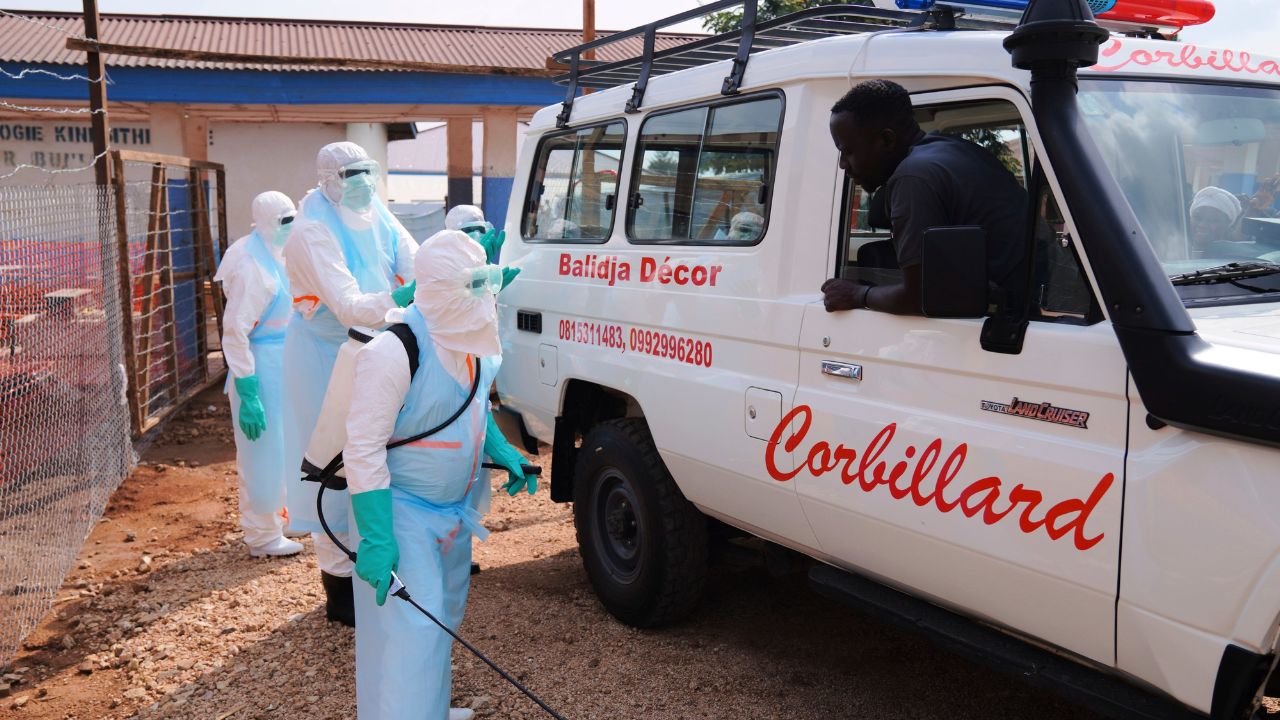



More than 1,700 people have died in eastern Democratic Republic of Congo as an Ebola outbreak spreads at an unprecedented pace, with health authorities struggling to contain transmission and still unable to identify the first person infected, according to official data.
The latest government update showed that 3,802 cases had been recorded by Tuesday, including 1,707 deaths. The outbreak, centred largely in Ituri province, has become the second-largest Ebola outbreak ever recorded, according to Africa Centres for Disease Control and Prevention (Africa CDC) Director-General Jean Kaseya, reports AP.
Kaseya, speaking during his second visit to Bunia, a town near the outbreak’s epicentre, said it remained unclear when infections would peak. He warned that the situation was worsening, with 60 to 70 per cent of new cases linked to community transmission rather than cases identified through contact tracing.
“Contact tracing is not working,” Kaseya said. “We don’t like the trajectory of this outbreak, and it’s already the second largest outbreak (ever) in the world.” World Health Organization (WHO) Director-General Tedros Adhanom Ghebreyesus was expected to arrive in Kinshasa on Tuesday before travelling to Bunia later in the week.

The outbreak was declared on May 15 and has been linked to the Bundibugyo strain of Ebola, for which there are currently no approved vaccines or treatments.
Africa CDC said the response has been hindered by delays in tracing contacts, difficulties reaching affected communities, mistrust among residents, and violence involving armed groups and some local populations.
Two clinical trials testing post-exposure prophylaxis drugs are under way in Ituri, while two separate vaccine trials are being conducted in the United Kingdom and Canada.



Remote province bears brunt of outbreak
The outbreak is mainly concentrated in Ituri, a remote eastern province that accounts for nearly 90 per cent of reported cases. However, infections have also been confirmed in five other provinces, including Kisangani, one of Congo’s largest cities.
Neighbouring Uganda declared itself free of Ebola after its last patient was discharged in mid-June.
A major challenge for health authorities is the failure to locate patient zero. The spread of the virus has been complicated by displacement caused by armed conflict and illegal mining activities, making it difficult to track thousands of people who may have come into contact with infected individuals.
The WHO said on Tuesday that it was monitoring more than 17,000 possible contacts, with almost 80 per cent receiving daily follow-up.
Mohamed Janabi, WHO regional director for Africa, said the agency was now testing more than 2,000 samples a day, a major increase from the previous capacity of 20 samples daily.
Health workers demand support
The response has also faced growing pressure from healthcare workers. On Monday, medical staff in Mongbwalu, one of the worst-affected towns, issued a warning over unpaid wages, saying they would escalate their action if their demands were not addressed within 24 hours.
Earlier, healthcare workers in Bunia went on strike over unpaid salaries and unsafe working conditions. The WHO said more than 100 health workers have been infected since the outbreak began.
The current outbreak has killed people at a faster rate than any previous Ebola outbreak, including the 2014-2016 epidemic in West Africa, which recorded around 28,000 cases and more than 11,000 deaths. That outbreak took roughly eight months to reach 1,000 fatalities.
Efforts to contain the disease in eastern Congo have been further complicated by a shortage of funding, attacks on health facilities, ongoing conflict and widespread mistrust among communities.
Meanwhile, enrolment has begun in a closely watched study examining two potential Ebola treatments in Ituri province, as authorities search for new ways to slow the rapidly expanding outbreak.