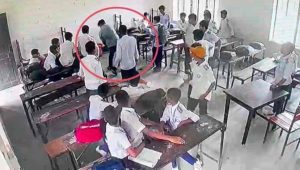



Despite repeated warnings from the highest levels of government, incidents of mob violence continue across the country, raising concerns among rights groups, legal experts and sections of the public.
Analysts say that unless laws are strictly enforced and accountability ensured, the growing culture of collective vigilantism — commonly described as “mob culture” — may become further entrenched.
The new government, which took office on 17 February, pledged to restore order and strengthen the rule of law. However, recent incidents in several districts, as well as controversies within key financial institutions, have kept the issue in sharp focus.
Human rights advocates argue that weaknesses in law enforcement during the interim administration contributed to a rise in mob violence, a trend they say is not uncommon in post-uprising political transitions.
Nasir Uddin Elan, director of the rights organisation Odhikar, said that after mass political upheaval, a temporary surge in vigilante-style actions can occur if the criminal justice system appears weak. He stressed that strengthening the criminal justice framework and ensuring objective investigations into every incident are essential to restoring public confidence.
Another rights activist, lawyer Nur Khan Liton, said previous administration had shown shortcomings in visibly confronting mob violence. With an elected government now in office, he argued, effective and decisive measures are urgently required.

Shihab Uddin Khan, a Supreme Court lawyer, said strict enforcement of existing laws is crucial. He suggested that the government could consider temporary regulations or even new legislation if necessary.
He also emphasised administrative accountability, proposing that local police and civil authorities be held answerable when mob violence occurs in their jurisdictions. Public awareness campaigns led by the government could also help discourage collective violence, he added.
Home Minister Salahuddin Ahmed has publicly stated that “mob culture” will be completely eliminated. Inspector General of Police Ali Hossain Fakir instructed all 64 district police superintendents to take firm action against those who take the law into their own hands, warning that such actions would not be tolerated.




Despite these directives, multiple incidents have continued to surface.
According to a February report by Human Rights Support Society (HRSS), at least 19 people were killed and 30 injured in 42 mob-related incidents across the country. The reported triggers included allegations of theft, robbery, snatching, disputes, dominance struggles and accusations of religious insult.
The same report stated that in 28 separate attacks during February, at least 63 journalists faced harassment or abuse. At least 55 were injured, one was assaulted, four were threatened, and one journalist was detained.
Meanwhile, the January report from Manabadhikar Sangskriti Foundation (MSF) documented 28 mob lynching incidents resulting in 21 deaths. In comparison, December saw 24 such incidents with 10 fatalities. The foundation also reported an increase in unidentified bodies during January.
In Rupganj, Narayanganj, three women accused of theft were publicly assaulted. Videos circulating on social media showed their hair being cut and the women tied to a tree. Police officials said the women denied the allegations and claimed they had gone to the house seeking work.
In Puthia, Rajshahi, villagers detained eight individuals on suspicion of robbery and subjected them to a beating, resulting in one death. A pickup van allegedly used by the suspects was set on fire during the incident, police said.
Similar episodes have also been reported in other districts, prompting broader concerns about public safety and legal order.
On 28 February, the body of Afra Ivnath Khan Ikra was recovered from her residence in the Mirpur DOHS area of the capital. Following her death, actor Zaher Alvi claimed he had not returned to Bangladesh from Nepal due to fears linked to mob-related threats. The incident has drawn attention within cultural circles and on social media, though authorities have not publicly linked it to any mob activity.
Allegations of mob-like pressure tactics have also emerged within major financial institutions.
On 25 February, unrest was reported at Bangladesh Bank after a government notification cancelled Governor Ahsan H Mansur’s contract and appointed Mostaqur Rahman as the new governor. Although the outgoing governor had already left his office before the official notification, some officials reportedly became agitated after the announcement and allegedly pressured an adviser to leave the premises.
Earlier, at the state-owned Sonali Bank, officials affiliated with an internal group reportedly entered the managing director’s office and pressed for the transfer and posting of six deputy general managers. Some banking officials have described the incident as resembling mob behaviour.
Political analysts say that transitional political periods often expose institutional weaknesses. Since assuming office on February 17, 2026, the new government has pledged to reassert the rule of law.
However, experts argue that visible prosecution of perpetrators, administrative accountability and consistent law enforcement will be key indicators of whether mob violence can be effectively curbed.
Without credible and timely justice, rights groups warn, public trust in formal legal mechanisms may erode further — potentially fuelling more incidents of collective vigilantism in the months ahead.