


Minister for Shipping, Road Transport and Bridges, and Railways Shaikh Rabiul Alam has directed all relevant ministries and agencies to take immediate measures to resolve ongoing complications regarding visas, transits, and crew changes for Bangladeshi seafarers in various countries, including the United Arab Emirates (UAE).
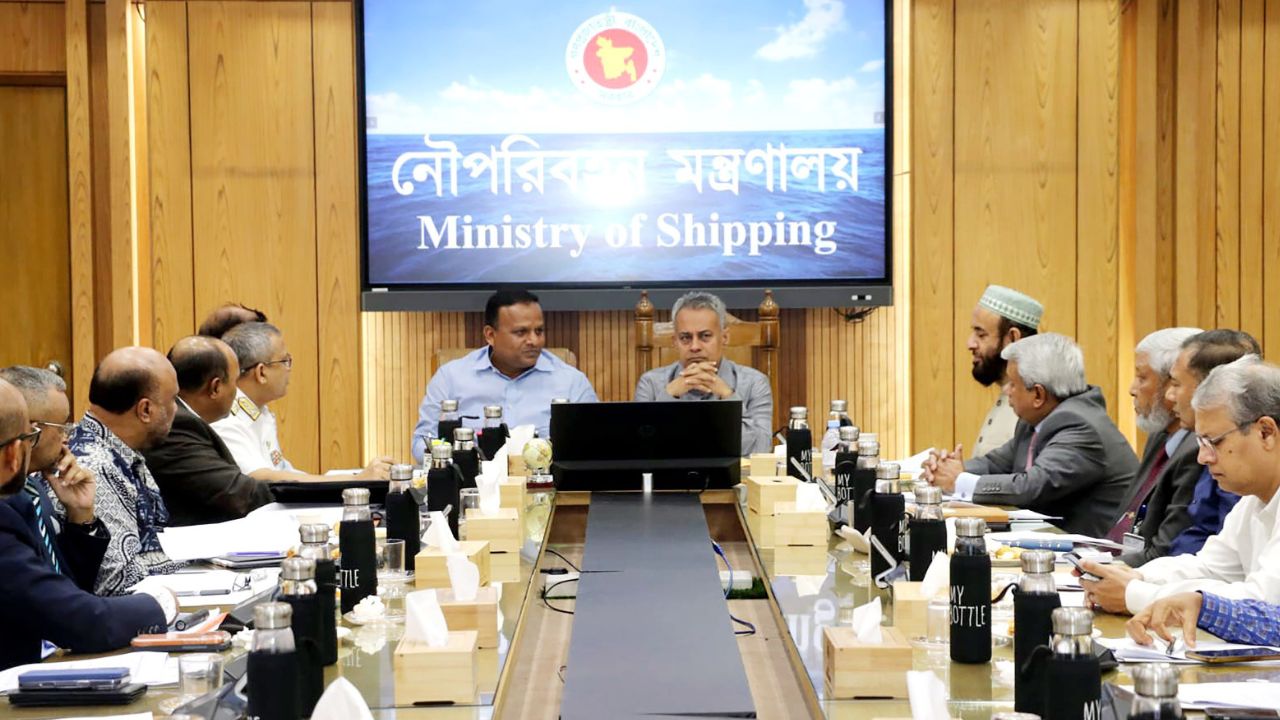
According to a press release issued by the respective ministry, the first meeting of the National Maritime Council held at the Ministry of Shipping’s conference room on Tuesday.
Presiding over the meeting, Rabiul emphasised that expanding employment opportunities for Bangladeshi sailors in the international shipping sector and ensuring their seamless movement is a matter of national interest.
He suggested forming a committee, if necessary, to strengthen diplomatic communication and inter-ministerial coordination with the countries concerned.

The meeting was attended by State Minister for Shipping and the Bridges Division, Md Razib Ahsan.
Detailed discussions were held regarding the difficulties faced by Bangladeshi sailors in obtaining transit visas, crew change visas, shore passes, and entry clearances in the UAE.
It was noted that although Bangladesh is a major supplier of seafarers globally, these recent complications are creating barriers to their recruitment and employment on international vessels.




To address this, the council stressed the importance of intensifying diplomatic efforts with UAE authorities through the Bangladesh Embassy in Abu Dhabi and the Bangladesh Consulate in Dubai.
Beyond visa issues, the council reviewed preparations for the 2028 IMO Member State Audit Scheme (IMSAS) and the progress in resolving issues identified during the 2017 audit.
The meeting also focused on formulating an integrated national preparation plan, implementing the Hong Kong Convention, and developing an international-standard ship recycling industry.
A roadmap for establishing a Treatment, Storage and Disposal Facility (TSDF) and related policy matters were also discussed.
To align with the International Maritime Organization’s (IMO) Net Zero Framework, the minister highlighted the need for a national database on ship fuel consumption, a carbon emission baseline, and a Bunker Fuel Monitoring Framework.
Furthermore, the council discussed adhering to international standards for managing dangerous goods at sea, land, and airports, implementing the IMDG Code, and integrating a Dangerous Goods Validation Module into the ASYCUDA World System.
The meeting concluded with a call for an integrated Maritime Policy to ensure the long-term development of the sector.
This policy aims to provide comprehensive guidance on enhancing maritime security, implementing international conventions, developing the Blue Economy, modernising port management, and ensuring sustainable growth in the maritime industry.
Rabiul urged effective coordination between relevant ministries, departments, and agencies to ensure the swift implementation of the decisions reached during the session.