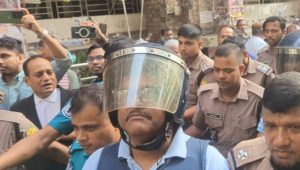
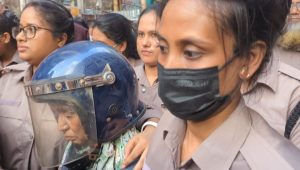
Six convicted militants who escaped from prison during the July–August 2024 upheaval remain at large, while 18 firearms looted from damaged prisons have yet to be recovered. At the same time, nearly 200 inmates held on charges linked to militancy have been released on bail over the past eight months, with no updated information available on their whereabouts, according to official sources.
These developments have raised renewed concerns among security analysts, despite repeated assurances from senior government officials and law enforcement agencies that militancy has no presence in Bangladesh.
Home Affairs Adviser Jahangir Alam Chowdhury has stated on multiple occasions that there is no scope for militancy in the country. Similarly, Additional Inspector General Md Rezaul Karim, who took charge of the Anti-Terrorism Unit (ATU) in late September, said there was no militant activity in Bangladesh.
Over the past one and a half years, no major anti-militancy operations have been publicly reported by the ATU or by the Counter Terrorism and Transnational Crime (CTTC) unit of the Dhaka Metropolitan Police (DMP).
Amid what law enforcement officials describe as weakened monitoring and intelligence coordination, an explosion at the Ummul Qura International Madrasa in Hasnabad, Keraniganj, on the outskirts of Dhaka on Friday drew renewed attention to militant threats.
Following the blast, the madrasa’s director, Sheikh Al Amin, 32, went into hiding. Police say he faces multiple cases over alleged links to the banned militant outfit New Jamaatul Mujahideen Bangladesh (New JMB). He had previously been arrested several times and had served prison sentences. Police later described the incident as an indication of possible militant activity.

Analysts warn against complacency
ANM Muniruzzaman, president of the Bangladesh Institute of Peace and Security Studies (BIPSS), told TIMES of Bangladesh the militancy problem in Bangladesh had not been resolved and that the challenge had grown more complex.
He said many militants who escaped from prison had not been rearrested and that a significant number of looted weapons remained unrecovered. He warned against what he described as complacency regarding militancy, noting that the issue had remained dormant for some time.
Muniruzzaman, a retired major general, said that law and order had further deteriorated since 5 August 2024 and stressed the need to address gaps in security management. He called for stricter surveillance by specialised law enforcement units.



Official monitoring claims
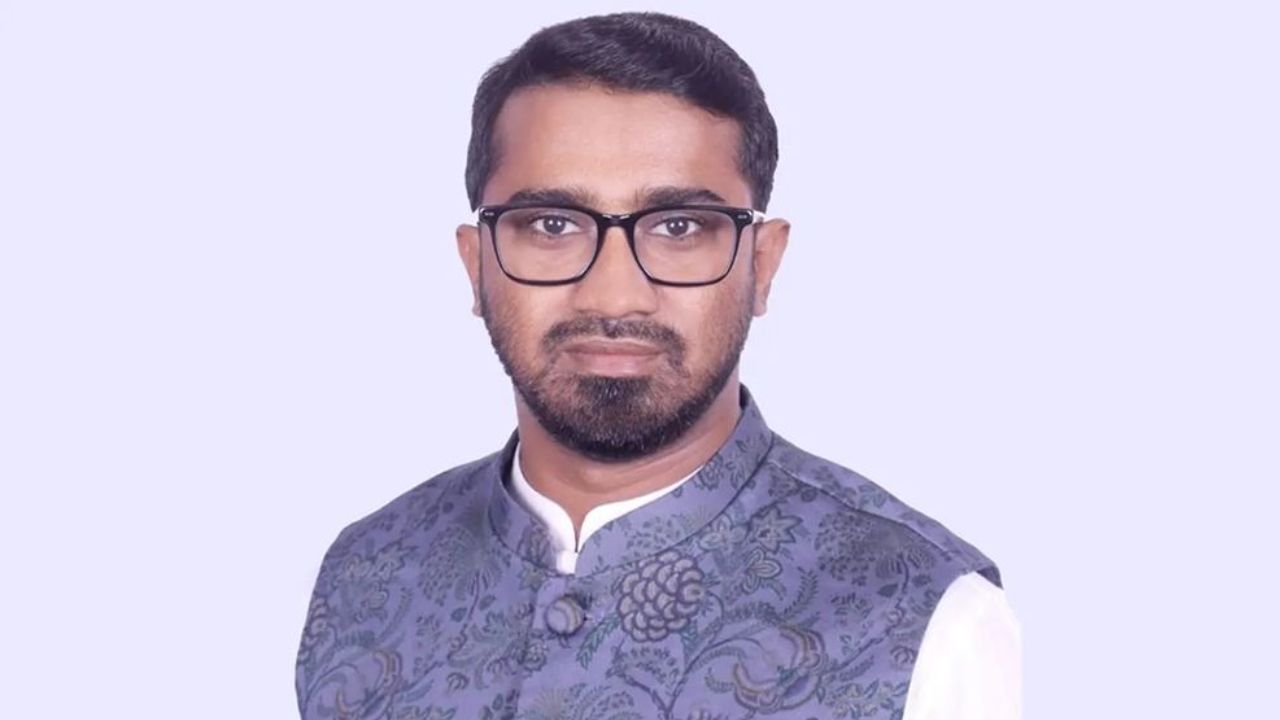
ATU chief and an additional IGP, Md Rezaul Karim, said that escaped convicts were under close monitoring and that law enforcement agencies were also keeping track of individuals released on bail in militancy-related cases. He reiterated that there was no place for militancy in Bangladesh.
CTTC chief Masud Karim said efforts were underway to arrest fugitives accused of militant involvement and to collect updated intelligence on their movements.
Mass bail releases after August 2024
According to data from the courts and the Prison Directorate, 346 inmates were released on bail in a short period following 5 August 2024. This group includes 12 top-listed criminals, eight convicts in the high-profile ten-truck arms haul case, and members of at least ten different organisations.
In the first eight months following the political transition, 148 members of the banned Jamaatul Mujahideen Bangladesh (JMB) were released on bail in cases filed over alleged militant involvement.
Police say those released include individuals previously listed as members of outlawed extremist groups such as Harkat-ul-Jihad-al-Islami, Ansarullah Bangla Team, Jama’atul Ansar Fil Hindal Sharqiya, Ansar Al Islam, Imam Mahmud’s Kafela, Hizb ut-Tahrir, Hamza Brigade, the Kuki-Chin National Front (KNF), and Allah’r Dal.
One notable case involves Jasim Uddin Rahmani, who was convicted and sentenced to five years’ imprisonment in the murder of blogger Rajib Haider and was accused of leading Ansarullah Bangla Team. He was released on bail after 5 August and later claimed that Ansarullah Bangla Team had never existed.
Prison damage and escapes during the uprising
According to Assistant Inspector General (Development) of Prisons Md Jannatul Farhad, 17 of the country’s 68 prisons were damaged during the July–August 2024 uprising, six of them extensively. Six criminal cases were filed at police stations linked to the affected prisons.
A total of 2,232 inmates escaped from five prisons during the unrest, including 88 prisoners sentenced to death. Among those still unaccounted for are more than 700 inmates, including six convicted militants sentenced to death or long prison terms.
During the prison attacks, 85 firearms were looted. While 67 have since been recovered, 18 firearms and a large quantity of ammunition remain missing.
Scale of the prison breaks
The largest escape took place at Narsingdi prison, where 826 inmates fled. In Sherpur, attackers broke through the main gate, vandalised the facility, looted property and set parts of the prison on fire, allowing 518 inmates to escape.
In Satkhira, hundreds of people reportedly scaled prison walls, broke locks on cell doors and freed 596 inmates. In Kushtia, 105 inmates escaped, while 209 high-risk prisoners fled from Kashimpur High Security Prison.
Jamalpur prison witnessed violent unrest but no successful escape. Inmates reportedly split into two factions, took 13 prison guards hostage and attempted to flee after breaking internal gates. Security forces opened fire to regain control, killing six inmates and injuring 19 people, including prison officials.
According to the Prison Directorate, many of the escaped inmates face charges involving robbery, murder, arms trafficking, drug offences, rape, violence against women and terrorism-related crimes, including convictions and allegations of militant activity.
In a press briefing on 17 September last year, Prison Directorate Director General Brigadier General Syed Mohammad Motaher Hossain said that of the approximately 2,200 inmates who escaped during the unrest, 1,500 had been rearrested, while about 700 remained at large.