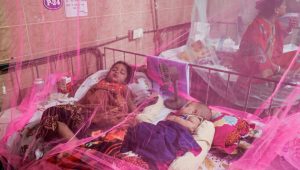
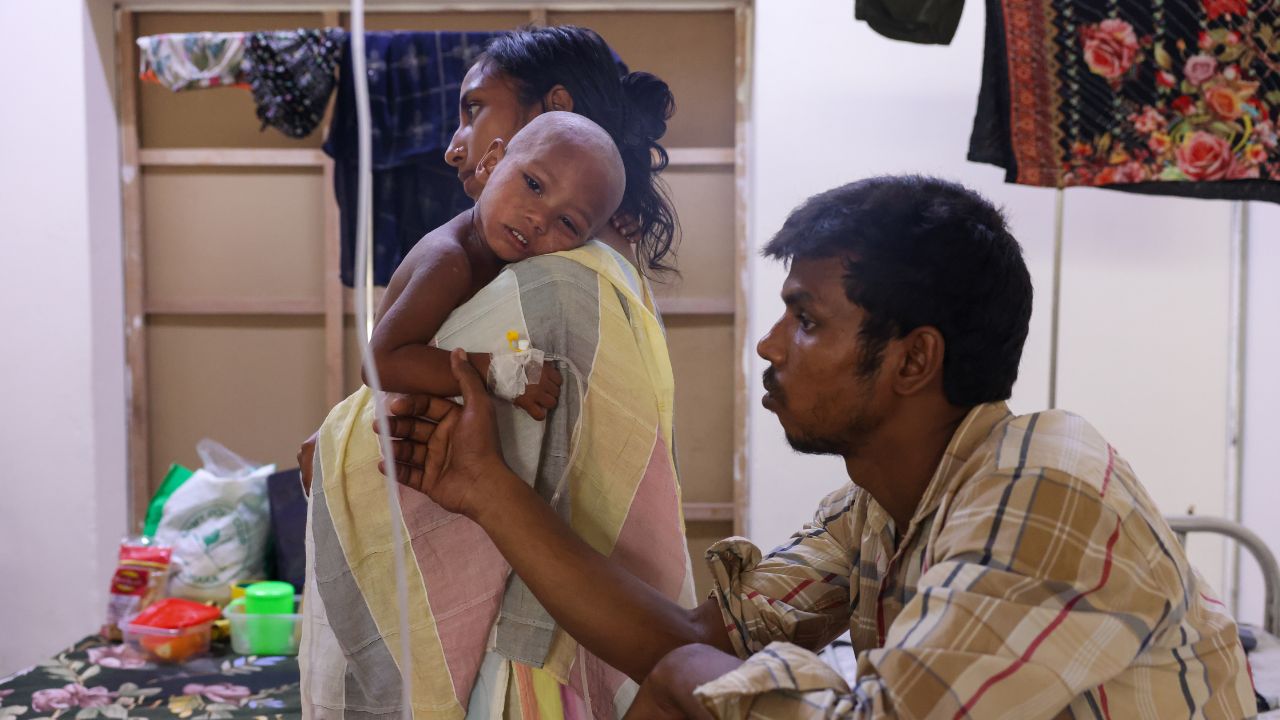
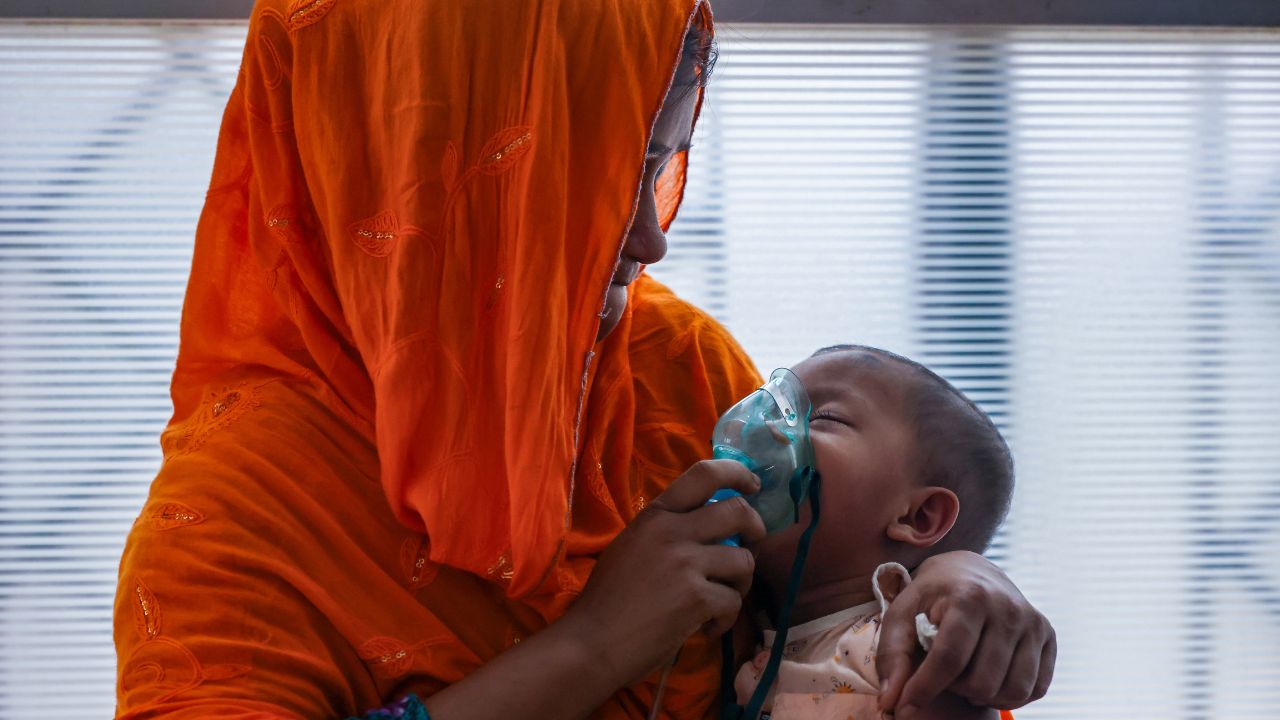
Bangladesh’s measles outbreak has escalated into a full-blown epidemic, contradicting the government’s repeated assurances of a quick resolution.
While Health Minister Sardar Sakhawat Husain claimed on 17 April that the crisis would be “under control within a week”, the situation on the ground tells a different story.
Data from the Directorate General of Health Services (DGHS) show that more than 1,000 new cases are being reported daily, with total deaths reaching 317 as of Tuesday, most of them children.
Health officials continue to highlight ongoing vaccination efforts and say the situation will improve in the coming weeks. However, public health experts argue that the outbreak has already reached epidemic proportions, citing delayed action, weak coordination and long-standing gaps in the health system. Despite repeated calls, a public health emergency has not been declared.
The Integrated Control Centre reported on Tuesday that six more deaths and 1,445 new cases were recorded in a single day across the country.
Experts have offered a more cautious outlook. On 16 April, public health expert Be-Nazir Ahmed told TIMES of Bangladesh that it could take around two months to achieve herd immunity strong enough to slow transmission.

Md Halimur Rashid, Director of Disease Control at DGHS, said on 16 April that the vaccination campaign is scheduled to end on 20 May, with a decline in cases expected roughly two weeks later.
Former IEDCR principal scientific officer Mohammad Mushtuq Husain told TIMES on Monday that deaths may begin to decline from mid-June as vaccination coverage expands, noting that immunity develops gradually after vaccination.
The Doctors’ Platform for People’s Health has blamed procurement delays, bureaucratic complications and institutional neglect for the severity of the outbreak, saying these failures have pushed measles to epidemic levels.
The group called for a public health emergency declaration on 18 April, but no such step has been taken.




On 20 April, the health minister rejected the need for an emergency declaration, saying the situation was improving and did not require extraordinary measures.
DGHS data, however, continue to show a worsening trend. On Monday, a record 17 deaths linked to measles and measles-like symptoms were reported. By Tuesday, total measles-related deaths had reached 317, most of them children.
Mushtuq Husain, also associated with the Doctors’ Platform for People’s Health, said successive governments have avoided declaring health emergencies, leaving the system unprepared for large-scale outbreaks.
He argued that an emergency framework would improve coordination and response capacity, warning that continued delays are costing lives. He also said the current approach reflects policy failure and an overreliance on short-term measures rather than long-term solutions.
On 19 March 2025, the interim government scrapped the Fifth Health, Population and Nutrition Sector Programme, a Tk1.06 lakh crore framework that had guided Bangladesh’s health sector for nearly three decades. It replaced the sector-wide approach with a project-based system, a shift critics say created fragmentation without a clear transition plan.
In September 2025, several key leadership posts in vaccine programmes, including line directors and programme managers, were abolished, leaving field operations without central coordination.
Experts say these changes contributed to declining vaccination coverage, which later fuelled the outbreak.
On 29 March this year, Chief Whip Nurul Islam said the Health Ministry briefed a parliamentary committee, where the deaths of 100 children were raised with the prime minister, who reportedly ordered action against those responsible.
However, no follow-up on that directive has been made public in the 37 days since.
Attempts to contact the health minister for comment were unsuccessful.
On 27 April, a High Court bench led by Justice Razik Al Jalil directed a Health Ministry investigation committee to submit a report within two weeks on allegations of negligence and mismanagement.
The court also questioned why action should not be taken over declining vaccination performance over the past two years.
Zahed Ur Rahman, information and broadcasting adviser to Prime Minister Tarique Rahman, said on Tuesday that an investigation is under way into allegations of negligence during the previous interim government’s handling of measles vaccination.
He said the purpose is to verify facts before any decision is taken and added that steps are being prepared to begin the formal inquiry process soon.