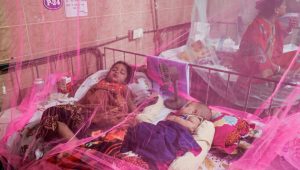
Amid the ongoing measles outbreak, many children with the disease are developing serious complications as delays in recognising early symptoms and repeated hospital transfers worsen their condition.
Physicians say mild symptoms such as fever, cough, and cold are often mistaken for routine illnesses, prompting families to first seek help at local pharmacies or small clinics. When the disease progresses, patients are sent to district hospitals and, eventually, to specialised centres in Dhaka.
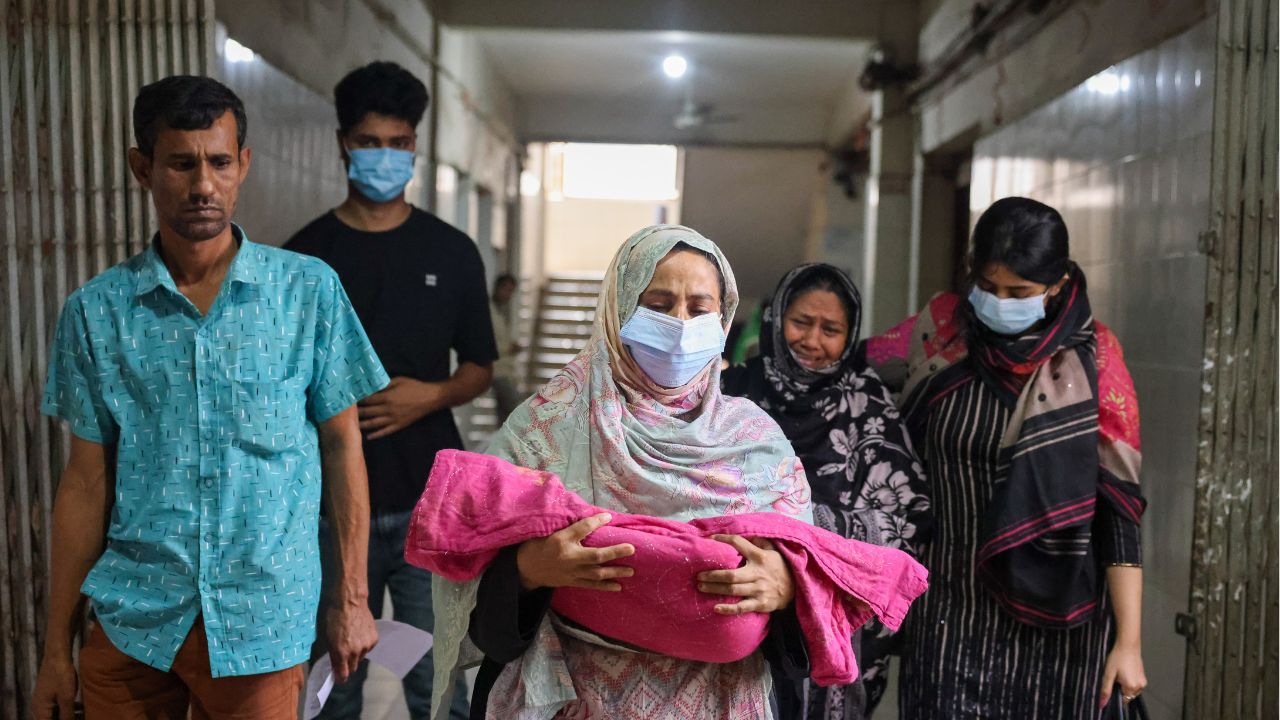
They warn that many children arrive too late, with infections already complicated by pneumonia and respiratory distress, making treatment increasingly difficult and resulting in preventable deaths.
The outbreak continues to worsen, with seven more children dying from measles and measles-like symptoms in 24 hours until 8am Thursday.

Since 15 March this year, a total of 488 people have died nationwide due to measles and measles-like symptoms, including 83 confirmed measles deaths and 405 suspected deaths. The information was released in a press statement issued Thursday by the Health Emergency Operation Centre and Control Room of the DGHS.
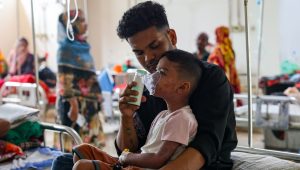
At Dhaka’s DNCC Dedicated Covid-19 Hospital, Nazrul Islam brought his five-year-old grandson Sohan for intensive care. While the child’s measles symptoms were stabilised within three days, he was simultaneously battling pneumonia.

Nazrul Islam told TIMES of Bangladesh that Sohan had been referred from several hospitals over consecutive days.

“First, we took him to the Fatullah 20-bed Hospital in Narayanganj with a fever. The doctor prescribed medication but did not admit him. After three days, his condition worsened. Sohan was then taken to Matuail Hospital, and from there he was referred to Dhaka Medical,” he said.
At Dhaka Medical, he was diagnosed with measles, but overcrowding forced two patients to share a single bed, he added.

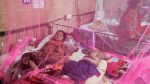
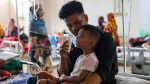

Following medical advice, Sohan was finally admitted to DNCC Hospital, where prompt intensive care helped control the measles, although he continued to battle pneumonia.
DNCC Hospital physician Fahim Rahman said, “Most patients arrive in critical condition, and delays during transport can make it very difficult to save lives.”

Doctors say many families are still treating measles at home during the first few days, mistaking it for ordinary fever. This delay in seeking proper medical care allows the infection to spread in children’s bodies, leading to lung inflammation, respiratory distress, and pneumonia. Children who are malnourished or unvaccinated are particularly at risk.
Lal Mia, who travelled from Kamrangirchar, described a similar experience.
His son had been sick for eight days. Initially, he sought treatment from a local pharmacy. Four days later, as the child’s condition worsened, he was taken to Dhaka Medical College, where measles was diagnosed and the boy was referred to DNCC Hospital.

Children are also being sent to Dhaka from district hospitals in serious condition. In many cases, local hospitals lack intensive care or ICU facilities, leaving specialised hospitals in the capital as the last resort for parents.
Mohammad Kasem brought his two-year-old son to DNCC Hospital after the child developed measles at Faridpur General Hospital. “After five days of treatment, doctors warned that the situation could require ICU care at any moment. But as there was no ICU there, we had to bring him to Dhaka,” he told TIMES.
Kasem arranged an ambulance at a cost of Tk5,500 to transport his child to the capital. The boy is now receiving treatment for pneumonia. “Measles symptoms have slightly improved, but there is still lung infection, chest problems, fever, cough, and signs of complications in the head,” he said.

Another parent, Raju Ahmed, said his five-month-old child was admitted to an ICU four days ago. While the measles infection has subsided, the child later developed pneumonia.
“Measles treatment was given here, but now ICU care is needed. I have searched at Shishu Hospital and Dhaka Medical, but cannot find an available ICU bed,” he said.
Despite the rising patient load, hospital authorities say treatment capacity is being maintained. Administrative officer Asif Haider said the hospital has 56 ICU beds, all prepared and in use for patients. In addition, 600 general beds have been set aside for isolation of infectious disease cases.

Currently, 449 patients are admitted, including 54 in ICU.
Child specialist Md Atiqul Islam of Bangladesh Shishu Hospital and Institute told TIMES of Bangladesh that recognising measles early and seeking prompt medical advice is crucial. “Delaying treatment by assuming it is a common fever can allow the infection to escalate rapidly into life-threatening complications, especially in children,” he said.
He added that delayed identification and referral at the initial stage often worsens patients’ conditions. ICU limitations further complicate care for children suffering from pneumonia and respiratory distress, increasing the severity of the crisis.