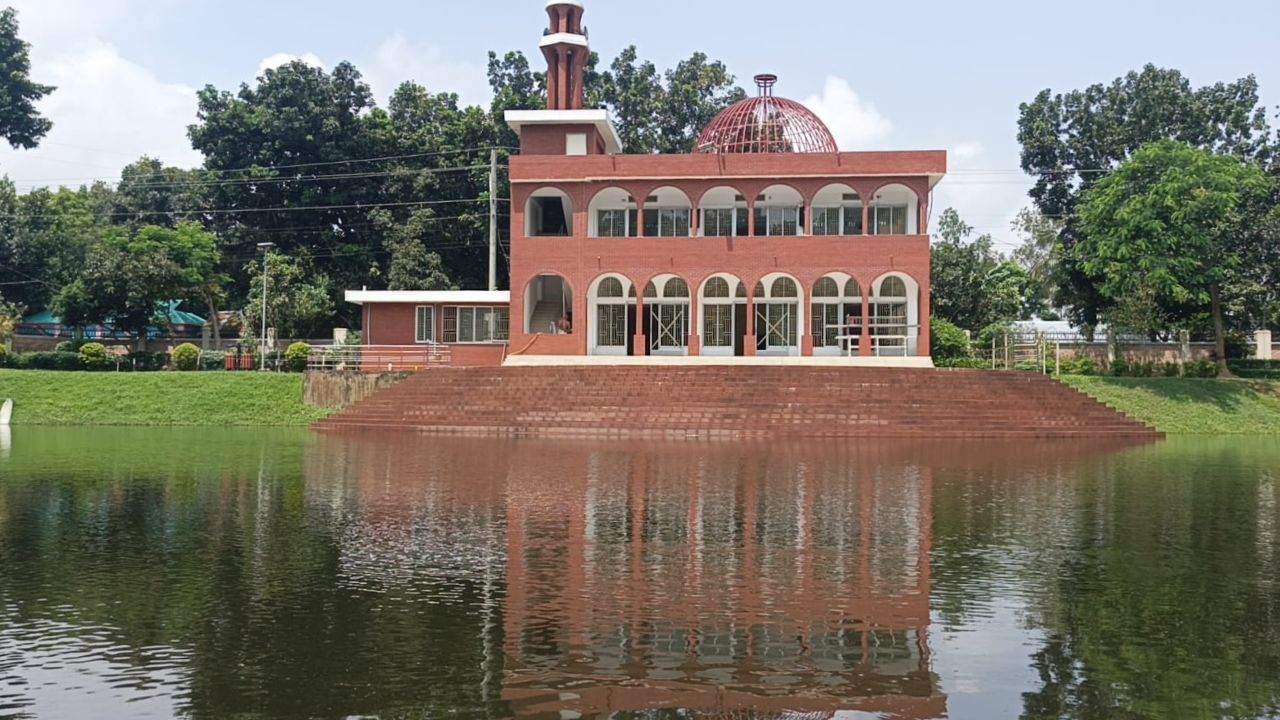



The Masjid-e-Nawajis in Sirajganj’s Kalia Haripur stands reflected on the calm pond beside the historic zamindar estate. Photo: TIMES
A two-storey mosque built beside a century-old zamindar estate in Sirajganj has emerged as a major attraction, with its reflection on a clear pond creating a unique blend of heritage, architecture and tranquillity.
Known locally as the Zamindar Bari Mosque, the ‘Masjid-e-Nawajis’ is located in the Kalia Haripur area of Kalia Haripur Union under Sirajganj Sadar Upazila, beside the Sirajganj-Kamarakhanda regional road.
The mosque, built on the western bank of an almost one-acre pond, has become a popular destination for visitors drawn by its distinctive design and peaceful surroundings. The crescent-shaped staircase in front of the mosque leads down towards the pond, while another staircase and an ornate entrance stand on the opposite bank.

During early morning and late afternoon, the mosque’s full structure is reflected on the still water, creating a picturesque scene that attracts visitors and photographers.
The mosque is closely linked with the history of the Kalia Haripur zamindar estate. According to local accounts, Shyam Shankar Maitra was the zamindar of the area during the British period. During the Pakistan era, his descendants sold their movable and immovable properties to Dr Nawsher Ali Talukder before migrating to India.
Dr Nawsher Ali Talukder and his successors later took ownership of the property. Around 25 years ago, his elder son Nawajis Ali built the mosque beside the old zamindar house pond, naming it Masjid-e-Nawajis after himself.


The mosque underwent modernisation and beautification work around one and a half years ago, adding contemporary features while preserving its traditional character.
With a capacity of around 250 worshippers, the mosque hosts regular five daily prayers, while attendance increases during Friday prayers.
Imam Maulana Mufti Md Tariqul Islam has been serving at the mosque for five years. The Dr Nawsher Ali Talukder Foundation covers the salaries of the imam, caretaker Shafiqul Islam and other staff, as well as all maintenance costs.
A notable feature of the mosque is that it does not accept donations from general visitors.
Foundation official Zulfikar Haider Liton said they were planning to expand their social welfare activities alongside running the mosque. A free healthcare centre for elderly and underprivileged people is expected to be launched soon, he added.
The Kalia Haripur zamindar house, once home to more than a hundred families, has largely disappeared over time. Only two old concrete buildings remain as reminders of the past, and they have recently been renovated.
The mosque’s elegant design alongside the historic structures has given the area a renewed appeal. Visitors are also attracted by locally produced traditional yoghurt made from milk supplied by nearby farms.
Combining history, architecture, nature and spirituality, Masjid-e-Nawajis has become one of Sirajganj’s notable landmarks, drawing religious visitors and tourists from different areas.
With the mosque’s reflection shimmering on the calm pond, the site has transformed from a place of worship into a symbol of heritage and peace.