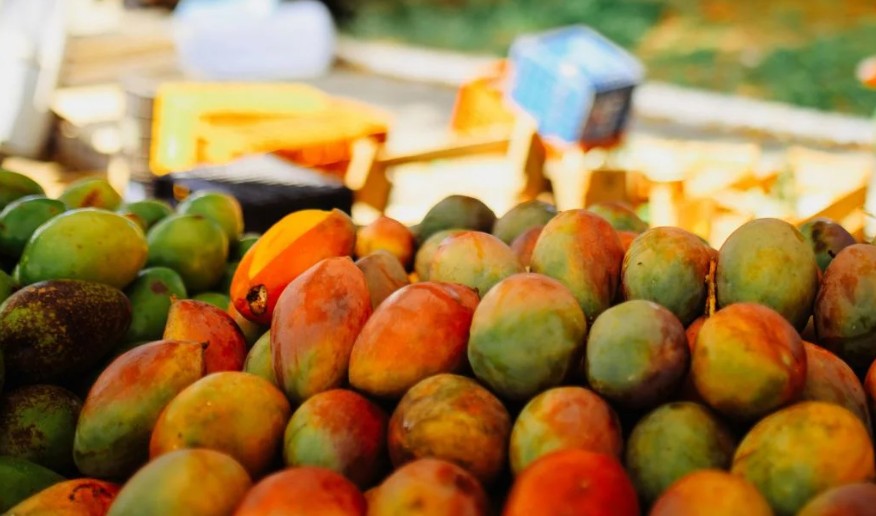

Bangladesh, the world’s eighth-largest mango producer, is confronting a stark economic paradox: it cultivates over two million tonnes of the fruit annually yet exports less than 0.1 percent of its harvest.
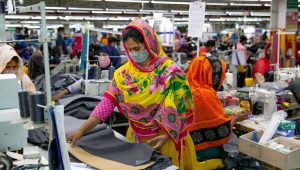
As the country approaches its graduation from the status of least developed country, narrowing this gap has become a pressing priority for diversifying an export economy dominated by garments.
The potential value is significant. Global mango import demand stands at approximately 2.4 million tonnes annually, a market worth billions where Asian producers like Thailand and India have secured lucrative footholds.
Bangladeshi exports, though starting from a low base, show promising momentum, reaching $284,135 by May in FY25 and surpassing the previous year’s total.
New market entries, including China – the world’s second-largest importer – signal growing international interest.

However, systemic bottlenecks within the supply chain threaten to cap this growth. A new analysis of the mango value chain, detailed in a report by the Climate Resilient Agricultural Advancement in Barind (CRAAB) project, identifies critical infrastructural and compliance deficits that must be solved to unlock an export-driven premium for farmers and the national economy.
The quality conundrum
Access to major retail channels in Europe, the Middle East, and North America is governed by strict certification regimes, primarily Global GAP.
Currently, only one entity in Bangladesh holds this certification, with costs for individual farmers often prohibitive, ranging from TK5 lakh to 0.12 crore. While national “Bangla GAP” standards provide a foundation, the scarcity of internationally recognised certification is a primary barrier to scaling exports.




Post-harvest treatment presents another formidable hurdle. To meet phytosanitary requirements of key markets, mangoes require Hot Water Treatment (HWT) or Vapor Heat Treatment (VHT).
Bangladesh has only five HWT facilities nationwide and no operational VHT units. This scarcity forces a costly and quality-degrading logistics loop, where fruit may travel from orchards to distant treatment centres and back before finally being routed to Dhaka for export.
Cold Chain Crisis and Logistics Costs
The nation’s cold chain infrastructure is inadequate for a highly perishable commodity. Post-harvest losses across the agricultural sector are estimated at a staggering $2.4 billion annually. For mangoes, the lack of controlled-temperature storage and transport drastically shortens shelf life, undermining competitiveness against peers like Thailand, which moves fruit from tree to shelf in 3-4 days.
Air freight, the only viable mode for fresh exports, compounds the cost challenge. Exporters face high and rising charges, between Tk250 to over Tk500 per kilogram, coupled with limited flight capacity and a lack of dedicated cargo space for perishables at Dhaka’s airport. An often-inoperative explosive detection scanner, mandated for EU and UK exports, creates further delays and risks of rejection.
Innovation and market positioning
Amid these challenges, pilot projects point to a potential pathway. The CRAAB project, supported by HSBC Bangladesh and implemented by SAF Bangladesh, promotes Ultra-High-Density Plantation (UHDP) with drip irrigation.
This climate-smart practice can double yields on the same land, reduce water use by up to 40 percent, and produce export-quality fruit, while also opening future access to carbon finance for farmers.
The private sector’s role is expanding, with investments in HWT facilities and a push towards value-added processed products like pulp, juice, and dried mangoes, which face less stringent export barriers.
However, branding remains weak. Bangladeshi mangoes often compete on price rather than establishing a premium, quality-focused identity in global markets.
Strategic crossroads
The report concludes that realising the mango sector’s export potential – estimated to be worth hundreds of millions of dollars – requires coordinated public-private investment. Recommendations include developing a network of decentralised treatment and cold storage facilities near production hubs, fostering group certification models to share costs, and strategic branding initiatives to shift from a commodity to a branded export.
For Bangladesh’s economic planners, the mango sector represents a tangible test case for agricultural export diversification.
Closing the gap between massive production and minimal export earnings will require tackling entrenched inefficiencies in its value chain. Success could provide a blueprint for other high-potential agro-products, helping to future-proof the economy as it steps onto a more competitive global stage.