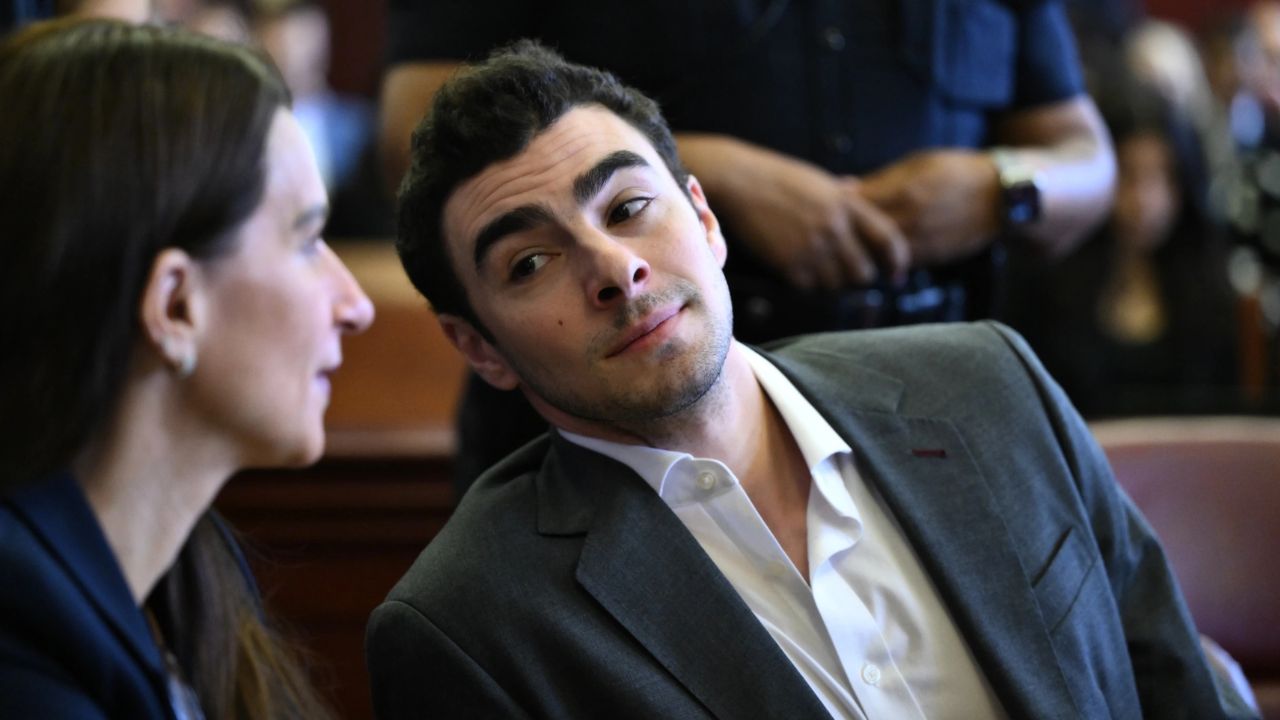



Luigi Mangione has admitted to the 2024 killing of a top American healthcare executive in a US federal court, sparking a major legal dispute over whether he can still face a separate murder trial in New York state.
The 26-year-old pleaded guilty on Friday, to federal charges of interstate stalking resulting in death and stalking through the use of interstate facilities, reports CBS News.
While Mangione now faces a potential life sentence at his 18 December sentencing, his admission has thrown his upcoming state-level murder trial – scheduled to begin in three weeks – into doubt.
The case stems from the December 2024 shooting of UnitedHealthcare CEO Brian Thompson, a father of two. Thompson was gunned down on a Manhattan sidewalk while he was heading to a company investors conference.
Following a manhunt, Mangione was eventually arrested in Pennsylvania, where he still faces separate weapons charges.

The double jeopardy argument
Mangione’s legal team, which includes Jacob Kaplan and Marc Agnifilo alongside lead solicitor Karen Friedman Agnifilo, argues that a state trial would violate the Fifth Amendment’s protection against double jeopardy.
They contend that New York law specifically prohibits successive prosecutions for the “exact same conduct.”




” Mangione has been unfairly treated since the outset,” Agnifilo said, noting the defence has already successfully fought off terrorism charges and the death penalty. Legal experts, however, suggest the argument is complex.
While New York law is generally more generous to defendants than federal law, the prosecution may rely on “carve-outs” for crimes with substantially different elements.
The case has been marked by a period of “jockeying” between state and federal prosecutors over who would bring the case to trial first.
Although federal prosecutors attempted to lead, New York State Supreme Court Justice Gregory Carro – who will rule on the current dismissal motion – reportedly insisted the state proceed first, noting that “New York did all the work here.”
Legal implications of the plea
Professor Jessica Levinson of Loyola Law School noted that the defence likely hopes the guilty plea will serve as a mitigating factor during sentencing by showing “acceptance of responsibility.”
However, a significant question remains as to whether Mangione’s open-court admission of the killing can be introduced as evidence if the state trial proceeds.
Legal analyst Joe Tamburino argued that the state trial should continue because the charges target different harms – federal law addresses the act of interstate stalking, whereas state law addresses intentional murder.
The Manhattan District Attorney’s Office, led by Alvin Bragg, remains “tirelessly” prepared for a state conviction for what they termed a “cold-blooded murder.”
In a statement, Thompson’s family acknowledged the “measure of accountability” provided by the federal plea but confirmed they would continue to seek justice in both New York and Pennsylvania.
Despite the DA’s readiness, legal observers anticipate that Justice Carro’s pending ruling on the double jeopardy motion will likely result in further delays to the state trial.