


Bangladesh faces a critical choice in its upcoming spectrum renewal whether to maximise short-term government revenue or keep spectrum affordable enough for operators to invest in networks, expand internet access and support long-term digital growth, industry leaders and policymakers said on Saturday.
The debate has gained urgency ahead of the renewal of 79.4 MHz of spectrum from November, as the government seeks to expand connectivity while mobile operators warn that declining revenues and profitability are already limiting their investment capacity
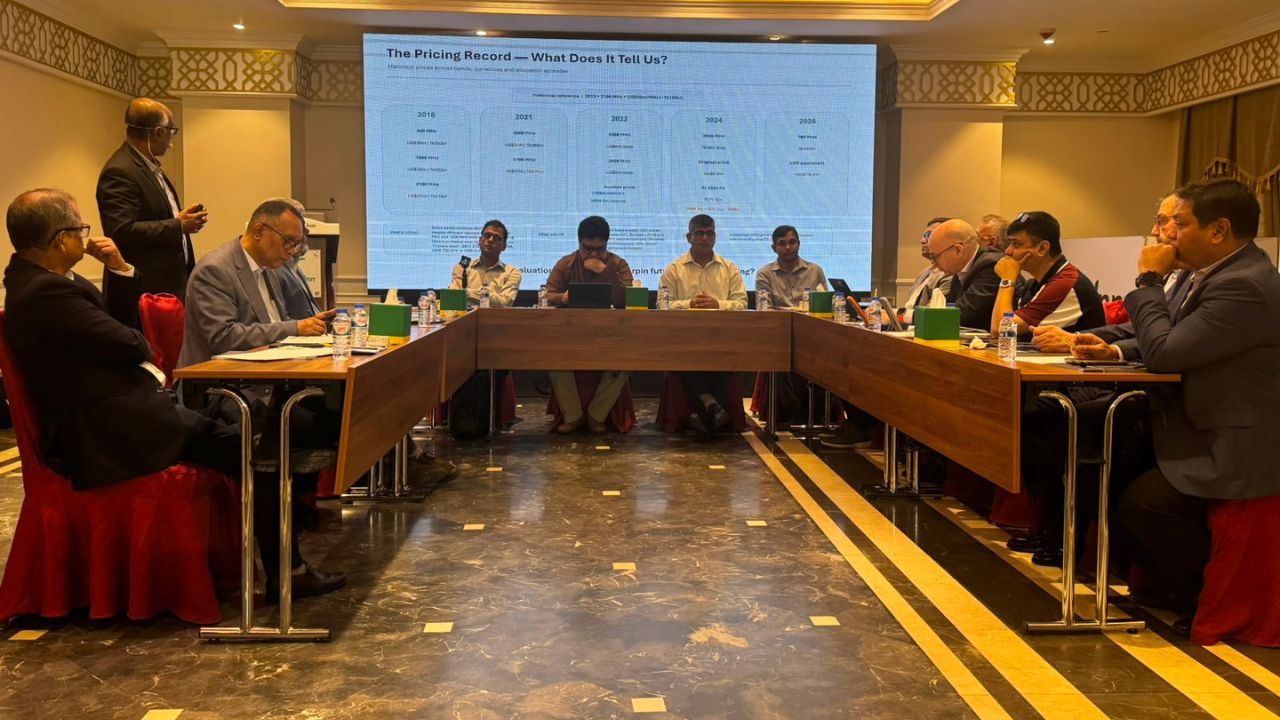
At a roundtable titled “Spectrum for a Connected Bangladesh: Enabling Internet for All”, organised by the Telecom and Technology Reporters’ Network Bangladesh (TRNB), speakers from the government, regulator and mobile operators called for a spectrum-pricing framework that balances the interests of consumers, operators and the government rather than treating spectrum primarily as a source of fiscal revenue.
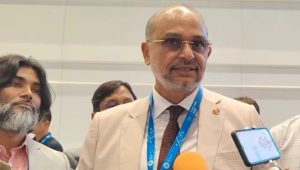
Prime Minister’s Advisor on Posts, Telecommunications and Information Technology Rehan Asif Asad said the issue should be viewed from the perspective of the country’s long-term development.
“Spectrum is not a revenue issue. The issue is the future of our country,” he said, arguing that telecommunications could become one of the country’s most important sectors over the next 20 to 30 years.
The advisor also set out an ambitious digital-inclusion target, saying the government aims to bring around seven crore people into the data network within six to 12 months.
Around half of the country’s estimated 14 crore mobile connections are still associated with 2G or feature phones, he said. The government is therefore working with local manufacturers to produce affordable smartphones at around Tk 5,500-Tk 6,000, while EMI facilities and operator-led device-and-data bundles are also being considered.
The government is also working to ensure zero tax, duty and VAT on raw materials used to manufacture such low-cost smartphones, he said.

BTRC Chairman Major General (retd) Md Emdad Ul Bari said Bangladesh is already facing a spectrum shortage as demand for connectivity rises.
Although mobile networks cover around 98.9 per cent of the country’s geographical area, only about 65 per cent of the population is connected to mobile services, while internet usage remains around 44 to 47 per cent, he said.
Bangladesh currently has only around 2.3 MHz of spectrum per million subscribers, below the global average. With 5G and future technologies expanding, the country could require around 1,500 MHz of spectrum by 2035, Bari said.
He stressed that coverage alone does not constitute meaningful connectivity. Affordability, actual internet usage and service quality must also be considered.
On pricing, Bari called for finding a “sweet point” that balances consumers, operators and the government. He also cautioned that simply lowering spectrum prices would not necessarily benefit consumers unless operators pass the gains through better service, greater investment or lower prices.
The industry’s financial position has weakened, with revenue declining in 2024 and 2025 and profitability falling in 2025, said Ziad Shatara, president of the Association of Mobile Telecom Operators of Bangladesh (AMTOB).




Shatara said past spectrum prices are no longer a valid benchmark, as operators have shifted from mainly voice services to high-speed data and future gigabit connectivity.
“History is not a good way to look at it,” he said, arguing that Bangladesh’s spectrum prices are also much higher than in neighbouring markets, citing 1800 MHz and 2100 MHz prices as around three times those in Vietnam.
He also rejected higher spectrum fees as a solution to the government’s budget deficit, saying, “Will solving one part of the budget deficit this year from increased spectrum solve the problem? My humble answer is absolutely no.” Instead, he called for a broader economic transformation supported by stronger telecom, infrastructure and investment.
Grameenphone CEO Yasir Azman said spectrum renewal must be viewed through a broader lens as the telecom industry has evolved from a largely vertical business into a connectivity platform supporting mobile financial services, digital services, education and other parts of the economy.
He said minutes have declined by 25 per cent and average revenue per user has remained flat, while the company’s contribution to the national exchequer has increased over the past five years even as its return on investment declined.
The key question, he said, is whether the economics of spectrum renewal will leave operators with enough capacity to invest in network expansion and service quality.
A presentation at the event highlighted concerns over Bangladesh’s spectrum valuation framework.
Between 2018 and 2026, Bangladesh held five spectrum allocation events, predominantly through auctions. Only 23 per cent of offered spectrum was sold in 2018, while 100 per cent was sold in 2021, when competitive bidding pushed prices around 70 per cent above the reserve price.
But the 2026 700 MHz auction attracted only one bidder, as other operators focused their investment on the 900 MHz band, raising questions over whether an auction can effectively discover a market price when competition is limited.
The presentation also showed that operators spend around 15.7 per cent of their revenue on spectrum, compared with roughly 10 per cent in the Asia-Pacific region and 8 per cent globally.
What the debate means for consumers
BTRC Chairman Bari said geographical coverage is already around 98.9 per cent, but only about 65 per cent of the population is connected to mobile services and roughly 44-47 per cent use the internet.
He stressed that coverage alone is not enough; affordability, actual internet use and service quality must also improve.
The government’s consumer-focused target was provided by Adviser Asad, who said it aims to bring around 7 crore people into the data network within six to 12 months.
Around half of the country’s estimated 14 crore mobile phones are still 2G or feature phones. To address this, the government is working on smartphones costing around Tk 5,500-Tk 6,000, with EMI facilities and operator voice-data bundles also being considered.
Economic impact of spectrum pricing
The main argument was that affordable spectrum would leave operators with greater capacity to invest in network infrastructure, which would improve connectivity and support sectors beyond telecom, including MFS, e-commerce, fintech, cloud services, digital content, AI and IoT.
The presentation cited GSMA research estimating that bringing spectrum prices closer to the regional average could generate an additional $34 billion in economic growth by 2035, while alignment with global average pricing could raise the potential economic gain to $45 billion.
It also said lower spectrum costs could enable 99 per cent 5G coverage by 2035.
Shatara said Bangladesh’s 1800 MHz and 2100 MHz spectrum prices are roughly three times those of Vietnam.
The broader presentation noted that Pakistan, India and Vietnam have recently reduced spectrum fees for bands including 900, 1800 and 2100 MHz.
The discussion therefore points to a larger policy question: should spectrum primarily generate immediate government revenue, or should it be priced as critical national infrastructure that enables greater investment, wider connectivity and a larger digital economy?
With millions still outside the data ecosystem and spectrum demand expected to rise sharply toward 2035, the answer could shape not only the telecom industry’s next investment cycle but also Bangladesh’s broader digital transformation.