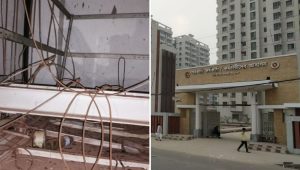
The cost of the 100MW solar power plant project in Jamalpur’s Madarganj is set to increase by Tk 103.44 crore, bringing the total estimated expenditure to Tk1,613.61 crore.
Alongside the rising costs, a proposal has been submitted to extend the project deadline until December 2026, citing the departure of Indian contractors, delays in loan disbursements, and regional flooding.
According to a Planning Commission official, the project – implemented by Rural Power Company Limited (RPCL) with Indian credit – was originally approved in September 2021 with a completion target of October 2024.
Although the deadline was previously shifted to October 2025, physical progress currently stands at 56 per cent, while financial progress has reached only 38 per cent.

Comparative costs and systemic delays
The Industry and Energy Division of Planning Commission has expressed dissatisfaction with the cost escalation, highlighting a significant disparity in expenditures when compared to similar initiatives.
Analytical data provided by the commission shows that the Electricity Generation Company of Bangladesh (EGCB) is constructing a 220MW solar plant in Sonagazi for Tk 1,888 crore.



In contrast, RPCL’s Madarganj project will cost over Tk1,613 crore for less than half that capacity, effectively making the per-megawatt cost nearly double that of the Sonagazi plant.
Consequently, the commission has directed RPCL to provide specific justifications for such high expenditures, while noting serious doubts about meeting the new 2026 deadline as illegal occupants have yet to be removed from the project land.
Political and economic triggers for escalation
RPCL has attributed the implementation delays to the political upheaval of July and August 2024. Following the events of 5 August, representatives of the Indian EPC contractor and local subcontractors abandoned the site, resulting in a four-month work stoppage.
The Exim Bank of India halted bill payments from December 2024 to March 2025, which disrupted progress, while severe flooding between July and September 2024 brought field operations to a complete standstill.
The primary driver for the budget increase is the devaluation of the Taka against the US Dollar. The original and first revised Development Project Proposals calculated the exchange rate at Tk 84.80 per dollar, whereas the current rate under the Subsidiary Loan Agreement is factored at Tk 110.50.
Scrutiny of expenditures and official response
The Planning Commission has flagged several spending proposals as questionable, including Tk23.50 crore for a 47km transmission line and other civil works, and a request to purchase new vehicles despite an existing budget for rentals. Additional allocations of Tk80 lakh for consultancy fees and a new sector for “fuel and gas for cooking” also faced objections.
KM Nayem Khan, Executive Director (P&D) of RPCL, stated that the cost hike is largely due to the dollar’s surge and noted that Indian contractors, whose involvement is mandatory under loan terms, have only recently returned to work.
Regarding the cooking gas allocation, he explained it was intended for officials living in rented accommodation near the project area, and he maintained that the additional consultancy fees were a revised calculation based on the current dollar rate rather than a new service.