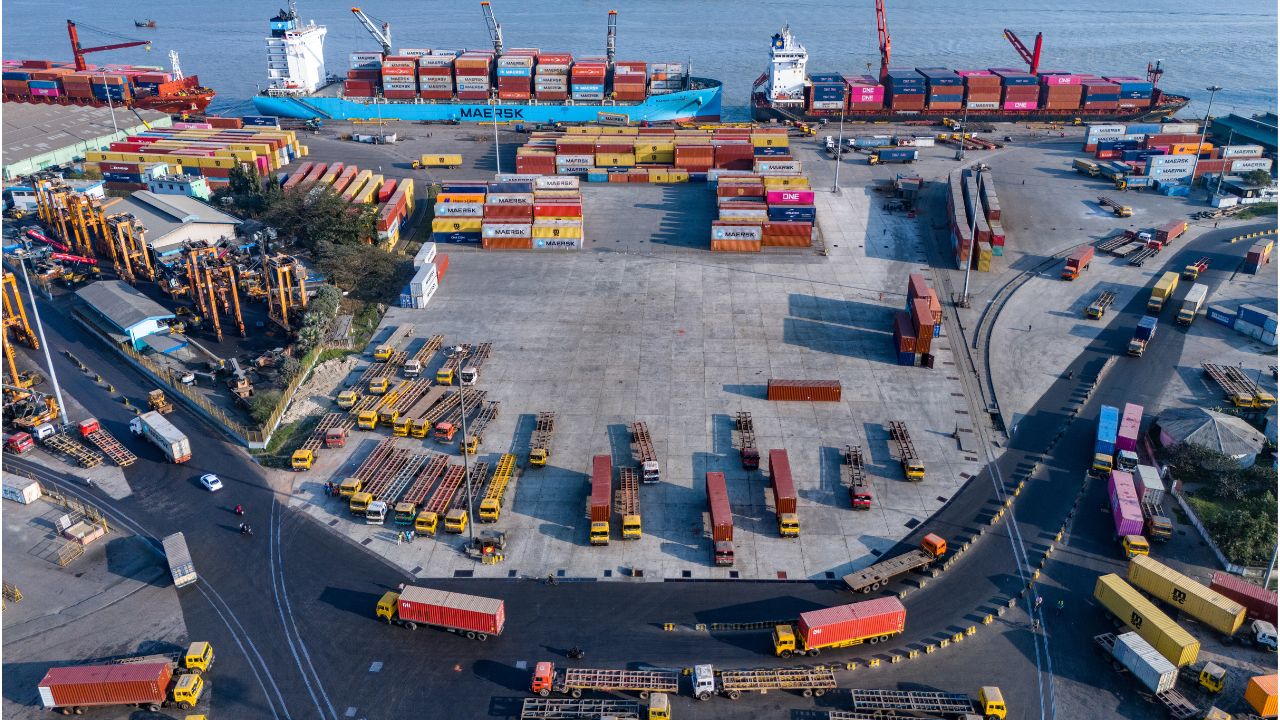
Container handling at the Chattogram Container Terminal (CCT) of Chattogram port are practically at a standstill as the four available gantry cranes need urgent repair.
Besides, vessels are having to wait longer to load or unload goods, costing them an extra $17,000 in daily expenses.
For example, MV MSC Eyra berthed at the CCT on October 19 and had to wait five days for before leaving as container loading-unloading activities went painstakingly slow without the specialised equipment.
Meanwhile, ships berthing at the New Mooring Container Terminal (NCT) are able to complete their activities within just two days.
MSC Eyra is not alone though as every vessel currently berthing at the CCT cannot leave until at least four-five days later.
Since the gantry cranes frequently break down, repairs are constantly underway, forcing operators to rely on mobile harbour cranes to load-unload containers. As such, operations at the CCT have slowed drastically.

Shippers say the extra time spent at the terminal is significantly increasing their operational costs. The daily charter hire for a vessel is approximately $15,000, while another $2,000 is charged for every day spent at berth.
Ultimately, these excessive costs are pushing up product prices in the local market, they added.
Against this backdrop, they said operating at the CCT has become unbearable.




Syed Mohammad Arif, chairman of Bangladesh Shipping Agents Association, said alongside the gantry cranes, other essential container handling equipment are in a similarly poor condition.
“Sometimes it takes six to seven days to complete operations here. Although this condition has persisted for years, the port authority has not taken any initiative to add new equipment,” he said, adding that Chattogram port’s efficiency is gradually declining.
As per port records, the CCT was built in 1986 and is 450 meters long. The terminal, capable of accommodating two container ships at a time, is currently operated by Saif Powertec.
Mosharraf Hossain, terminal manager of Saif Powertec, said the four gantry cranes procured in 2005 are now obsolete.
“They often break down and require frequent repair. As such, containers must be loaded and unloaded with the help of mobile harbour cranes,” he added.
Some main line operators informed that they avoid the CCT when possible as its wait time is almost double that of the NCT.
They said when a ship is assigned berth at the CCT, departure schedules become uncertain. To restore operational efficiency, they demanded immediate installation of new gantry cranes.
Chattogram port currently boasts four container terminals, with the NCT capable of berthing four ships at a time while the CCT can take two ships. Additionally, the General Carogo Berth (GCB) terminal houses up to six ships simultaneously.
Also, the Patenga Container Terminal (PCT) being managed by Red Sea Gateway, a foreign operator based in Saudi Arabia, can receive three ships at the same time.
A performance review of container handling between July and December of 2024 revealed that the PCT handles an average of 18.75 containers per hour. Likewise, the GCB handles 16.98 containers per hour and the NCT sees 13.65 containers per hour.
On the other hand, the CCT posted the worst performance, handling roughly 12.88 containers hourly.
Nearly 99 percent of all containers moving through Bangladesh are transported through Chattogram port, which handles more than 3.2 million TEUs of import-export cargo annually.
During fiscal year 2024-25, Chattogram port handled 32,96,067 TEUs.
Chattogram Port Authority Secretary Md Omar Farooq could not be reached for comment despite multiple attempts by phone.