The spot right opposite Mitford Hospital, where four launches are tied side by side, is not actually a launch terminal, despite it being in the Sadarghat area. Although they look exactly like regular launches, these vessels do not go anywhere. They simply stay afloat in one place. These are floating hotels.
In these floating hotels, the minimum cost for staying one night is Tk 120. Many low-income people in the Sadarghat area have made these floating hotels their long-term homes. Many relatives of patients admitted to Mitford Hospital also come here to stay.
Some of the boarders here have been living on these boats for years. From here, they go to work every day or run small businesses in the nearby areas.
The history of floating hotels in Dhaka is more than 100 years old. Once, there were more than 100 such floating hotels spread across the Buriganga River.

During the British period, many high-ranking officials would stay in these floating hotels when they came to Dhaka. Some even came here not because they lacked a place to stay, but simply for a change of atmosphere.

During the Pakistan era, most of these floating hotels were owned by Hindu proprietors. Over time, many changes of ownership took place. Until the 1970s, the floating hotel business was still very lively. But as demand slowly decreased, the number of floating hotels fell, and now only four remain.
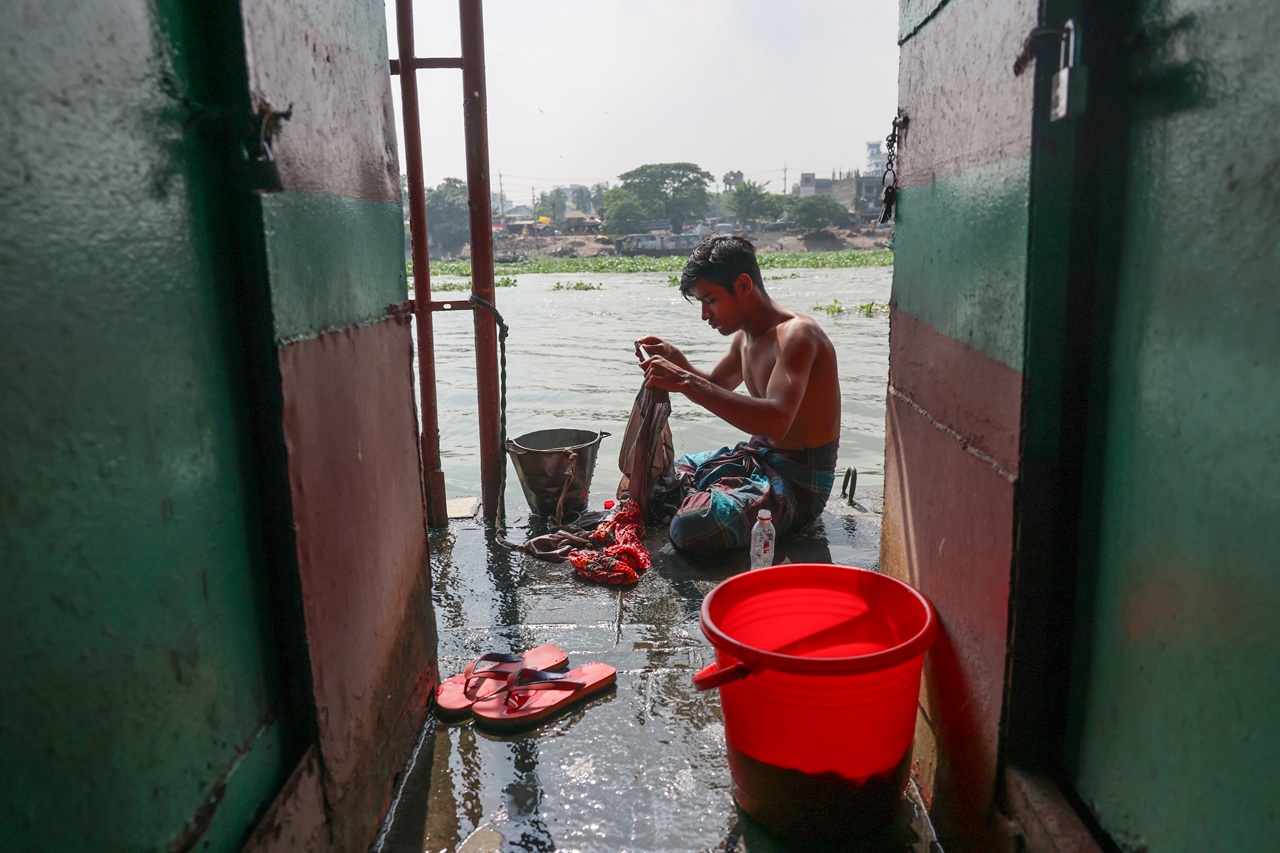
Upon entering the Faridpur Muslim Boarding, the first thing that stands out is the back area. At the end of a narrow passage, someone can be seen bathing in the river water.




The boarders say there are no special facilities for sanitation. Like ordinary launches, there is only a small toilet at the back. However, in some parts of Sadarghat, there are separate bathing facilities available, and some boarders go there.
The boarders don’t seem worried about safety. A boarder named Jahid Hossain said, “Everyone has to show a copy of their identification cards as part of the safety maintaining.”
Due to difficulties in managing clean water and food supply, these hotels do not have arrangements for food. The boarders eat at the nearby restaurants in Sadarghat.
However, there are facilities quite like those of regular hotels. All these floatel’s have electricity connections, ceiling fans and mobile charging points in cabins.
The floating hotels do not have engines. When they need to be moved from one place to another, engine-powered trawlers are used. During storms or heavy rain, tying the boats tightly to the shore is their only real protection.
In each boarding hotel, the manager stays in the first cabin. On both sides of the corridors, there are single and double rooms, known as cabins.
Several boarders at Faridpur Muslim Boarding said that being able to enter the hotel at any time after finishing work is one of the biggest conveniences for them.

People living on these four boats said that regular boarders here have a community of their own. Mosquitoes and the bad smell of the polluted Buriganga do cause some discomfort. But overall, they say they live reasonably well. Those who live here become like family to each other.
Now, with modern hotels available all over the city, there are not as many boarders as before. Yet during certain busy seasons, when traders and travellers come to Dhaka from different regions, the floating hotels still get fully occupied.
Today, these floating hotels remain as quiet reminders of a different Dhaka, one that once lived and breathed with the rhythm of the river. They may have lost their glamour and numbers, but the life around them still endures, quietly and resiliently.