


Ahead of the 13th National Parliamentary Election, the non-governmental organisation Leading Education and Empowerment for Disadvantaged Organisations (LEEDO) has unveiled a 12-point manifesto calling on political parties to ensure the rights and protection of street and underprivileged children.
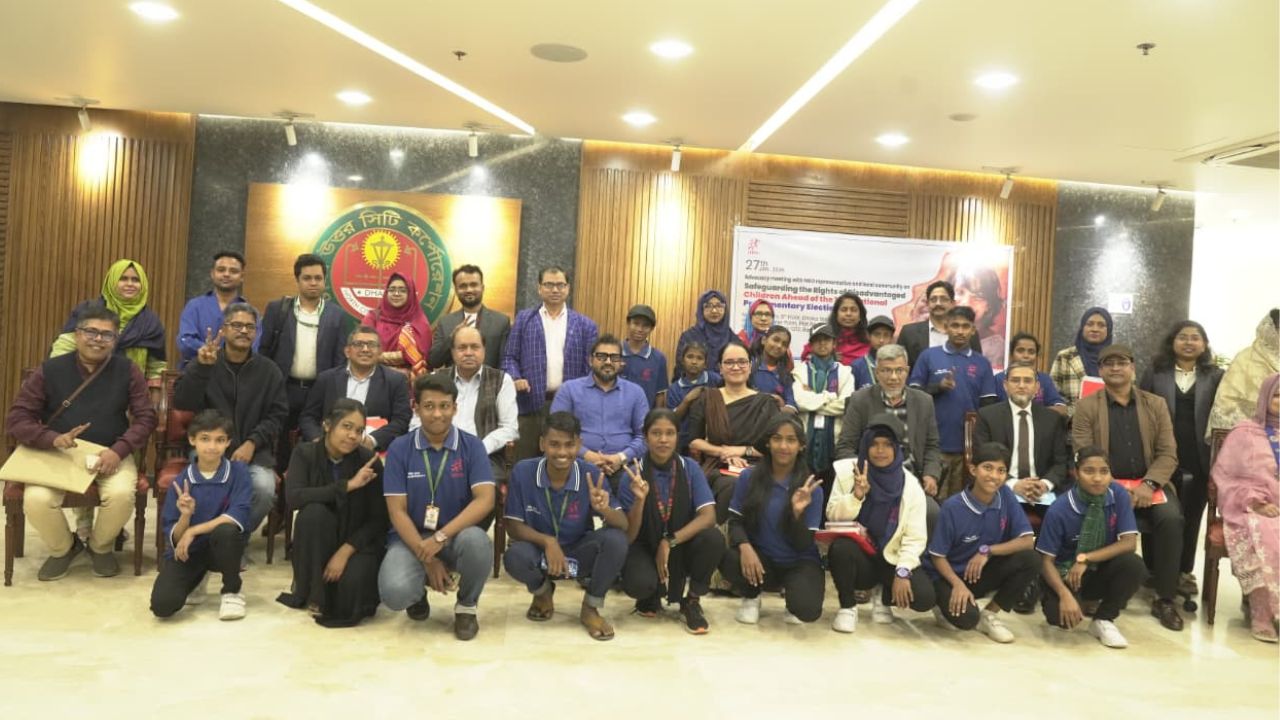
The manifesto was announced on Tuesday at a roundtable titled “Safeguarding the Rights of Disadvantaged Children Ahead of the 13th National Parliamentary Election 2026” at the DNCC conference hall.
Key proposals include establishing a dedicated ministry or department for street and underprivileged children, ensuring legal identity for all children, launching a centralised digital database, setting up child help desks, providing free education and healthcare, creating emergency housing facilities, offering vocational training, establishing drug rehabilitation centres, promoting cultural and sports participation, and a firm commitment to prevent the political use of children.

In his address as chief guest, Dhaka North City Corporation Administrator Mohammad Azaz highlighted the vulnerability of children to urban pollution.
“Children are the most vulnerable group. Our goal is to build a child-friendly city with clean air and safe play spaces,” he said.


He also noted that urban social safety nets are weak, and national programmes, designed primarily for rural areas, fail to adequately address the needs of city dwellers.
Keynote speaker Mahfuza Sultana Munni, a fifth-grade student from a street-connected background, who shared her lived experience of being used in election-related activities, urged political parties to refrain from using disadvantaged children in political processes.
“All stakeholders must be aware and accountable to stop the exploitation of underprivileged children in politics,” she said.
Participants at the roundtable included child rights activists and representatives from various non-governmental organisations.
Speakers called on parties to prioritise children’s rights in the upcoming election and ensure they are not exploited for political purposes.