When Bangladesh’s new cabinet was formed on 17 February, one decision immediately stood out.
Prime Minister Tarique Rahman appointed Khalilur Rahman, former national security adviser in the Muhammad Yunus-led interim administration, as foreign minister. For some, it was an unexpected move. For others, it appeared to be a carefully calculated geopolitical signal.
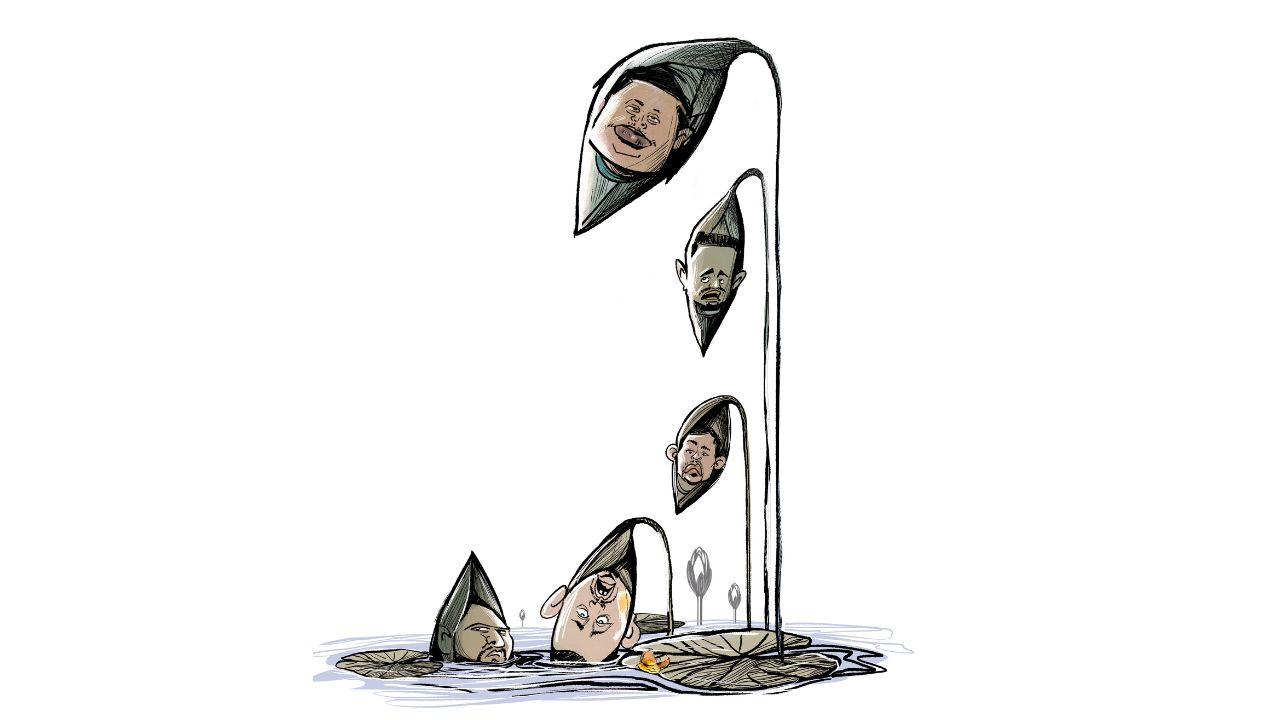
In diplomatic circles, the question now is whether the appointment marks a shift in how Dhaka plans to navigate the increasingly complex rivalry between India, the United States and China.
Relations with India cooled during the tenure of the interim government, according to several political observers in Dhaka. There was no formal breakdown in ties, but the political tone and level of engagement were widely viewed as less warm than in previous years.
For a newly elected political government, stabilising ties with its largest neighbour carries both symbolic resonance and strategic significance. India remains Bangladesh’s important security partner, particularly in border management and regional stability, while also serving as one of its important economic counterparts.
Some analysts had expected senior party figures to be given key portfolios as a signal of a diplomatic reset with New Delhi. Instead, the foreign ministry went to Khalilur Rahman — a figure associated less with party hierarchy and more with technocratic experience during the interim period.

The choice suggests that the government may be placing greater value on international exposure and strategic networks than on internal party seniority.
Khalilur Rahman spent many years in the United States and is believed to maintain strong contacts in Washington. As the national security adviser and high representative on Rohingya affairs, he engaged closely with both American and Indian officials.
At one stage, critics within BNP questioned his citizenship status — claims he has consistently denied. Yet supporters argue that his international background is an asset at a time when foreign policy is increasingly intertwined with trade, security and migration.



For Washington, Bangladesh sits at a strategically important point in the Indo-Pacific. For India, it is central to regional connectivity and border management. Khalilur Rahman’s profile places him at the intersection of these overlapping interests.
But Bangladesh’s diplomacy cannot be framed solely through a Washington–Delhi lens.
China remains one of the country’s largest development and infrastructure partners. From defence cooperation to bridges, power plants and industrial zones, Beijing’s footprint in Bangladesh is extensive. Successive governments in Dhaka — including BNP administrations dating back to President Ziaur Rahman — have maintained close ties with China.
For any foreign minister, the task is therefore not alignment, but balance.
The United States and India have increasingly coordinated their Indo-Pacific strategies, often with the implicit aim of limiting Chinese influence. Bangladesh, by contrast, has long adhered to the principle of “friendship to all, malice towards none”.
Khalilur Rahman will have to ensure that closer engagement with Washington and New Delhi does not come at the cost of relations with Beijing — particularly as Bangladesh seeks investment, export diversification and support during its post-LDC transition.
There is also historical resonance in his return.
Khalilur Rahman served as a secretary at the Chief Adviser’s Office during the 2001 caretaker government led by Latifur Rahman — the election that brought BNP to power with a two-thirds majority. After leaving government service, he relocated to the United States.
His return to frontline politics at a moment of geopolitical flux suggests that the current leadership sees value in experience that bridges domestic governance and international diplomacy.
The true significance of his appointment, however, will be measured not in symbolism but in policy.
Will Bangladesh tilt more decisively towards Washington and New Delhi? Or will it pursue a carefully calibrated, multi-vector strategy designed to draw benefits from all sides?
The answer will become clearer in the months ahead — in trade negotiations, defence cooperation, infrastructure financing and regional diplomacy.
For now, Khalilur Rahman’s elevation looks less like a routine cabinet formation and more like a signal that Bangladesh understands the realities of great power competition — and intends to navigate them cautiously.