GDP growth above 6.5% is not possible under the current economic structure, former World Bank Dhaka Office Lead Economist Zahid Hussain told TIMES of Bangladesh, cautioning the new government against overpromising.
He said achieving a trillion-dollar economy by 2034 would require nearly 9% annual growth, which cannot be delivered without deep structural reform.
“If growth can be raised to 5.5% within two years, that itself would be a major success. If it goes higher, that will mean the economy has genuinely turned around.”
Zahid Hussain said the biggest immediate challenge for the elected government is expectation management in the first 100 days.
The administration secured a two-thirds majority and made multiple specific commitments, including issuing “Family Cards” starting with 5 million households, reviewing public sector salaries, allocating 5% of GDP to education and earmarking a similar share of GDP for healthcare.
“These expectations cannot be fulfilled overnight,” he said.
The most urgent task is presenting a budget that reflects fiscal realities. He said the government must calculate how much of its commitments can realistically be implemented in the first budget.

If Tk2,500 per family a month is provided to 5 million families under a Family Card programme, the fiscal impact will be enormous.
“Even partial implementation of proposed public salary adjustments would significantly increase state expenditure,” he said, adding that there are also commitments related to loan waivers and other financial pledges.
“If expectations are not properly managed in advance, the government could face strong criticism after announcing the budget,” he said.
On fiscal constraints, the economist said raising state revenue immediately is not possible. At the same time, the government has said it wants to move away from a debt-driven economy.



“A large deficit budget would mean higher borrowing,” he said, adding that without revenue growth, expenditure expansion is unsustainable.
“Balancing this arithmetic will be the core challenge,” Zahid Hussain added.
Revenue growth depends on economic acceleration, which in turn will require structural reform.
He said banking sector reform has begun and some work is progressing at the National Board of Revenue, but energy sector reform and port efficiency improvements are essential.
“Without structural reform, growth will remain capped.”
On financial stability, he said depositor confidence risks created by distressed assets have been partly contained but not fully resolved, while high non-performing loans remain a concern.
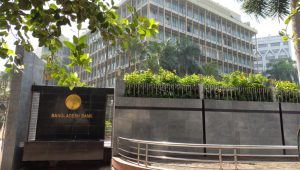
Progress has been made in merging five banks and restructuring is under way, but another 15 to 20 weak banks remain.
Large state-owned banks, including Bangladesh Krishi Bank, Rajshahi Krishi Unnayan Bank, Sonali Bank and Janata Bank, still face unresolved financial distress.
“These will be a major challenge for the new government,” he said.
Assessing the interim government’s performance, Zahid Hussain said the most visible improvement was stabilisation. External balance pressures eased, the exchange rate stabilised and foreign exchange reserves increased.
Earlier, during the Awami League government, foreign currency shortages had disrupted power supply and strained business relationships. Airlines were selling tickets but were unable to remit in dollars because transactions could not be settled. “That pressure has eased,” he said.
However, “stability must translate into durable growth,” as investment remained stalled for a prolonged period due to political uncertainty.
He said the interim government’s primary mandate was political transition, and the peaceful transfer of power sent a strong positive signal to investors.
Before the election, there were fears of violence and disruption, with hostile actors active. Completing a peaceful process despite those risks has improved investor sentiment.
Political uncertainty had been a major barrier to investment. That barrier has now largely cleared, but the extent to which the opportunity can be utilised will depend on how economic reform programmes are designed and implemented.
“The challenge is large, but not impossible,” Zahid Hussain said.