Women who participated in Bangladesh’s July Revolution are facing online harassment, threats and smear campaigns despite having been celebrated for their role in the movement, scholars and women’s rights advocates said at an international roundtable in Dhaka.
The concerns were raised on Saturday at Shanto-Mariam University of Creative Technology (SMUCT) in Uttara, where academics and development practitioners from Bangladesh and abroad called for stronger legal protections and coordinated international action against violence targeting women.
The roundtable, titled “Violence Against Women & Transnational Feminism Across the Borders”, was organised by the university’s Department of English with support from Women Living Under Muslim Laws (WLUML), an international solidarity network of women’s rights advocates and researchers.
Speakers said women who took to the streets during the July Revolution now face online smear campaigns, doxxing, moral policing, threats and the circulation of manipulated images on social media.
They warned that such attacks were intended to silence women, discourage their participation in public life and erase their contributions to the movement.

The discussion also examined technology-facilitated gender-based violence (TFGBV), domestic abuse, sexual harassment, workplace discrimination, economic exclusion and political intimidation.
Participants identified social stigma, weak enforcement of laws and limited access to justice as major obstacles preventing survivors from obtaining redress.
They also highlighted unpaid care responsibilities, safety concerns, unequal access to resources and entrenched stereotypes as barriers to women’s advancement in politics, business, education and public service.



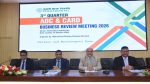
SMUCT Vice-Chancellor Shah-E-Alam said universities must go beyond producing knowledge and help create safe, respectful and inclusive environments, both on campus and online.
Among the speakers were Concordia University Professor Emerita Homa Hoodfar, a founder of WLUML; Stanford University Lecturer and WLUML Executive Board Member Mona Tajali; Carleton College Associate Professor Summer Forester; and Concordia University Affiliate Assistant Professor Afra Jalabi.
SMUCT Faculty of Humanities and Social Science Dean Syed Azizul Huq also attended.
SMUCT Department of English Associate Professor and Head Md Shahrear Talukder facilitated the discussion. Speakers from Khulna University, BRAC University and East West University also participated, alongside faculty members and students from different SMUCT departments.
Summing up the discussion, Talukder said the July Revolution demonstrated both the strength of women’s participation and the vulnerability they subsequently faced.
He said academic forums could help translate women’s lived experiences into research and practical recommendations for communities and institutions.
Participants called for stronger survivor-centred legal and reporting mechanisms, responsible content moderation by technology companies and gender-sensitive education from an early age.
They also urged greater representation of women in politics, engagement of men and boys as allies and ethical documentation of abuse that protects survivors’ privacy and autonomy.
The panellists agreed that violence against women transcends national borders and requires international cooperation grounded in local realities.
The session concluded with questions from students and researchers, while organisers expressed hope for continued collaboration with international partners.
Speakers said democracy and justice would remain incomplete until women could move freely, participate in parliament and express themselves online without fear.