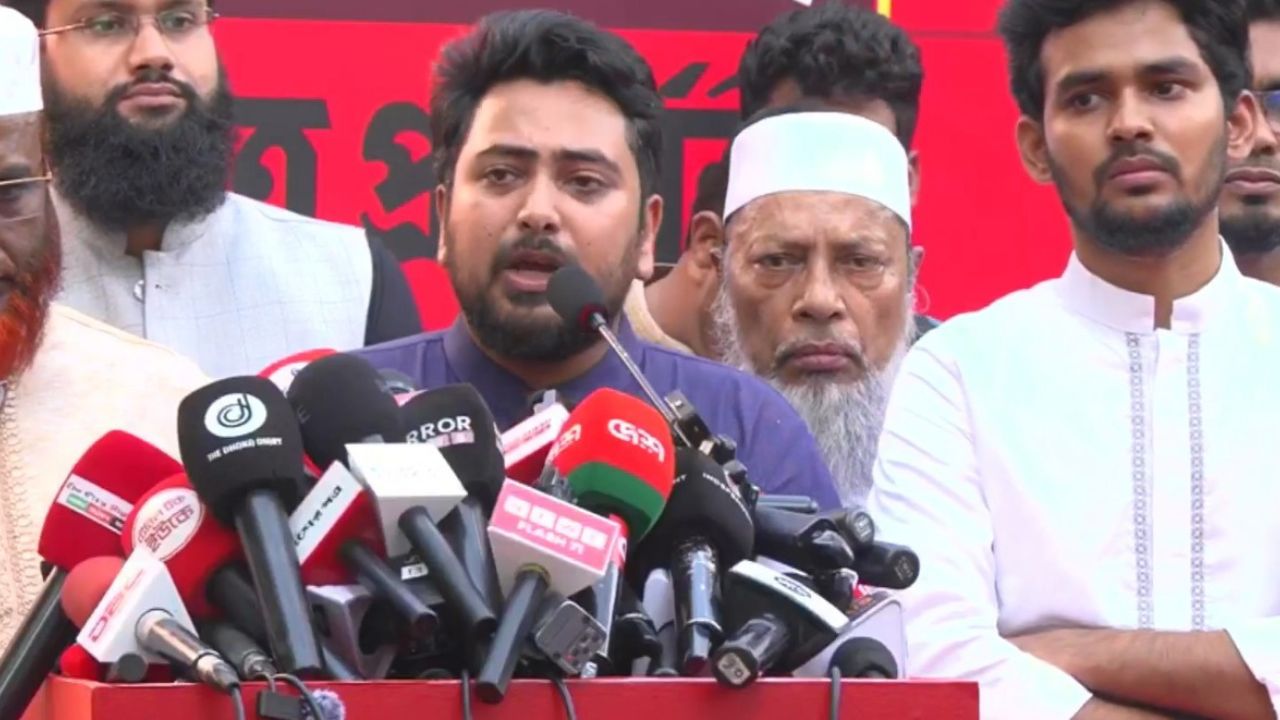



Nahid Islam, convener of the National Citizen Party (NCP) and opposition chief whip, has said the history of the July mass uprising should not be politicised.
He also called for legislation to recognise the July Mass Uprising Memorial Museum as an autonomous institution.
The NCP leader told reporters on Saturday morning after visiting the museum with other NCP leaders.
He stressed the need for an independent structure for the July museum.

“For 16 years, Gono Bhaban was the centre of brutal fascism. Alongside domestic fascism, the exhibition should also depict how foreign powers influenced the creation of fascism during the Hasina regime,” he said.
He called on authorities to ensure that national issues remain its core focus. He also criticised the absence of relics and mementos from schools and colleges outside Dhaka that played active roles in the July mass movement.




Nahid said the history of the uprising should be presented through a complete timeline covering its different phases—the repression, resistance and spread of the movement—rather than focusing on a few familiar faces.
He alleged that the contributions of private university and madrasa students, as well as movements and resistance at universities and in districts outside Dhaka, had not received adequate prominence.
“The July uprising was not a movement of any specific individual, party or region. Therefore, its history must be presented in a way that reflects the participation of people from all classes, professions, regions and educational institutions,” he said.
Warning against the uprising’s history becoming the history of any political party, Nahid said the museum should become an important institution of national heritage.
He called for individuals, researchers and experts who embody the spirit of July and were directly involved in the movement to be included in the museum’s management. He also demanded an autonomous structure and the formulation or amendment of necessary laws.
“The management and development of the museum should be carried forward by individuals who participated in the July mass uprising and hold its spirit,” he said.
He said the July Museum is not merely a building or exhibition space but an important memorial to Bangladesh’s recent history. He called for long‑term planning for its management, security, staffing, exhibitions and presentation of history.