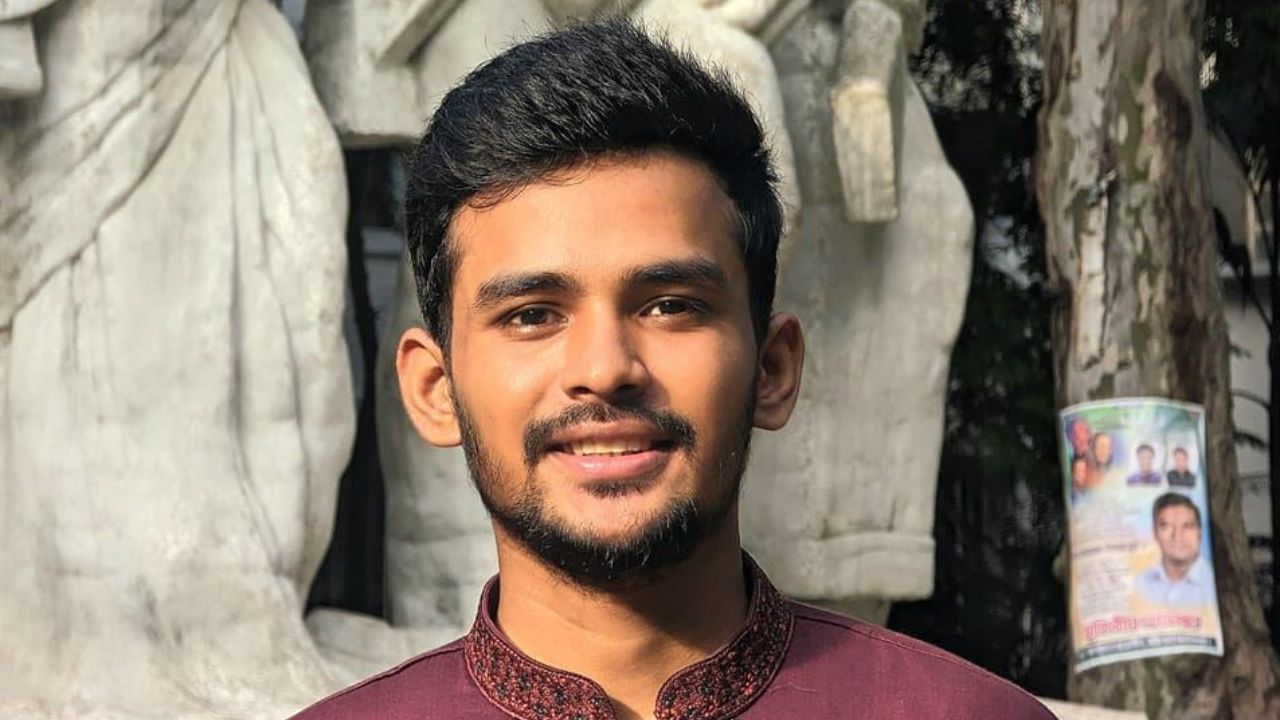
The International Crimes Tribunal-1 has formally opened trial proceedings against four senior figures of the ousted Awami League government, including former ICT adviser and Sheikh Hasina’s son Sajeeb Wazed Joy, in connection with alleged crimes against humanity committed during the July 2024 uprising.
The tribunal, headed by Justice Md Golam Mortuza Mozumder with members Justice Md Shafiul Alam Mahmood and retired district judge Md Mohitul Haque Enam Chowdhury, took cognisance of the charges on Thursday.
The court issued an arrest warrant against Joy. It also ordered that former adviser to Hasina Salman F Rahman, former law minister Anisul Huq, and former state minister for ICT Zunaid Ahmed Palak—all currently in jail in separate cases—be shown arrested in the crimes-against-humanity case and produced before the tribunal on 14 December.
The prosecution was represented by Chief Prosecutor Mohammad Tajul Islam.
According to case records, Joy and Palak are charged together in one case carrying three allegations, while Salman and Anisul face separate charges contained in five counts.
Charges against Joy and Palak
First Charge: Incitement through social media leading to attacks
The prosecution alleges that during the anti-discrimination student movement, and with the approval, instruction, and knowledge of Joy, Palak made a series of incendiary Facebook posts around midnight on 14–15 July 2024.
These posts included: “The Rajakars who carried out the mass killing of students and teachers at Dhaka University on March 25 — does it not cause shame to chant slogans in favour of those Rajakars by calling oneself a Rajakar’s child?”

“Who are you? Who am I? Bengali, Bengali… Your and my address: the Padma–Meghna–Jamuna.”
“The weapon of ’71—let it roar once more… You who are Rajakars, leave Bengal this moment.”
The prosecution argues these posts incited attacks carried out later that night and on 15 July at Dhaka University and nationwide by police, Chhatra League members, and armed Awami League cadres—resulting in widespread injuries, obstruction of medical treatment, and assaults inside hospitals.
The violence, the case states, continued until 5 August, the day the Hasina government fell. Over this period, more than 1,400 protesters, including Abu Sayeed, were allegedly killed, and over 25,000 wounded.
The prosecution asserts that Joy and Palak failed to prevent or punish subordinates, amounting to command responsibility.



These offences fall under Sections 3(2)(a)(g)(h), 4(1), 4(2), 4(3) of the ICT Act and are punishable under Sections 20(2) and 20A, which allow for the death penalty.
Second Charge: Internet shutdown to aid killings and conceal atrocities
The second allegation states that, with Joy’s direction, approval and knowledge, Palak enabled the use of lethal force to suppress protesters and facilitated “maximum force” operations by law enforcement.
This included reducing mobile internet speed and then shutting it down; issuing false statements about the shutdown; blocking broadband, mobile internet and platforms including Facebook, TikTok and WhatsApp; and disabling cache servers.
The prosecution claims the shutdown concealed atrocities from both Bangladesh and the global community and facilitated mass arrests, torture and killings.
It further alleges that between 12:47am and 8:00am on 15 July, mobile internet was shut down across five public university areas, and on 16 July from 6:39pm, services were blocked across 55 public universities and four private universities via BTRC.
These actions, prosecutors argue, enabled coordinated block raids and facilitated repression nationwide.
These acts are also charged under Sections 3(2)(a)(g)(h), 4(1), 4(2), 4(3) of the ICT Act.
Third Charge: Assisting killings on 5 August
The third charge alleges that Joy and Palak, through orders and approval to subordinates, helped conceal the atrocities by enforcing a nationwide internet blackout and facilitated the killing of Jabeer Ibrahim, Samaul Aman Nur and 32 others in Uttara on 5 August.
The prosecution argues that the killings were carried out by law enforcement and armed Awami League cadres in an effort to suppress the March to Dhaka programme and keep the Hasina government in power.
These are categorised as crimes against humanity under the same sections of the ICT Act.
Charges against Salman F Rahman and Anisul Huq
The charges against Salman and Anisul span five counts, each alleging their involvement—through incitement, instruction and assistance—in imposing curfew, deploying lethal weapons and directing operations intended to kill and eliminate protesters.
The prosecution contends that they acted through then Prime Minister Sheikh Hasina, the home minister and 14-party leaders, and that they knowingly facilitated killings and repression through law enforcement and armed Awami League members. They are also accused of providing encouragement, provocation and operational guidance during curfew-linked crackdowns.
All five charges fall under Sections 3(2)(a)(g)(h) and 4(1), 4(2), 4(3) of the ICT Act, carrying the same maximum penalty of death.
The tribunal’s decision follows several major verdicts in recent months.
On 17 November, former Prime Minister Sheikh Hasina was sentenced to death by the tribunal for crimes against humanity committed during the 2024 unrest.
On 27 November, in a separate corruption case involving Purbachal plot allocations, she was handed a 21-year prison sentence by a Dhaka court. Joy was also sentenced to five years in prison and fined in the case.
On 1 December, Hasina was awarded five years in another corruption case related to Purbachal plot.
In July, she was sentenced to three years imprisonment for contempt of court.