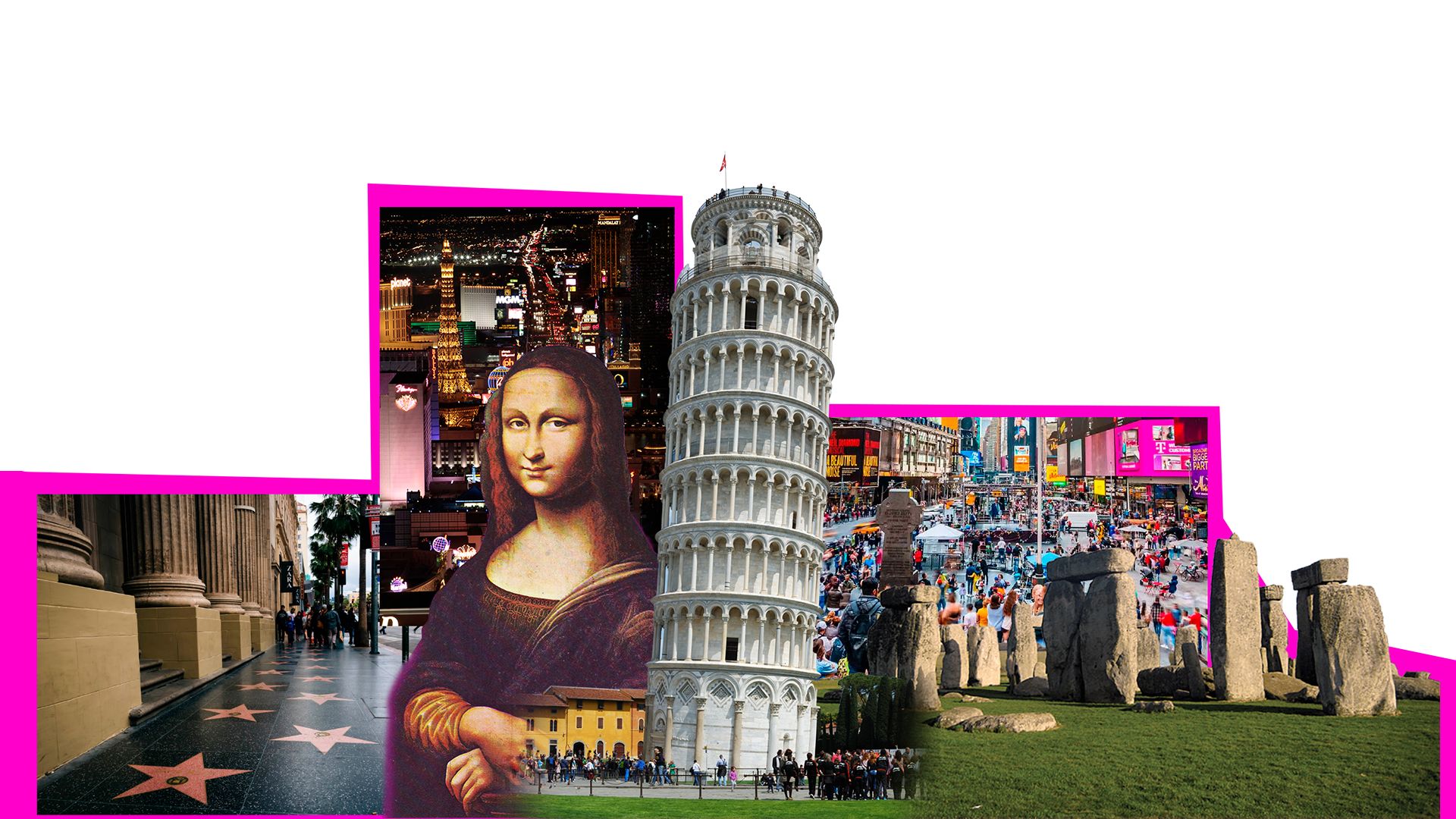

Travel has taught me an important lesson: The more famous a destination becomes, the harder it is for reality to live up to the photograph.
Before every trip, I used to do what most travellers do: scroll through glossy magazines promising unforgettable experiences. Every destination looked magical. Every landmark seemed larger than life. But after visiting some of the world’s most famous attractions, I realised that popularity and satisfaction aren’t always the same thing.
That doesn’t mean these places aren’t worth visiting. They absolutely are. History, culture, and personal curiosity make each one special. But sometimes the postcard sets expectations so high that reality simply can’t keep up.
Hollywood Walk of Fame, Los Angeles
The first time I walked along the Walk of Fame, I expected to feel like I’d stepped into the glamorous heart of the film industry. Instead, I found myself looking down at what was, essentially, a pavement with famous names stamped on it.
There was a small thrill in spotting the stars of actors I admired, but beyond that, it felt surprisingly ordinary. Hollywood, it turns out, is far more cinematic on screen than it is beneath your feet.

The Leaning Tower of Pisa, Italy
Pisa’s tower certainly earns its fame as one of the world’s most recognisable landmarks. I couldn’t help laughing at the obvious joke; it still hasn’t managed to stand up straight after all these centuries.
But around it was a sea of souvenir stalls and hundreds of tourists all attempting the exact same photo, each pretending to hold the tower upright. Somewhere in that crowd, I became just another person striking the same pose.
The Mona Lisa, Paris




Then came the Louvre. Like millions before me, I joined the queue, shuffled slowly through the galleries, and finally caught sight of Leonardo da Vinci’s masterpiece. My first thought: “Is this it?”
Not because the painting lacks artistic brilliance, but because years of seeing it reproduced in books, films, and documentaries had convinced me it would be larger, or at least, more overwhelming. Instead, I viewed it over a forest of raised smartphones, sharing a brief moment with hundreds of strangers before being swept away by the crowd.
Times Square, NYC
If there’s one place that perfectly captures sensory overload, it’s Times Square. The giant billboards are impressive for about five minutes – after that, all I could think about was how unbelievably crowded it was.
At one point, I joked that Dhaka felt roomier by comparison, and anyone who’s experienced its streets knows that’s saying something. The lights are dazzling, but breathing space is a luxury.
The Strip, Las Vegas
Growing up, I remember constantly seeing the famous “Welcome to Fabulous Las Vegas” signboard in movies, documentaries, and more than a few daydreams. The lights, the glamour, shows like Cirque du Soleil, Penn and Teller working their magic, the grand hotels throwing parties I was (surprise, surprise!) too young to attend. In my head, it was a city that never stopped sparkling.
So, I was more than a little dumbfounded to discover that the famous Strip is really just one stretch of road, and that the rest of the city was seedy, sun-bleached motels where God only knows what people were up to (probably nothing good).
Stonehenge, England
After years of reading about one of humanity’s greatest archaeological mysteries, I finally arrived, looked at the monument, and thought: “It’s… just a bunch of rocks.”
Of course, I knew they were among the most historically significant rocks in the world, standing for thousands of years and still puzzling archaeologists. But expectation has a funny way of overpowering perspective. I’d imagined something larger, more immersive, more dramatic than the carefully protected circle visible only from a distance.
Looking back, I don’t regret visiting a single one of these places. I’m glad I did. Every famous landmark carries a story, and sometimes that story is more meaningful than the attraction itself.
Travel has taught me that the greatest destinations aren’t always the ones with the biggest reputations. More often, they’re the places we discover without impossible expectations – the ones that quietly surprise us instead of loudly announcing themselves.
Perhaps that’s the real secret to travelling well. The best memories are rarely found in the postcard. They’re found in the moments after you put the camera away.