US Vice-President JD Vance said on Saturday that he expects to travel to Switzerland soon for talks with Iran, even as Tehran threatened to close the Strait of Hormuz, accusing the United States and Israel of violating the recently agreed ceasefire.
Iran’s Khatam al-Anbiya Central Headquarters said the strategic waterway, through which a significant share of global oil shipments passes, would be closed to commercial traffic in response to what it described as repeated ceasefire violations by the US and Israel, according to the state-run Mehr news agency.
The military command described the move as the “first step” in its response and warned that further measures would follow if what it called “aggression” continued.
Iranian media also reported that a delegation would travel to Switzerland to press Washington to fulfil its commitments under the interim agreement.
“In Switzerland, we intend to press for the fulfilment of the other side’s commitments and clarify how they plan to act on their obligations,” Iranian Foreign Ministry spokesman Esmaeil Baghaei was quoted as saying by Fars News Agency.
He warned that if the United States failed to implement its commitments, Iran would take what it called “necessary measures”.

Meanwhile, Israeli air strikes across Lebanon reportedly killed at least 32 people on Saturday despite ongoing ceasefire efforts.
Lebanon’s National News Agency said four members of a family were killed when an Israeli strike hit a house in Sohmor in the western Bekaa Valley. One child was reported trapped under the rubble.
Lebanon’s Health Emergency Operations Centre said another strike in Qanarit, in the Sidon district, killed at least seven people and injured 13 others.
The Lebanese army accused Israel of trying to undermine efforts to restore stability.


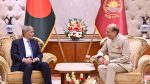

“The continuation of Israel’s brutal attacks aims to obstruct any solution that would allow the restoration of stability in Lebanon,” the army said in a statement.
It also confirmed that one of its military personnel had been killed in an Israeli strike on the Kafr Reman-Nabatieh road.
The latest escalation has also exposed growing differences between Washington and Tel Aviv over Lebanon.
Political analysts say criticism of the Trump administration has intensified within Israel, with several politicians and media outlets accusing the US president of abandoning Israeli interests.
Prime Minister Benjamin Netanyahu is reportedly facing increasing political pressure as he weighs US calls for de-escalation against domestic demands to continue military operations.
Analysts say any deterioration in Netanyahu’s relationship with President Donald Trump could have significant strategic implications for Israel.
Pakistani Interior Minister Mohsin Naqvi arrived in Tehran for talks with senior Iranian leaders, including Foreign Minister Abbas Araghchi, in what observers see as an effort to revive stalled US-Iran negotiations.
Diplomatic sources say Naqvi has played an important role in previous rounds of indirect negotiations and is viewed as a trusted intermediary by both sides.
His visit is being interpreted as a sign that negotiations have reached a difficult stage and require high-level political intervention from Islamabad.
Russian Security Council Deputy Chairman Dmitry Medvedev cautioned that any agreement between Washington and Tehran could quickly collapse if fresh hostilities erupted.
Writing on the social media platform Max, Medvedev said expectations of lasting peace were “rash”, arguing that new military action in Lebanon or other provocations could easily derail the process.
Separately, a United Nations hearing in New York became heated after Israel’s ambassador, Danny Danon, strongly criticised UN officials over reports accusing Israel of violations against Palestinian children during the conflict.
Danon demanded the resignation of Pramila Patten, the UN Secretary-General’s Special Representative on Sexual Violence in Conflict, after Israel was included for the first time on a UN blacklist.
The exchange escalated when Vanessa Frazier, the UN representative for Children and Armed Conflict, interrupted Danon and defended the reports, saying they were based on verified evidence.
Danon rejected the findings and accused UN officials of bias against Israel.