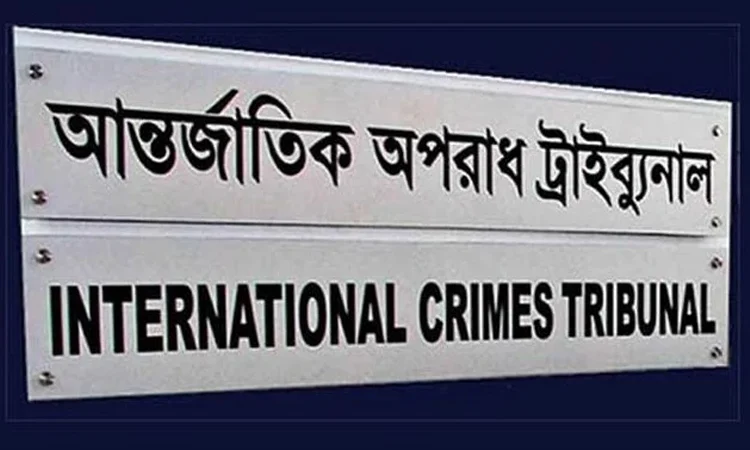



Controlled administrative investigations were routinely staged to grant legal legitimacy to extrajudicial killings whenever they entered the public domain, the International Crimes Tribunal-1 was informed during the trial of accused former army officer Ziaul Ahsan.
Testifying before the tribunal, Md Rafiqul Islam, the investigation officer in a case against Ziaul, added that controlled probes were systematically deployed to ensure the actual perpetrators remained hidden.
Islam explained that to submit these controlled investigation reports, officials were forced to conceal the true causes of death by preparing false and inaccurate autopsy reports alongside misleading police reports, all aimed at protecting the real culprits.
He noted that these details emerged while investigating the allegations of crimes against humanity brought against Ziaul.

On Thursday, the International Crimes Tribunal-1 recorded a section of the deposition of Islam, who is serving as the 15th and final prosecution witness in the case.
The tribunal had initially begun recording his testimony on 30 September regarding allegations of crimes against humanity involving more than a hundred enforced disappearances and murders. The remaining portion of his deposition is scheduled to be taken on Sunday, 11 October.
During his statement, Islam outlined his investigation methodology, detailing whose statements were recorded, the various locations visited, and the data and evidence collected throughout the inquiry.




Several army officers, including former Army Chief Iqbal Karim Bhuiyan, have provided witness testimonies in the case.
According to the prosecution, these depositions provided a detailed account of how Ziaul transformed into a “serial killer” and described how officers of the Rapid Action Battalion (RAB) gradually became embroiled in such systemic crimes.
The formal trial against Ziaul commenced after the International Crimes Tribunal-1 framed three charges against him on 14 January over his alleged direct role in state-sponsored enforced disappearances and extrajudicial killings during the Awami League government’s tenure, involving the murder of 104 individuals.
According to prosecution claims, Ziaul served as the director of RAB’s Intelligence Wing and additional director general (Operations) between 2009 and 2016.
During this period, he directly participated in enforced disappearances and extrajudicial killings, with RAB personnel committing these offenses under his explicit orders and approval.
Prosecution sources further alleged that after his initial deployment to RAB as an army Major in 2009, Ziaul became a close and trusted confidant of then Prime Minister Sheikh Hasina.
He remained seconded to various forces and agencies under the Ministry of Home Affairs without returning to the Bangladesh Army until his dismissal from service in 2024.
The prosecution asserted that Ziaul was eventually promoted to the rank of major general without completing mandatory professional courses, training, or holding command over any battalion or brigade – a promotion described as unprecedented in the professional history of the Bangladesh Army.