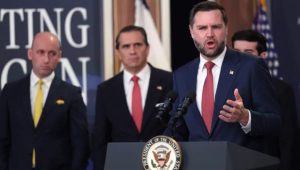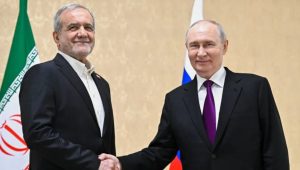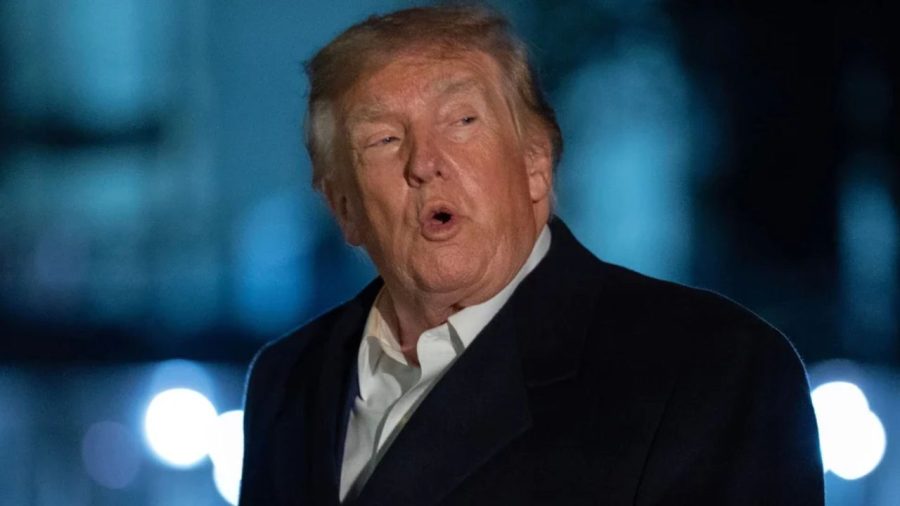



US President Donald Trump has ruled out renewed American military strikes against Iran before the November 3 midterm elections, citing progress in ongoing discussions with Tehran amid continued tensions across the Middle East.
In a social media post on Thursday, Trump said Washington would not launch attacks against Iran before the elections, adding that his administration was engaged in “productive discussions with the Islamic Republic of Iran.”
The announcement follows weeks of uncertainty over whether the United States would resume large-scale military operations against Iran after a conflict that has continued for several months, reports AP.
During campaign appearances this week, Trump suggested that the war could potentially end around the time of the midterm elections, although he had previously left open the possibility of renewed military action.
The United States and Iran reached an interim agreement in June intended to establish a 60-day ceasefire and create a framework for a lasting peace deal. However, the arrangement collapsed within weeks as military operations resumed and disagreements persisted over control of the strategically important Strait of Hormuz.
Diplomatic efforts have since encountered significant obstacles. Last month, Trump rejected an Iranian proposal under which Tehran would reopen the Strait of Hormuz within seven days in exchange for Washington meeting certain conditions.

Iran subsequently confirmed that it had received a counterproposal from the United States. Iranian Foreign Minister Abbas Araghchi said on Thursday that Tehran was expected to deliver a formal response within the coming days.
Trump also disclosed on Wednesday, during a campaign rally in San Antonio, Texas, that his special envoy, Steve Witkoff, had continued indirect talks with Iranian officials.
Despite the diplomatic contacts, the US president indicated that he was not necessarily interested in securing an immediate agreement.



“I think the deal isn’t really something that I want to do, but they’re willing to offer us anything to stop,” Trump said.
The president has maintained that Washington is strengthening its negotiating position through its military presence in the region. US forces have been helping oil tankers transit the Strait of Hormuz, while a naval blockade continues to limit Iran’s oil exports.
According to reports, the US Central Command has been escorting tankers through the waterway at night, with their tracking systems switched off. Gulf countries have also relied on pipelines that bypass the strait to keep oil exports close to prewar levels.
However, Iran has stepped up attacks on tankers in recent days, leaving commercial traffic through the critical shipping corridor well below its prewar volume. Shipments of liquefied natural gas and refined petroleum products have also declined.
Shipping analysts say some tanker operators willing to cross the strait under US military protection are demanding fees of $1 million or more per day.
The regional security situation has grown more complex following a military campaign by Saudi Arabia and Yemen’s internationally recognised government against Iran-backed Houthi rebels. The operation aims to push the group away from the Bab el-Mandeb Strait, another vital passage for global oil supplies and commercial shipping.
The Houthis have retaliated with drone and missile attacks targeting Saudi airports and other infrastructure, adding to concerns over the security of major maritime routes.
Meanwhile, Washington continues to reinforce its military presence in the region despite Trump’s announcement that strikes against Iran would not resume before the elections.
US officials have said the aircraft carrier USS Theodore Roosevelt, accompanied by thousands of troops and additional naval vessels, could arrive in the region by the end of October.
The USS Abraham Lincoln, which has been deployed in support of the war against Iran, was scheduled to return to its home port in San Diego on Thursday after an extended deployment.
The carrier’s mission has reportedly been marked by crew fatigue, mental health concerns and shortages of essential supplies, including food and hygiene products.
The USS George Washington, normally stationed in Asia, replaced the Lincoln in August. Another carrier, the USS George H.W. Bush, has been operating in the Middle East for approximately six months and recently made a port call in Phuket, Thailand.
Trump’s latest statement offers a temporary indication of Washington’s military intentions ahead of the November 3 elections.
However, continued hostilities, unresolved disputes over the Strait of Hormuz and uncertainty surrounding the diplomatic process leave the prospects for a lasting settlement unclear.