Since her public debut in November 2022, Kim Ju Ae, the daughter of North Korean leader Kim Jong Un, has transitioned from a mysterious child figure to a central pillar of state propaganda.
While her age is estimated to be approximately 13, her increasing presence at strategic military and diplomatic events has led South Korea’s National Intelligence Service (NIS) to conclude that she is being groomed as the next in line to lead the nuclear-armed nation.
Her trajectory, marked by a shift from simple attire to sophisticated, authoritative presentation, provides a rare window into the regime’s long-term survival strategy.
Kim Ju Ae’s first official appearance occurred during the high-stakes test of an intercontinental ballistic missile (ICBM), where she was photographed walking hand-in-hand with her father.
Initially dressed in a black pair of trousers and a white padded jacket with her hair tied back, this introduction was far more than a family outing. It served as a calculated unveiling of the “Baekdu bloodline’s” fourth generation.
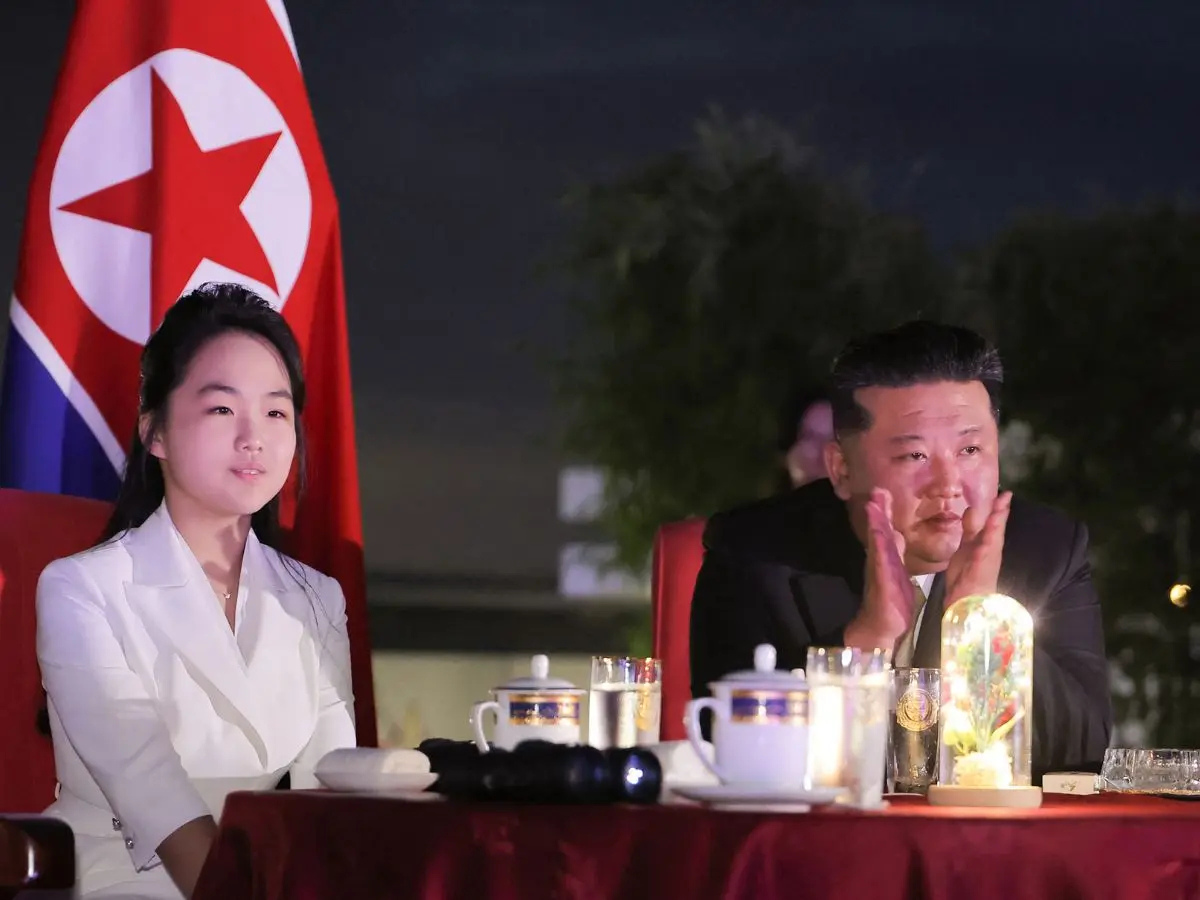
Since that debut, she has become a constant fixture at her father’s side, standing prominently at missile launches, military parades, and official overseas missions.

This level of exposure is unprecedented for the child of a North Korean leader at such an early stage in their development.
Analysts believe this carefully managed ascent is orchestrated by the government’s Propaganda and Agitation Department.
As Kim Ju Ae is still very young, her age is viewed as a potential weakness for a future leader.
To counter this, the state has transitioned her into elegant and mature clothing – including formal suits, burgundy jackets, and elaborate hairstyles – that often mirrors the appearance of her mother, Ri Sol Ju.
By presenting her in these formal settings, the regime seeks to project an image of stability and capability, masking her youth with a veneer of authoritative experience.
This strategy follows a historical pattern known as “image replication,” which the Kim dynasty has utilised for decades to secure legitimacy.
In the early years of his own rule, Kim Jong Un famously adopted the sartorial style and mannerisms of his grandfather, the state founder Kim Il Sung, to offset his lack of experience and youthful appearance.
Experts note that by visually linking a successor to established figures of authority, the regime facilitates a seamless transfer of respect and loyalty from the public.
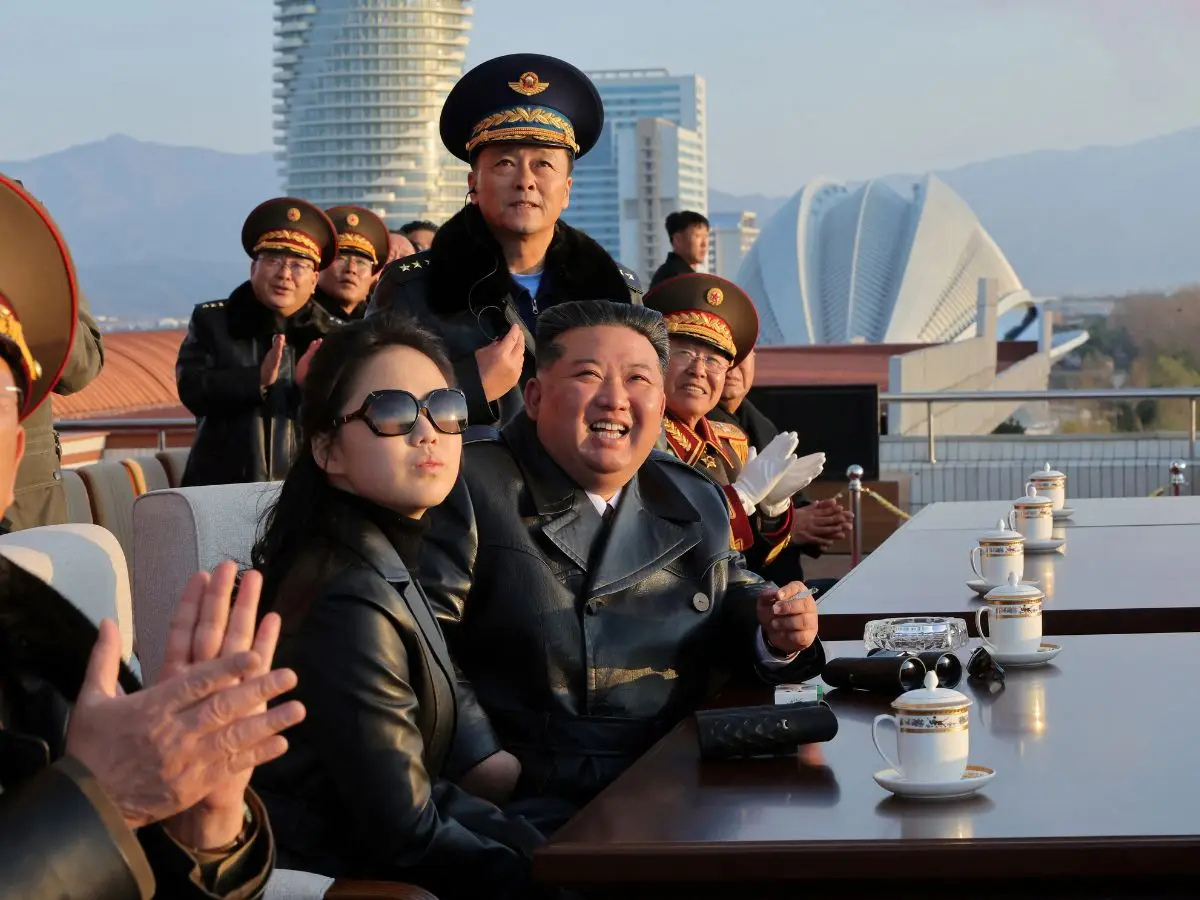
Just as Kim Jong Un’s resemblance to his grandfather was used to suggest a sense of continuity, Kim Ju Ae’s presentation alongside her father in matching leather trench coats at military bases is designed to signal her readiness for leadership.
Beyond securing legitimacy, her public image serves as a “differentiation strategy” to elevate the ruling family above the general population.
While ordinary North Koreans are subject to the 2020 Reactionary Ideology and Culture Rejection Act – which strictly prohibits Western culture and “anti-socialist” fashion – Kim Ju Ae has been observed in luxury items, including a $1,900 (£1,405) Christian Dior jacket and partially see-through blouses.
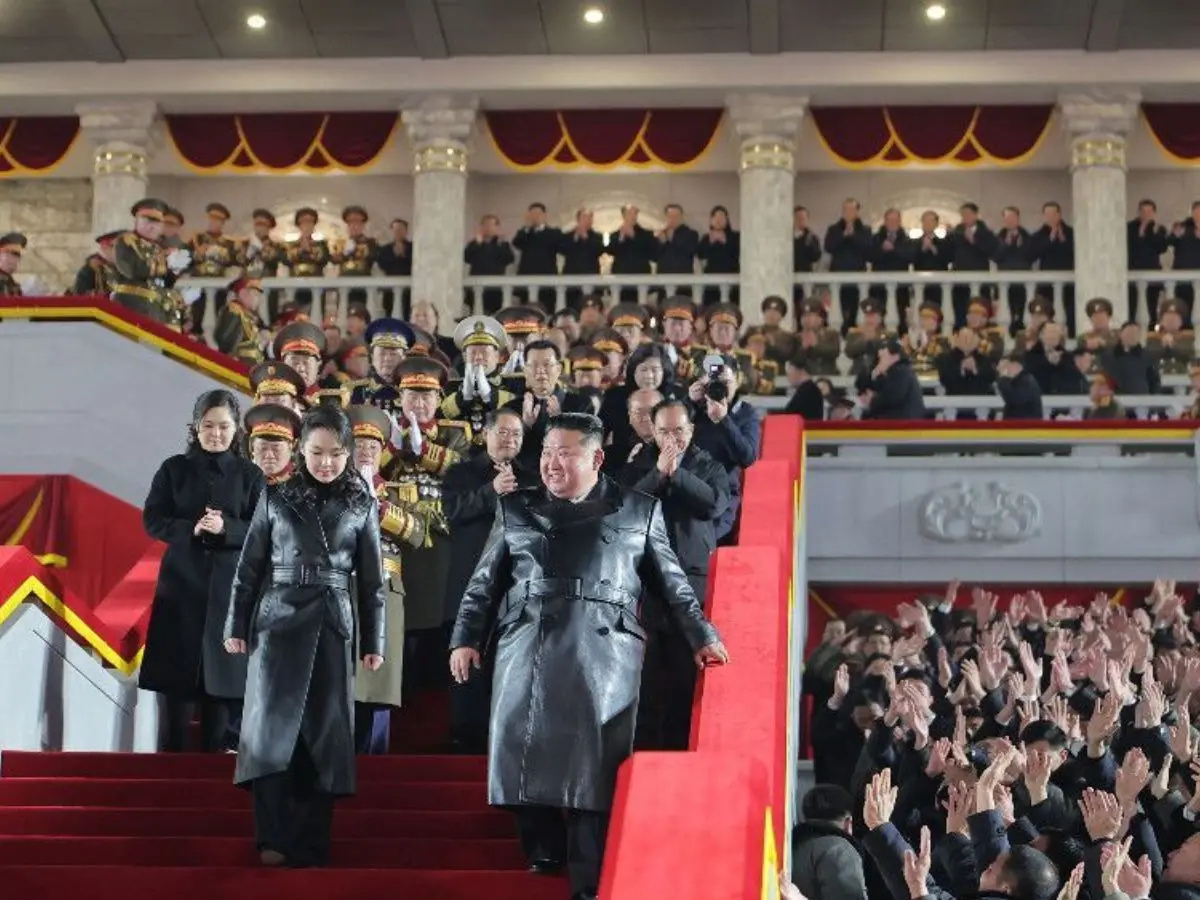
These choices highlight the “god-like” status of the Kim family, who remain exempt from the restrictive laws they enforce.
Professor Lee Woo-young of the University of North Korean Studies notes that in North Korea, there is effectively “nothing the supreme leader is unable to do,” regardless of domestic bans on foreign culture.
Despite state warnings that such “non-socialist” styles “eat away at the regime,” Kim Ju Ae has inadvertently become an icon for the country’s affluent youth.
Reports indicate a rising demand for leather coats, sunglasses, and high-end cosmetics among the wealthy elite in border regions, as citizens attempt to keep up with the styles displayed by the leader’s daughter.
This cultural influence further cements her position as a figure of authority and aspiration within the state.
As she continues to accompany Kim Jong Un to strategic military locations and national ceremonies, her presence remains the primary indicator of North Korea’s political future.