

With Eid-ul-Adha approaching, Dhaka’s shopping malls and markets are fully stocked with new clothes, jewellery, shoes and fashion accessories. What many businesses say is missing, however, are customers.
After four consecutive years of high inflation, rising living costs and fresh increases in fuel and food prices, retailers say this year’s Eid market has slowed significantly compared with previous years.
Where shoppers once spent freely on multiple outfits, expensive sarees, jewellery and branded products ahead of Eid, many are now limiting purchases to essential items and moderate budgets.
Economists say prolonged inflation has sharply reduced people’s purchasing power, while slower job growth and rising rural poverty over the past two to three years have further weakened consumer spending.
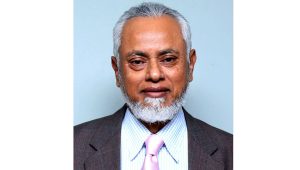
“People’s purchasing power has declined overall,” economist M Masrur Reaz, chairman and CEO of Policy Exchange Bangladesh, told TIMES of Bangladesh.
“As living costs continue to rise, many families are cutting back on extra spending during festivals,” he said.
With around two weeks left before Eid, visits to the New Market area and Bashundhara City Shopping Mall on Friday revealed mostly quiet stores and sparse crowds despite the weekly holiday.
Many traders said shoppers were less enthusiastic this year and that sales remained below expectations.

A salesperson at Maria Fashion in Noorjahan Market said business had also been disappointing during Eid-ul-Fitr earlier this year.
“We still have fewer customers than expected. But we hope sales will improve in the remaining days before Eid,” she said.
The shop is seeing comparatively higher demand for two-piece and one-piece outfits, according to the salesperson.
At Bashundhara City, a salesperson at Albeli Fashion, which sells Pakistani and Indian dresses, described the market situation as one of the worst in recent years.
“There is almost no business this time. The whole year has been worse compared with previous years,” he said.
A slightly different picture emerged at Nihar Jamdani Kutir in Dhanmondi Hawkers Market, where sales were described as “reasonably good”.




A representative of the store said “Karchupi Jamdani” sarees were trending ahead of Eid.
Retailers say clothing prices have also risen alongside essential commodities, further affecting Eid shopping trends this year.
A salesperson at the store said sarees that once sold mostly within the Tk2,000 to Tk2,500 range are now being sold more frequently at prices up to Tk4,500.
The shop has brought in around 250 new sarees for Eid, while several hundred more remain in storage, the salesperson added.
At Sumaiya Bastra Bitan in the same market, salesperson Abul Kashem said sales are usually lower during Eid-ul-Adha than Eid-ul-Fitr, but this year the slowdown has been more noticeable.
“Sales have declined somewhat because of the political changes and the economic situation,” he said.
He added that most shoppers visiting the market were now choosing mid-range products instead of premium items.
At Bashundhara City Shopping Mall, an employee at local fashion brand Deshal said the store had launched a new cotton collection for Eid, but customer turnout remained weak compared with previous years.
Sellers of Iranian Burkha Bazar said they were offering discounts of 20 to 25 per cent in an effort to attract buyers.
A salesperson at jewellery store KZ said customers were increasingly opting for lower-priced products.
“People are now buying cheaper items more often,” the salesperson said.
Sales staff at Jyoti Saree Ghar also described sales as disappointing despite bringing in a large number of new sarees for Eid.
“Most of the customers who are coming are buying sarees for weddings or as gifts, not specifically for Eid,” one salesperson said.
At Raymond Shop, a salesperson said business had remained weak for the past two years.
He said customers were moving away from expensive fabrics and instead prioritising affordable and practical clothing.
Fashion brand Bishwo Rang founder Biplob Saha said consumer behaviour and purchasing power had changed significantly over the past few years.
In his view, the country’s economic difficulties, the lingering effects of the Covid pandemic, political instability and the lack of a business-friendly environment had all created long-term pressure on the market.
“Reduced business hours at different times, political uncertainty and economic pressure together have hampered business,” he said.
Economist M Masrur Reaz said a large share of household income was now being spent on food, rent, healthcare, education and transport, leaving little room for clothing or luxury spending.
He added that higher import costs and the rising US dollar exchange rate had also increased the prices of foreign clothing and branded products.
As a result, many consumers are now placing greater importance on affordability and durability rather than brand names, he said.