


Leading manufacturers have urged the government to introduce clear rules for publishing research on product safety, saying studies alleging harmful substances such as microplastics should first be shared with the relevant regulator for verification to prevent consumer confusion and unnecessary damage to businesses.
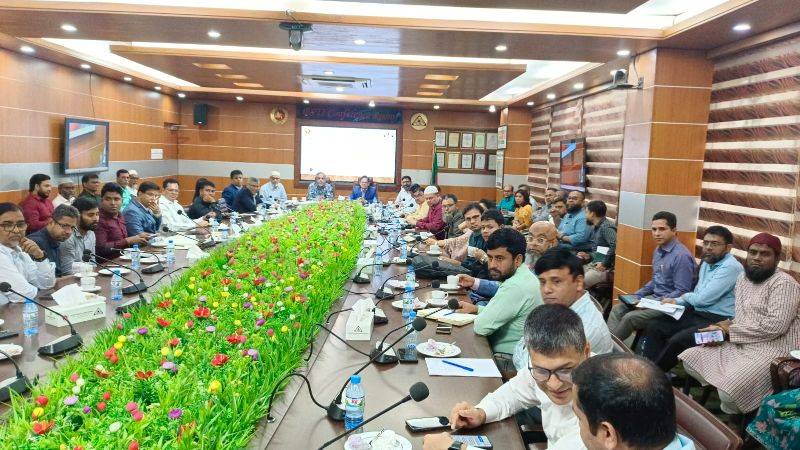
The call came at a public hearing organised by the Bangladesh Standards and Testing Institution (BSTI) in Dhaka on Thursday, where industry representatives also sought a legal framework for publishing research on regulated consumer products, according to a BSTI press release.
The demand follows recent public debate over studies claiming the presence of microplastics in toothpaste and potassium bromate in bakery products. Speakers said premature publication of unverified findings could trigger negative publicity, erode consumer confidence and inflict lasting reputational damage on manufacturers.
Bangladesh Standards and Testing Institution Director General (Secretary) Kazi Emdadul Haque said research should be encouraged because quality studies help shape policy and public awareness. However, findings that could create public anxiety should be shared with the regulator before publication.

Referring to the recent toothpaste study, he said informing BSTI beforehand would have enabled the regulator to review the findings. He also sought to reassure consumers, saying there was no reason for alarm over microplastics in toothpaste as no international standard currently specifies permissible limits.
He said BSTI’s expert committee would examine relevant International Organization for Standardization (ISO) and other international standards before deciding whether regulatory measures were needed.




Square Group Senior Legal Counsel (Legal and Regulatory Affairs) Sohel Hossain said toothpaste is subject to mandatory BSTI certification, making prior consultation with the regulator essential before publishing research findings.
He said private research does not always follow internationally recognised methodologies and that regulatory verification could help prevent inaccurate conclusions from reaching the public. Otherwise, businesses could face media trials, reputational damage and financial losses even if subsequent investigations proved the claims unfounded.
Olympic Industries Ltd Adviser (International Marketing) Shafikur Rahman Bhuiya referred to recent claims that potassium bromate had been detected in several bakery products. He said later tests by BSTI’s accredited laboratory and the Bangladesh Council of Scientific and Industrial Research (BCSIR) found no trace of the substance, but the affected companies had already suffered reputational damage.
Representatives from Square Food & Beverage Ltd, PRAN-RFL Group, Nestlé Bangladesh, Bangladesh Edible Oil Ltd, Transcom Consumer Products, Akij Resource, New Zealand Dairy Bangladesh Ltd, ACI Food & Beverage, Unilever Bangladesh, Marico Bangladesh Ltd, Meghna Group, Reckitt Benckiser (Bangladesh), Arla Foods Bangladesh Ltd, IFAD Group, Nabisco Biscuit and Mega Group of Industries also participated in the hearing.
Participants said consumer protection and industrial development should go hand in hand, calling for greater transparency, accountability and regulatory coordination in publishing product safety research.
The hearing also discussed measures to improve BSTI services, including introducing online payments, enabling online submission of applications and supporting documents, accepting licence renewal applications digitally, developing a Bangladesh Standard for growing-up milk for children aged three to five years, and updating provisions of laws and regulations governing packaged products.