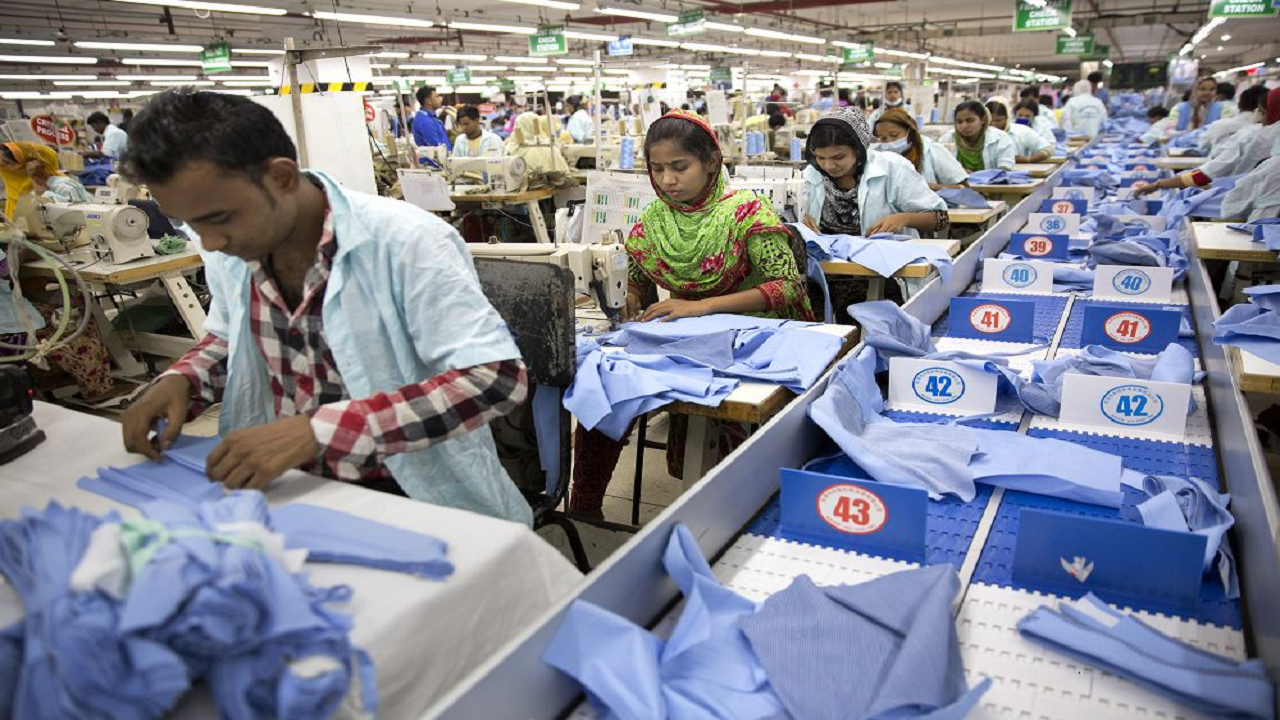

The new India–UK Free Trade Agreement (FTA), signed in July, poses a fresh challenge for Bangladesh’s textile sector.
Once approved by the House of Commons and the House of Lords, the deal will sharply reduce duties on Indian apparel entering the UK market.
Currently, India exports garments worth around £880 million to the UK, compared to Bangladesh’s £2.74 billion. The FTA is expected to tilt the playing field.
At a recent roundtable in London, Sudhir Sekhri, Chairman of India’s Apparel Export Promotion Council (AEPC), said Indian apparel exports to Britain could rise two-and-a-half times within three years under the new regime.

Bangladeshi exporters see this as a competitive threat. However, in the short term, they believe UK buyers are unlikely to immediately divert orders to India.
“Reduced or zero duty on Indian apparel products will make them more competitive. It is a challenge, but I don’t think orders will shift to India on a large scale in the short run,” Bangladesh Garment Manufacturers and Exporters Association (BGMEA) President Mahmud Hasan Khan Babu told TIMES of Bangladesh.




He said that Bangladesh will continue to enjoy duty-free access to the UK and EU markets until 2029.
“Both countries have their own advantages,” he said.
“Bangladesh offers lower wages and has built strong buyer confidence over decades. India, on the other hand, benefits from domestic cotton production, a strong backward linkage industry, and comparatively better infrastructure.”
Future challenges
Mustafizur Rahman, Distinguished Fellow at the Centre for Policy Dialogue (CPD), stressed the need for Bangladesh to upgrade skills and productivity.
“Bangladesh will enjoy zero-duty access to many European countries until 2029,” he said. “But if we fail to secure GSP+ status beyond that, our products could face around 10% duty.”
He cautioned that India’s tariff advantages, coupled with infrastructural strengths, could become a significant challenge for Bangladesh’s apparel exports.
The BGMEA president also underlined the importance of addressing domestic bottlenecks.
“We must improve our infrastructure — ports, energy supply, and the Dhaka–Chittagong highway. Access to low-cost credit is equally vital,” he said.
“We are working to improve skills and productivity, but without better infrastructure and affordable financing, competitiveness will remain at risk.”