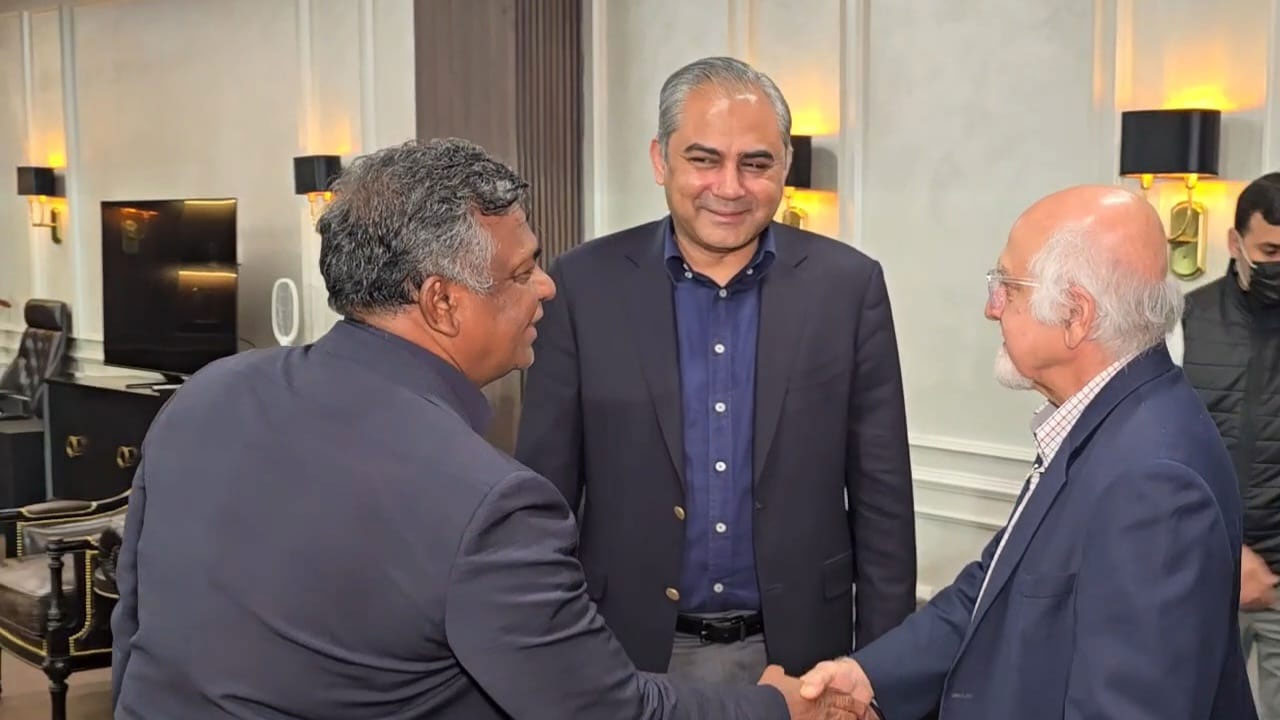

Bangladesh cricket found a measure of breathing space on Sunday when BCB president Aminul Islam Bulbul met ICC and PCB officials in Lahore, discussed the fallout from Bangladesh’s T20 World Cup exclusion, and publicly thanked PCB chairman Mohsin Naqvi for standing by them during a volatile standoff.
The crisis erupted after Bangladesh’s removal from the World Cup rattled the game’s politics. Pakistan escalated matters by signalling a boycott of their match against India, leaving the ICC scrambling to protect both credibility and calendar.
Bulbul flew to Lahore with a clear brief. He wanted dialogue, clarity and support at a moment when Bangladesh cricket felt isolated. The meeting delivered all three, at least in principle.

The ICC urged Pakistan to play their scheduled T20 World Cup match against India on 15 February. That request sat at the heart of the talks, because the entire tournament structure depends on that fixture carrying on as planned.
At the same time, the ICC offered Bangladesh assurances of support after their exclusion. That dual-track approach showed the governing body trying to douse two fires with one hose.




Bulbul made a point of acknowledging Pakistan’s role. He thanked Mohsin Naqvi for backing Bangladesh and for acting as a bridge between the ICC and the BCB when communication risked breaking down.
Pakistani broadcaster Geo TV reported that the ICC responded positively to Bangladesh’s demands. More importantly, officials began shaping a formula to resolve the dispute rather than letting it fester in press statements and counter-briefings.
That formula could carry real substance. Bangladesh may receive compensation linked to World Cup revenues, a crucial issue for a board that relies heavily on ICC distributions to fund its programmes.
The talks also reopened the door to future tours of India under a hybrid model. That detail matters because it offers Bangladesh flexibility and security in an era when bilateral cricket often bends to political pressure.
The PCB played coordinator throughout the discussions. Pakistan’s willingness to mediate, rather than inflame, marked a notable shift after days of tension and hard public positions.
This episode underlined how fragile World Cup politics have become. One exclusion triggered a chain reaction that threatened the tournament’s marquee fixture and forced emergency diplomacy.