The International Civil Aviation Organization (ICAO) launched an Aviation Security National Inspectors (ASNI) Course at the Civil Aviation Academy in Bangladesh, aiming to strengthen aviation security oversight and inspector training in line with international standards.
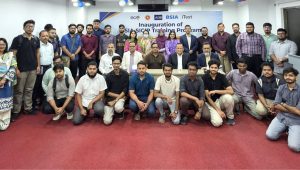
The two-week course, organised by the Civil Aviation Academy with ICAO support under the ICAO TRAINAIR Framework, brought together 12 aviation security inspectors from Bangladesh and several other countries, the organisers said in a press release.
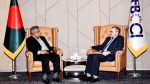
Bangladesh Civil Aviation Authority (CAAB) Member for Operations and Planning Air Commodore Abu Sayeed Mehboob Khan BSP BUP ndc psc attended the inauguration ceremony as chief guest.
CAAB Member for Security Air Commodore Md Asif Iqbal BSP BUP ndc afwc psc gd(p) attended as special guest.

Civil Aviation Academy Director Prashanta Kumar Chakraborty and ICAO-approved trainer and course instructor Mohammad Alamgir were also present at the programme.
In his welcome speech, Prashanta Kumar Chakraborty said internationally standardised training programmes would help strengthen and modernise Bangladesh’s civil aviation security framework.


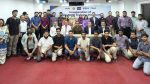
The academy said the ASNI course is being organised by ICAO for the first time under its direct supervision within the ICAO TRAINAIR Framework, with Bangladesh Civil Aviation Academy selected by ICAO as the host institution.
Speaking at the programme, Air Commodore Abu Sayeed Mehboob Khan highlighted the importance of developing trained inspectors to address growing challenges in civil aviation security.
He said such training was essential for implementing ICAO Standards and Recommended Practices (SARPs) and would contribute to improving the country’s aviation security system.
Later, ICAO trainer Mohammad Alamgir outlined the course objectives, content and expected outcomes.
He said the programme would strengthen professional capabilities of aviation security inspectors, improve oversight capacity and support compliance with international aviation security standards.
Participants in the programme are expected to receive training on aviation security inspections, oversight activities, evaluation methods and implementation of international standards.