A humanoid robot representing the Chinese smartphone manufacturer Honor has broken the men’s half-marathon world record, finishing significantly ahead of its human competitors in the capital on Sunday.
The machine, which is equipped with an autonomous navigation system, completed the 21-kilometre course in 50 minutes and 26 seconds. According to the state broadcaster CCTV, the robot maintained an average speed of approximately 25km/h.
This performance comfortably surpassed the standing human world record of 57:20, held by the Ugandan runner Jacob Kiplimo, reports Al Jazeera.

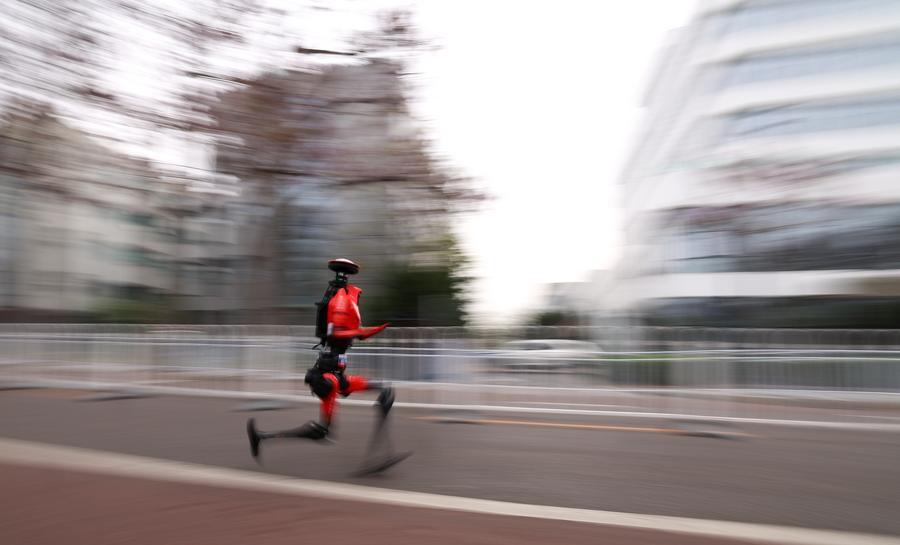
The event, titled the second Beijing E-Town Half Marathon and Humanoid Robot Half Marathon, took place in the Yizhuang district. To ensure safety and avoid collisions, robots and human runners competed in separate lanes.
While some machines demonstrated high levels of agility reminiscent of elite sprinters like Usain Bolt, others possessed only basic movement capabilities.




The record-breaking result underscores the rapid evolution of the Chinese robotics sector. During last year’s event, the fastest robot took more than two hours and 40 minutes to finish, with many entries falling repeatedly. Participation has also grown substantially, with organisers reporting that humanoid entries rose from roughly 20 last year to more than 100 in 2026.
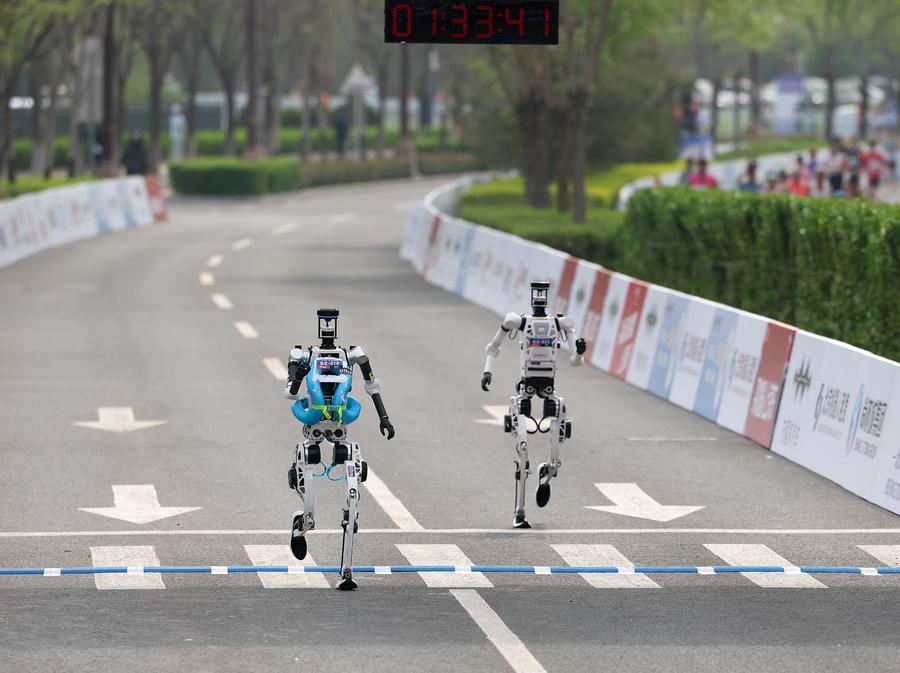
This technological leap is supported by heavy financial backing. A government agency study indicated that investment in robotics and “embodied AI” in China reached 73.5 billion yuan ($10.8b) in 2025.
Public reaction to the spectacle was a mixture of awe and apprehension. Han Chenyu, a 25-year-old student, praised the advancement as “pretty cool” but admitted concerns that the rapid sophistication of artificial intelligence might eventually threaten human employment.
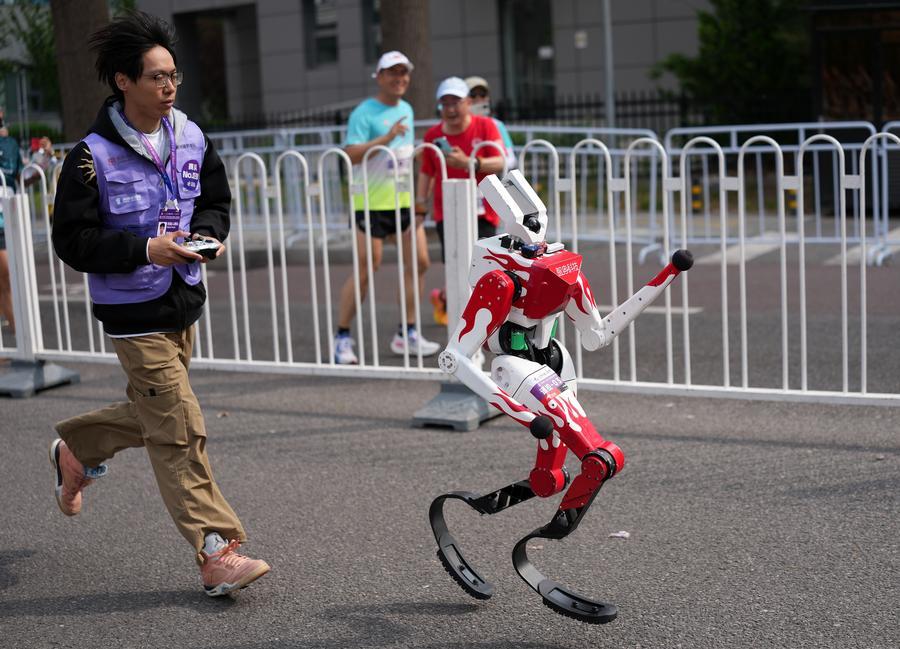
Xie Lei, 41, who attended the race with his family, suggested that humanoid robots could become a fixture of daily life within a few years, assisting with housework, companionship for the elderly, or performing hazardous duties such as firefighting.
“For thousands of years, humans have been at the top on planet Earth,” Xie remarked, noting that robots are now beginning to surpass human capabilities in specific fields like autonomous navigation. “On one hand, it does make you feel a little bit sad for humanity. But at the same time, technology… has given us so much imagination.”