For centuries, the city of Gaziantep has been defined by pistachios, locally known as “green gold,” which remain the most prized ingredient in Turkey’s culinary capital. This valuable crop is the secret behind the city’s legendary baklava and serves as a beloved symbol of the region.
While the typical harvest occurs in September, some pistachios are hand-picked nearly a month early when the nut-like drupes still possess emerald-coloured flesh.
These early-season pistachios are considered essential for traditional sweets such as katmer and baklava, making the city a pilgrimage site for dessert lovers, reports BBC.

According to Hatice Pekmez, an associate professor at Gaziantep University, sweets in the city mark nearly all life milestones, from welcoming new babies with syrupy baklava to mourning with semolina halva. This tradition of sharing dishes is viewed as a vital method for strengthening community bonds in one of the world’s oldest continuously inhabited cities.
At the century-old, family-owned Katmerci Zekeriya Usta, locals gather before dawn for katmer—dough envelopes filled with sweet pistachios and clotted cream—which is traditionally the first breakfast for newlyweds. Mehmet Özsimitçi, the bakery’s third-generation owner, emphasises that reproduction of these flavours relies on local ingredients, including clarified butter from nearby mountain herds.


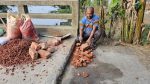
The city’s association with the nut is ancient, with pistachio remains dating back to the 3rd millennium BCE discovered at the archaeological site of Oylum Höyük. Today, Gaziantep features a Pistachio Museum housed in a pistachio-shaped building, while the local markets, such as Bakırcılar Çarşısı (the Coppersmiths’ Bazaar), offer various pistachio-based goods including Turkish delight and rolls of pistachio paste.
More than 70 per cent of Turkey’s pistachio crop originates from this region, where the rocky soil and intense summer heat produce nuts that are sweeter and greener than those grown elsewhere. Following the devastating 2023 Turkey-Syria earthquakes, some city orchards have been managed by caretakers after their owners perished in the disaster.
Baklava remains the “uncontested king” of the city’s pastries, a tradition transformed in the mid-19th century by Güllü Çelebi, who substituted walnuts for local pistachios at the shop Güllüoğlu in the Elmacı Bazaar. Filiz Hösükoğlu, a gastronomy expert, likens the pride in Gaziantep’s baklava production to the artistry of Michelangelo in Florence.
Large establishments like İmam Çağdaş, founded in 1887, continue to employ master bakers who often begin their training as children. Burhan Çağdaş, the bakery’s fourth-generation owner, notes that it takes a minimum of five years to educate a baklava master. For the people of Gaziantep, baklava is more than food; it is a cultural necessity described by Çağdaş as being as vital as “air and water”.