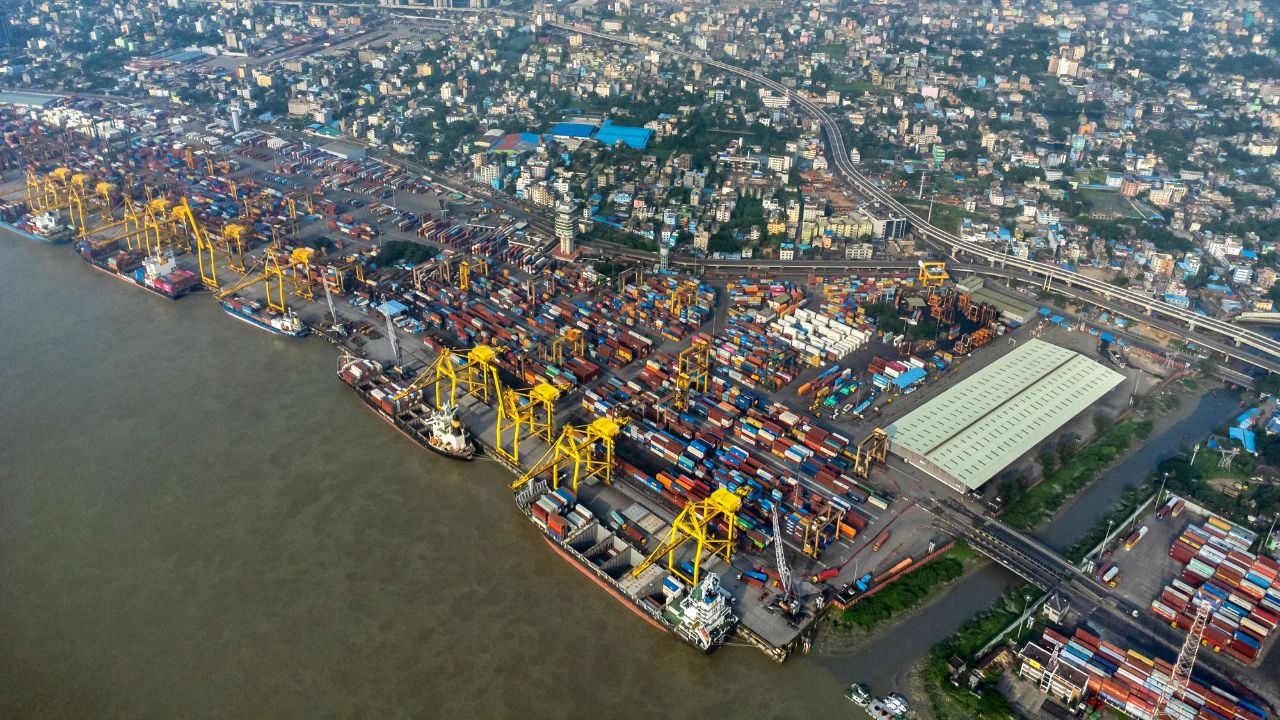
The crew of MV Banglar Joyjatra marked this year’s Eid not with family gatherings or festive meals, but aboard a ship stranded in Iranian waters under the shadow of a widening Middle East conflict.
Then they spent another Eid the same way.
For nearly three and a half months, the Bangladesh Shipping Corporation vessel remained unable to sail as tensions between Iran and Israel turned the Strait of Hormuz into one of the world’s most dangerous maritime corridors. The 31 Bangladeshi crew members lived with the possibility that a missile strike, drone attack or sea mine could abruptly end their voyage.
When the ship finally crossed the Strait of Hormuz late on Monday night and reached Fujairah Port in the United Arab Emirates, relief replaced months of uncertainty.
“We have safely reached Fujairah after crossing the Strait of Hormuz. But throughout this period, the fear of death never left us,” Captain Shafiqul Islam, master of the vessel, told Times of Bangladesh.
“We spent two Eid festivals onboard in confinement while living under constant anxiety over missile attacks, drone strikes and sea mines.”
The ordeal offered a glimpse into a reality that thousands of Bangladeshi seafarers face while serving aboard merchant vessels across the world.
Their work contributes nearly $800 million in annual remittances to Bangladesh, but those earnings often come at a cost measured not only in months away from home but also in exposure to wars, piracy and geopolitical crises far beyond their control.
Nearly 90 per cent of global trade moves by sea. Every day, merchant ships transport oil, food, industrial raw materials and consumer goods through shipping lanes that increasingly intersect with military conflicts and security threats.
For seafarers, those geopolitical flashpoints are not headlines. They are workplaces.

Caught in the crossfire
Over the past four years, Bangladeshi sailors have repeatedly found themselves trapped in conflicts stretching from Eastern Europe to the Middle East.
In March 2022, shortly after Russia launched its invasion of Ukraine, Bangladesh Shipping Corporation vessel MV Banglar Samriddhi was struck by a missile while anchored at Ukraine’s Olvia Port.
Engineer Hadisur Rahman was killed in the attack.
His death became one of the earliest civilian maritime casualties of the war and sent shockwaves through Bangladesh’s maritime community.
The incident highlighted a harsh reality of modern shipping. Merchant vessels are civilian assets, but they often operate in conflict zones because global trade cannot simply stop when wars begin.
The danger resurfaced this year as tensions between Iran and Israel escalated.
Industry sources said 13 vessels carrying Bangladeshi sailors became caught up in the conflict, including three flying the Bangladeshi flag and 10 operating under foreign registries.




Around 125 Bangladeshi seafarers found themselves stranded aboard those vessels as security conditions deteriorated across the region.
Five ships reportedly sustained missile or drone damage, although no Bangladeshi crew members were injured.
Six Bangladeshi sailors also narrowly survived a missile strike on foreign vessel MV Gold Autumn.
Five eventually returned home through Pakistan using emergency travel documents, while the remaining sailor was repatriated later.
For those onboard, survival often depends on circumstances beyond their control.
Unlike military personnel, merchant sailors enter conflict zones carrying commercial cargo, not weapons. Yet they face many of the same dangers.
When pirates return
War is not the only threat stalking modern shipping routes.
Despite years of international naval patrols, piracy remains a persistent risk across parts of the Indian Ocean, the Somali coast, the Gulf of Guinea and East African waters.
For Bangladeshi seafarers, that threat became painfully real in March 2024.
Somali pirates hijacked Bangladeshi-flagged cargo vessel MV Abdullah in the Indian Ocean and took its 23 crew members hostage.
For more than a month, families in Bangladesh waited anxiously for news while negotiations continued for the crew’s release.
The sailors eventually returned home safely, but the incident served as a reminder that piracy has not disappeared from the world’s oceans.
For crews operating in high-risk waters, the threat extends beyond armed robbery. Hijackings can mean weeks or months of captivity, uncertainty and psychological trauma.
Maritime professionals say pirate attacks remain one of the most feared scenarios in commercial shipping because crews often have limited means of protecting themselves.
The unseen burden
The dangers confronting seafarers are often measured by the most dramatic incidents—missiles, hijackings or hostage crises.
Yet many mariners say the psychological burden can be equally difficult.
Months at sea already mean separation from family, missed celebrations and long periods of isolation. During conflicts or security emergencies, those pressures intensify.
The crew of Banglar Joyjatra spent more than three months unable to leave a region increasingly exposed to military escalation. Every development ashore carried implications for their safety, yet they had little ability to influence events.
Such experiences are increasingly common as geopolitical tensions affect major shipping routes.
The Russia-Ukraine war, Houthi attacks in the Red Sea, the Iran-Israel conflict and renewed piracy concerns have transformed several of the world’s busiest maritime corridors into high-risk operating environments.
For the estimated 19,000 Bangladeshi seafarers working in the industry, those risks have become part of the profession.
Keeping trade moving
Bangladesh currently has around 19,000 registered seafarers, including officers, engineers and ratings. Between 8,000 and 9,000 are serving aboard merchant vessels around the world at any given time.
Most voyages pass without incident.
But the experiences of Banglar Joyjatra, Banglar Samriddhi, MV Gold Autumn and MV Abdullah reveal how quickly ordinary commercial journeys can become survival stories.
The vessels were operating in different waters, under different circumstances and years apart. What connects them is the vulnerability of civilian sailors caught between the demands of global commerce and the realities of an increasingly unstable world.
As the world marks the International Day of the Seafarer, their stories offer a reminder that global trade depends on more than ports, ships and supply chains.
It depends on people willing to sail through war zones, piracy-prone waters and geopolitical crises so that the rest of the world can continue to receive the goods it often takes for granted.