


New waves of transformation are now taking place in the world economy, along supply chains, through technology, and with the emergence of Asia as a new growth hub. In this context, both Bangladesh and Hong Kong have complementary capacities which are significantly under-exploited. The country’s manufacturing sector is among the fastest-growing in Asia, and Hong Kong is one of the world’s leading international financial, commercial, legal, and logistics hubs.
As Dhaka turns over a new leaf with a new government-in-charge, these comparative advantages can be leveraged to form a partnership that is more than mere trade. Education, development funding, Special Economic Zones (SEZs), legal arbitration and mediation, research cooperation, and regional connectivity should mark the beginning of a new era of cooperation between Hong Kong and Bangladesh.
As a long-standing gateway for South Asian businesses hoping to establish a foothold in mainland China, Hong Kong has a significant role to play in enabling Bangladeshi companies to navigate the complex and dynamic Chinese ecosystem. The richness of investment management skills and experience, emphasis on corporate governance, and established strengths in trade financing and facilitation all render Hong Kong a vital stop for Bangladeshi capital entering the mainland, and, increasingly, vice versa.
With the growth of cross-border investments, the need for effective mechanisms to handle disputes inevitably increases. Commercial arbitration and mediation are now among the best-known and most respected international centres of excellence in Hong Kong, thanks to its strong reputation and the quality of its legal system. Endowed with a world-class reputation and legal system, Hong Kong is one of Asia’s leading international arbitration and mediation hubs. It has adopted comprehensive laws, well-qualified legal professionals, and an arbitration mechanism, thereby building confidence among businesses entering into complex cross-border transactions recognised internationally. Enhancing the availability of legal services in Hong Kong for Bangladesh companies engaged in international trade and foreign investment, particularly in infrastructure contracts, commercial disputes, and the enforcement of intellectual property and investment agreements, would be very helpful to these businesses. More cooperation in legal arbitration and/or mediation would be vital in fostering a more predictable and investor-friendly business climate.

Chinese capital and firms are also looking abroad – with a significant majority of investment outflows running through Hong Kong. Bangladesh has considerable appetite for long-term investment in the transport and energy sectors, port development, digitalisation, and climate change-resilient projects. Besides the multilateral development banks and bilateral partners, project finance, green bonds, infrastructure funds, Islamic finance, and public-private partnerships are other financing avenues available to the financial sector in Hong Kong. Financial institutions in Hong Kong can help Bangladesh obtain foreign capital for economically viable projects and encourage more effective and responsible systems of transparency, risk management, and environmental protection.
Throughout the past decade, the Belt and Road Initiative (BRI) introduced by China has fostered Asian infrastructure connectivity and established new corridors for trade, investment, and industrial cooperation. Bangladesh stands at the crossroads of South and Southeast Asia, connecting to the Indo-Pacific region. With Beijing designating Hong Kong as a vital springboard and contributing pillar towards Chinese enterprises’ internalisation efforts, the city can act as a catalyst in mobilising resources, developing trade, and even fostering channels for the Bangladeshi business community to connect with markets in Northeast and North Asia.




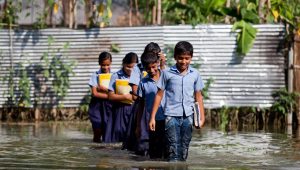
Special consideration should be allocated to green finance. Bangladesh is one of the most climate-vulnerable countries in the world and, at the same time, emits a negligible amount of GHG emissions compared to other countries. A significant investment in renewable energy, flood management, sustainable transport and adaptation to climate change will be necessary. Hong Kong’s private and professional service sectors can serve as strong advocates for Bangladesh’s move towards a low-carbon, climate-resilient economy. Infrastructural developments in Bangladesh will benefit both Bangladesh and the global sustainable finance system.
Another promising area of synergy here would be Special Economic Zones (SEZs), where Bangladesh can certainly stand to gain from the experience – of both the successes and pitfalls – of the SEZs that had proliferated throughout Guangdong in the 1970s and 1980s, which were in turn modelled after Hong Kong. The Government of Bangladesh has already established various SEZs to attract foreign investment, diversify the economy, and create employment opportunities. One of these schemes for creating an international-class manufacturing zone is the Bangladesh Special Economic Zone (BSEZ). The experience and expertise of Hong Kong investors, developers, logistics professionals, and others in operating industrial parks, export-oriented manufacturing, supply chain management, and export marketing are abundant.
Ultimately, no partnership between economies can be sustainable without the human-to-human connection and human-level knowledge. Universities serve as critical hubs of innovation, entrepreneurship and policy development. The universities in Hong Kong consistently rank among the best in Asia in engineering, finance, public policy, business administration, medicine, artificial intelligence, and urban governance. The growing higher education system in Bangladesh offers greater opportunities for academic interactions with other countries through joint research programmes, student and faculty exchanges, and new programmes. Further development of understanding between the peoples should be achieved through promotion of culture, tourism, professional training visits, business visits and exchanges of youth leadership.
On the other hand, Hong Kong can also stand to gain from deeper interfacing with Bangladesh. The rapid socio-economic changes in Bangladesh offer a valuable research laboratory for studying various aspects of industrialisation, urbanisation, climate resilience, labour markets, migration, digital transformation, and sustainable development. Hong Kong should accordingly position itself as a regional studies hub for South Asian economies and regional governance.
With the right incentives and catalysts for change, Hong Kong and Bangladesh can travel a long way towards a brighter and more enduring future.
The views expressed in this article are solely those of the author
Sujit Kumar Datta is a Professor in the Department of International Relations, University of Chittagong, Bangladesh
Brian Wong is an HKU-100 Assistant Professor in Philosophy and a Fellow, Centre on Contemporary China and the World, University of Hong Kong