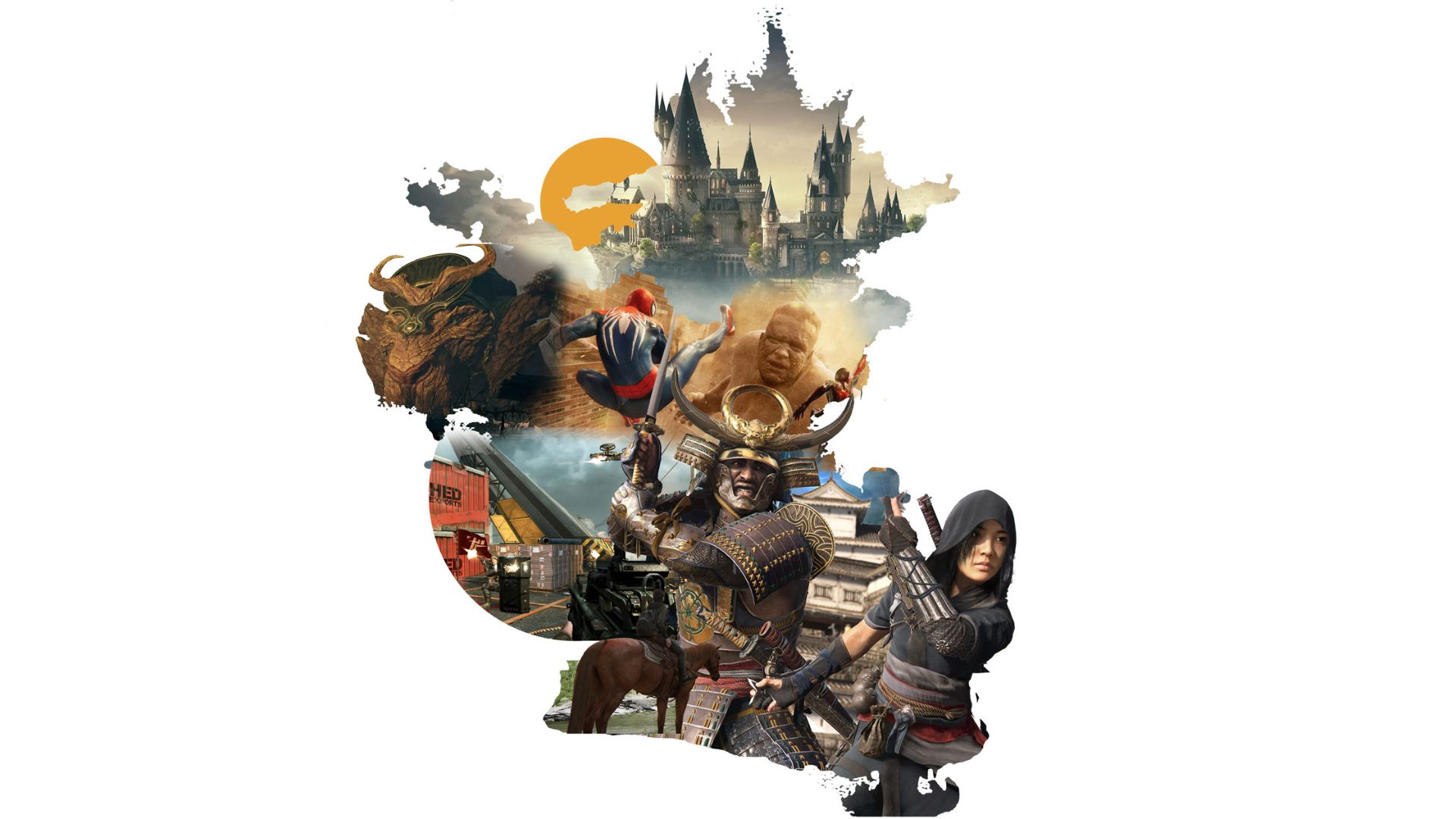

There was a time when making a video game was an act of ambition. A handful of people could disappear into a room, build something strange, beautiful, imperfect and eventually put it out into the world. The industry grew, the technology improved, and the games became bigger. Then bigger still.
Eventually, bigger became the whole point. Now we have arrived at the uncomfortable crossroads that bigger may be breaking the very industry that built it.
That was the argument that caught my attention in Mrwhosetheboss’ recent video, “The Gaming Industry Is Starting to Break.” It is deliberately gloomy, but beneath the dramatic presentation is a fairly simple economic problem: Modern games have become extraordinarily expensive to make, while the amount of time humans have to play them has remained stubbornly unchanged.
The numbers are difficult to ignore. AAA development can now involve hundreds of people working for years, with budgets reportedly reaching hundreds of millions of dollars. One recent estimate puts some major North American productions at $300 million or more before marketing.
Think about what that means. If a publisher spends $300 million developing a game and receives roughly $49 from a $70 digital sale after a platform’s cut, it needs more than six million copies simply to recover the development budget. Marketing comes after that. So does the cost of keeping servers running, supporting the game and paying the people who made it.
A blockbuster can sell millions of copies and still leave executives staring nervously at a spreadsheet.

And this is where the industry’s obsession with making games bigger begins to look less like ambition and more like gambling with increasingly large sums of money.
The safe bet becomes another sequel. Another remake. Another established franchise. Another attempt at a live-service game that will supposedly keep players spending for years.
But players have not acquired more hours. There are only so many evenings in a week. Only so many games one person can finish. And when the market becomes saturated with enormous releases competing for the same attention, even a very good game can become invisible.




Developers are feeling the consequences. According to the 2026 State of the Game Industry report, 28 per cent of surveyed developers had been laid off within the previous two years, while two-thirds of AAA respondents said their companies had experienced layoffs.
Behind every percentage is a person who thought they had found a career. That may be the saddest part of this entire story.
The people who create these worlds are increasingly being treated as the variable that can be removed when the spreadsheet stops working. Studios expand dramatically to build a blockbuster, then contract just as dramatically once it ships, or once executives decide the project is no longer worth the investment.
The industry is consequently losing something money cannot easily replace: Experience.
A great studio is not simply a collection of talented individuals. It is accumulated knowledge, trust, chemistry and years of learning how to build things together. Tear that apart repeatedly and eventually the cost-cutting begins to cost something far more valuable than money.
And yet, buried beneath all this gloom is a strange possibility. Maybe gaming does not need to become bigger. Perhaps it needs to become smaller.
AI could lower development costs and allow smaller teams to do things that once required enormous studios. Developers already expect AI to significantly affect team structures and productivity, while smaller teams are being viewed as one of the industry’s major opportunities.
That could be frightening. It could also be liberating. The future might belong to games that do not cost half a billion dollars, take seven years to make and require millions of people to buy them simply to justify their existence.
Maybe the next great game will come from a team small enough to know one another’s names. Maybe it will be strange. Maybe it will be short. Maybe it will not have a cinematic universe, a battle pass or a roadmap stretching five years into the future. And maybe that is exactly what gaming needs.
The industry is not dying. The games are not going away. But something is ending: The belief that every new game must be larger, more expensive and more spectacular than the one before it.
That era has produced some extraordinary things. It has also produced an industry where the people making the games are increasingly afraid of losing their jobs before they ever get to see their work finished.
So perhaps the breaking of gaming is not the end of gaming at all. Perhaps it is simply the sound of an industry finally realising that it cannot keep growing forever.
My hope is that, when the dust finally settles, the industry remembers what made us fall in love with games in the first place.