
The stories grandmothers tell in kitchens, courtyards and family gatherings rarely appear in history books. Instead, they are passed from one generation to the next, carrying memories of hardship, resilience and everyday life that often disappear with time.
A new anthology, Stories My Grandma (Never) Told Me, seeks to preserve those voices, turning oral traditions into a written record that academics and writers say broadens the way Bangladesh’s social and cultural history is documented.
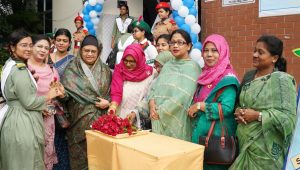
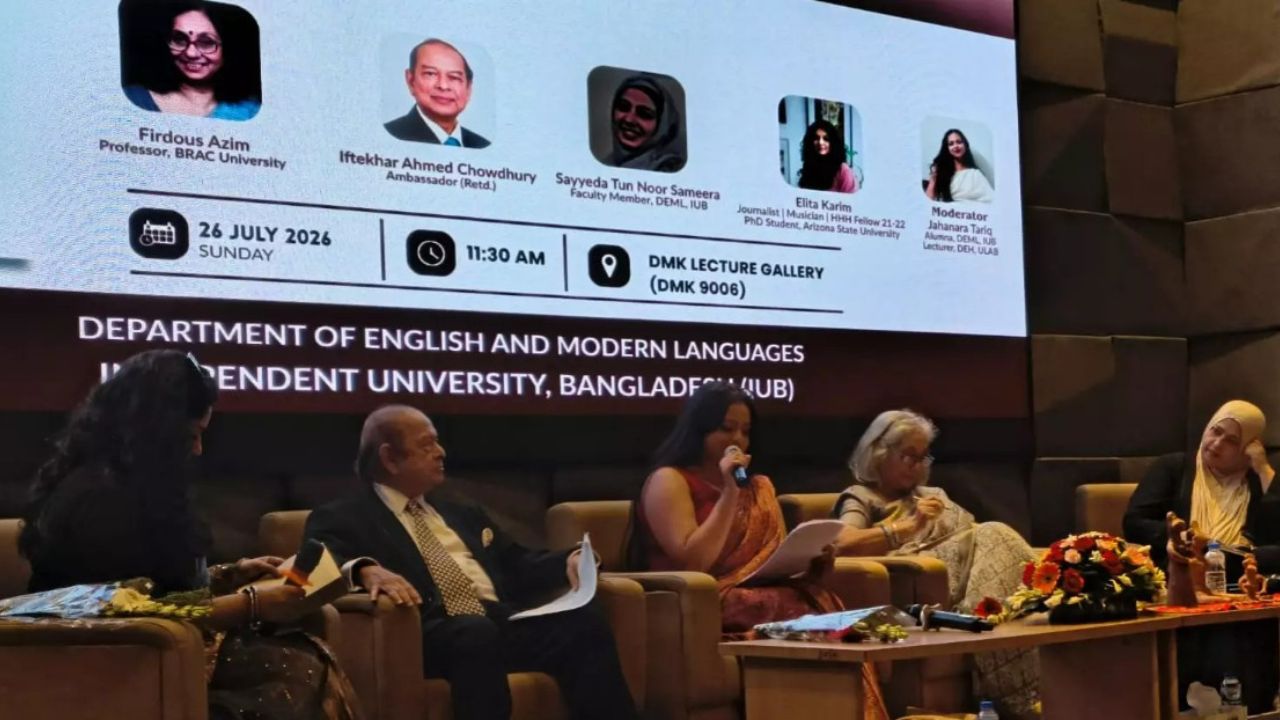
The book, edited by Razia Sultana Khan, a professor at Independent University, Bangladesh (IUB), was discussed at a programme organised by the university’s Department of English and Modern Languages on Sunday.
Speakers described the collection as more than a compilation of personal narratives, saying it captures the experiences of women whose lives have largely remained outside official histories while highlighting storytelling as a powerful vehicle for preserving identity and memory.

Firdous Azim, a professor at BRAC University, said the anthology resonated deeply with her as both a scholar and a grandmother.
She recalled how her six-year-old granddaughter waits every night to hear a story before going to sleep, a ritual that revived memories of tales once told by her own grandmothers. Recording such stories in English, she said, allows them to reach new generations of readers and students while offering a wider lens through which to understand family history.



Iftekhar Ahmed Chowdhury, president of the Cosmos Foundation and former foreign affairs adviser, said the anthology elevates the quiet experiences of women into a collective narrative.
Describing it as a tribute to the “whispers of resilience” carried across generations, he argued that history is often shaped as much in homes as in public institutions. Kitchens, family gatherings and moments of mourning, he said, are places where societies preserve values and memory even when official records remain silent.
Chowdhury added that the grandmother in many of the stories serves as both a real person and a literary metaphor through which the writers explore contemporary questions of identity, belonging and family. He described the collection as a portrait of its contributors as much as of the women who inspired them, calling grandmothers the “keepers of us.”
Sayyeda Tun Noor Sameera, a faculty member at IUB, said English-language anthologies centred on such intimate family narratives remain uncommon in Bangladesh. She credited the editor with bringing together stories that many readers would recognise from their own childhoods, preserving memories that continue to shape family bonds long after they are first told.
Musician and Arizona State University doctoral student Elita Karim said women have long safeguarded knowledge through stories, songs and poetry, adding that the anthology recognises this tradition as an art form worthy of literary attention.
The collection was written by members of The Reading Circle, an international community of readers and writers whose previous projects include translations of works by Kazi Nazrul Islam and Alice Munro, as well as Stories from the Edge: Personal Narratives of 1971.
According to the publisher, the latest anthology grew out of the group’s fascination with family secrets and untold histories that survive across generations through conversation rather than documentation, preserving voices that might otherwise have faded with time.